

 Français
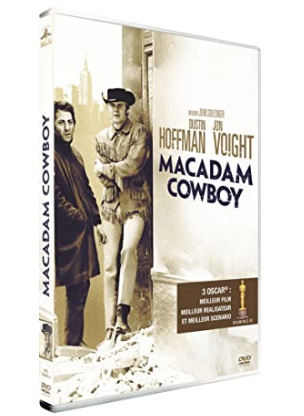
Midnight Cowboy
Synopsis
Joe Buck is a naive, handsome young dishwasher from Texas who leaves his mundane small-town life behind and moves to New York City wearing fringed buckskin jackets and cowboy boots, dreaming of becoming a high-priced gigolo for wealthy Manhattan women. Upon arrival, reality shatters his naive illusions; he discovers that his rugged charm generates zero clients, and he is quickly conned out of his meager savings. Stranded and broke on the cold streets of New York, Joe forms an unlikely, tender friendship with Enrico Ratso Rizzo, a sickly, crippled petty con man living in a condemned tenement building. Together, these two marginalized outlaws navigate urban poverty, illness, and desperate survival while dreaming of escaping to the warm sunshine of Florida.
The Making of the Film
Director John Schlesinger adapted the groundbreaking drama from James Leo Herlihy bestselling 1965 novel of the same name. Producer Jerome Hellman and United Artists financed the gritty production, which pushed boundaries by becoming the first and only X-rated film in history to win the Academy Award for Best Picture. The production captured the gritty, decaying urban underbelly of late-1960s New York City.
Critical Reception
Critics universally acclaimed Midnight Cowboy upon its release, praising John Schlesinger visionary direction, Waldo Salt Oscar-winning screenplay, and powerhouse lead performances by Jon Voight and Dustin Hoffman. Reviewers lauded the film for its unflinching, compassionate depiction of urban poverty, human loneliness, and desperate friendship. It is universally celebrated as a masterpiece of American cinema.
Public reception was explosive and phenomenal, turning the gritty counterculture drama into a major box-office blockbuster worldwide and a defining cultural milestone of the New Hollywood era. Audiences were deeply moved by the tragic bond between Joe and Ratso. Its cultural footprint is monumental.
The film won three Academy Awards: Best Picture, Best Director for John Schlesinger, and Best Adapted Screenplay for Waldo Salt. Jon Voight and Dustin Hoffman earned legendary Oscar nominations. Its critical legacy is untouchable.
Behind-the-Scenes Stories
Director John Schlesinger drew inspiration from gritty New York street life, underground counterculture, and documentary realism. He chose authentic, unpermitted location shooting across grimy Times Square, neon alleys, and condemned tenements of New York City. His direction pushed Dustin Hoffman to adopt a severe physical limp and hacking cough to play Ratso Rizzo.
Production faced heavy censorship battles and financial hurdles before release due to its taboo themes of homosexuality and prostitution, earning an initial X-rating from the MPAA that United Artists embraced as a badge of honor. Jon Voight brought naive innocence to his Texas cowboy role. Hoffman lived in character on the streets.
A memorable sequence involves Ratso Rizzo limping furiously through yellow-cab traffic on a rainy New York street while banging on a car fender and shouting his immortal line I walking here! I walking here! during an unpermitted street shoot. The scene became one of the most famous moments in film history. Hoffman improvisation anchored the realism.
The casting process brought together two master actors. Jon Voight was cast as Joe Buck, launching his career into superstardom. Dustin Hoffman fought to play Ratso Rizzo, completely transforming his physical appearance to contrast with his previous role in The Graduate.
Themes Explored
The film explores urban loneliness, human connection, poverty, disability, betrayal, and the shattered American dream. It highlights how unexpected friendship redeems marginalized outlaws in a cold city. Compassion conquers isolation.
NULL
Meaning of the Title
The title refers ironically and literally to the protagonists naive illusion of arriving in New York City as a glamorous midnight cowboy gigolo for wealthy women, contrasting his harsh reality of poverty. It highlights the tragic dream.
NULL
NULL
Similar Films
Other similar films include Taxi Driver, The Panic in Needle Park, and Serpico.