

 Français
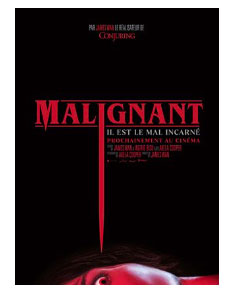
Malignant
Synopsis
Madison Mitchell, a young woman struggling through personal trauma and domestic abuse, begins experiencing horrific, vivid visions of brutal murders happening in real-time. To her growing horror, she discovers that these waking nightmares are actually psychic projections of a murderous, parasitic entity from her past named Gabriel. As the body count rises and police detectives close in, Madison must unravel a terrifying childhood medical secret to stop the carnage before it claims more lives.
The Making of the Film
This supernatural giallo-inspired horror film was directed by James Wan, who returned to his independent horror roots after helming massive blockbusters like Aquaman and Furious 7. Wan co-wrote the story with Ingrid Bisu, aiming to create an unhinged, wildly unpredictable homage to Italian giallo cinema, 1980s body horror, and classic creature features. The filmmakers embraced over-the-top practical gore, bizarre plot twists, and theatrical stylistic flair to subvert modern horror expectations.
Critical Reception
Critical reception was polarized upon release, with many reviewers praising its audacious creativity, gonzo narrative swings, and breathtaking third-act action pivot. Critics highlighted Annabelle Wallis-s committed lead performance and Wan-s virtuosic camera direction, which paid loving tribute to classic horror masters like Dario Argento and Brian De Palma. Some mainstream reviewers found the tonal shifts jarring, but cult horror fans embraced it instantly as a modern midnight-movie classic. Global horror audiences turned the film into a viral sensation, sparking intense online discussions, memes, and widespread celebration of its shocking anatomical twist. Viewers praised its refusal to follow safe horror formulas, cementing its status as a bold, inventive genre entry. The film received nominations at various horror fan choice awards for best director, most shocking twist, and best creature design.
Behind-the-Scenes Stories
Director James Wan drew inspiration from classic Giallo films, Cronenberg body horror, and medical anomalies, aiming to create a cinematic experience that kept audiences guessing until the final reel. He utilized elaborate practical stunt rigs and contortionist actors for the villain Gabriel to minimize CGI reliance. Production took place in Los Angeles under tight security to prevent plot spoilers from leaking online prior to release. The crew constructed elaborate hospital basement and penthouse sets to facilitate sweeping, gravity-defying camera shots. A famous behind-the-scenes anecdote involves actor Marina Mazepa—who played the physical body of Gabriel—performing intense backward-bending contortion stunts in a custom prosthetic suit while running backward through fight scenes, leaving the crew astonished. The casting process prioritized actors who could embrace the campy, high-octane melodramatic tone without breaking character sincerity.
Themes Explored
The series explores trauma, parasitic attachment, hidden pasts, and the literal monstrosity of toxic family secrets. It examines bodily autonomy and the psychological scars left by childhood medical experimentation.
Ending Explained
The explosive climax reveals that Gabriel is actually Madison-s parasitic twin brother whose face was surgically removed from the back of her skull in childhood; when Madison hits her head, Gabriel takes physical control of her body to exact bloody revenge.
Meaning of the Title
The title refers medically to cancerous growths, symbolizing both the parasitic twin entity growing out of Madison-s body and the malignant nature of buried past trauma.
Basket Case, Deep Red, Phenomena, The Evil Dead