

 Français
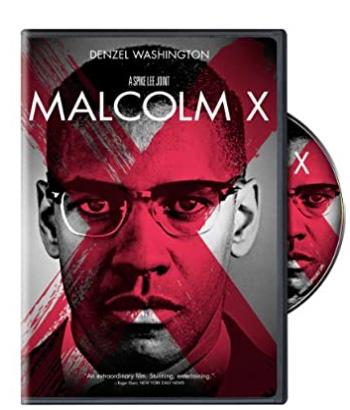
Malcolm X
Synopsis
Malcolm X traces the extraordinary life of one of the most influential and controversial figures in the American civil rights movement. Born Malcolm Little, he experiences racial discrimination and personal tragedy during his childhood before becoming involved in crime as a young man. After serving time in prison, he discovers the teachings of the Nation of Islam and undergoes a profound personal transformation. His growing influence as a speaker and activist makes him a powerful voice against racism and racial oppression. Following a pilgrimage to Mecca and a period of reflection, he begins to reconsider some of his earlier positions and develops a broader international vision of human rights. The film follows his journey from personal struggle to political leadership and his eventual assassination in 1965.
The film's origins
Malcolm X was developed as a major biographical film based on The Autobiography of Malcolm X, written by Malcolm X with journalist Alex Haley. The project originated shortly after Malcolm's assassination in 1965, when producer Marvin Worth acquired the rights to his story. Writer James Baldwin was initially involved in adapting the autobiography, but the project underwent several changes during its long development. Spike Lee eventually took over the film, revising the screenplay with Arnold Perl and developing an ambitious historical portrait of the civil rights leader. Denzel Washington was selected for the leading role after previously portraying Malcolm X in a stage production. The director wanted to present the complexity of Malcolm's political and spiritual evolution rather than reducing his life to a simple story of activism. The screenplay follows his childhood, criminal activities, conversion to Islam, leadership within the Nation of Islam and later international human rights advocacy. The production also incorporates historical speeches, archival material and references to the broader history of racial discrimination in the United States. The result is a large-scale biographical drama that examines the life of a man whose ideas continue to provoke debate and inspire political movements.
Reviews and reception
Critical reception:
Malcolm X received highly favorable reviews from many professional critics. Denzel Washington's performance was widely praised for its emotional intensity, physical transformation and command of Malcolm's distinctive speaking style. Spike Lee was recognized for creating an ambitious historical portrait that combined political analysis with powerful cinematic storytelling. The cinematography, editing, production design and supporting performances also attracted considerable attention. Some reviewers debated the film's historical interpretation and its treatment of certain political controversies, but its artistic ambition was broadly acknowledged. It has since become one of the most important American biographical films of the 1990s.
Audience reception:
The film attracted substantial attention from audiences interested in American history and the civil rights movement. Its extended running time and serious political subject did not prevent it from reaching a wide public. Denzel Washington's performance was particularly influential in introducing Malcolm X's life and speeches to younger generations. The film also encouraged renewed discussion about racial identity, political resistance and the history of the Nation of Islam. Its lasting reputation has grown through educational screenings, television broadcasts and retrospective cinema programs.
Awards and recognition:
Denzel Washington received an Academy Award nomination for Best Actor for his portrayal of Malcolm X. He also won the Silver Bear for Best Actor at the 1993 Berlin International Film Festival and received an MTV Movie Award for Best Actor. The film received additional recognition for its cinematography and production design. Its historical importance and Washington's performance have continued to be acknowledged by critics and film institutions. The production is now widely regarded as one of Spike Lee's major achievements.
Behind-the-scenes stories
Director's inspirations:
Spike Lee was deeply interested in the political and historical significance of Malcolm X and wanted to bring his story to a large international audience. The director considered the autobiography an essential source for understanding Malcolm's personal transformation and political development. He also wanted to connect the historical story with contemporary debates about racism and American identity. The opening sequence, which incorporates documentary footage of the beating of Rodney King, establishes this connection between the past and more recent events. Lee approached the film as both a biography and a reflection on the continuing struggle for racial justice.
Production challenges:
The production faced considerable financial difficulties because of its ambitious scale and extended running time. When the budget became insufficient, Spike Lee agreed to reduce his own salary and sought additional financial support from prominent supporters. Oprah Winfrey, Michael Jordan and Bill Cosby were among the individuals who contributed to helping the production reach completion. Recreating several decades of American history also required extensive work on costumes, locations and historical environments. Denzel Washington undertook considerable preparation to reproduce Malcolm's speeches, physical appearance and changing mannerisms. The film ultimately required a major production effort to present such a long and complex life in a single cinematic work.
A memorable scene:
The film's opening sequence is particularly striking because it combines archival footage of the Rodney King beating with a speech by Malcolm X. Images of the American flag gradually become associated with the violence and racial injustice discussed in the speech. As the sequence progresses, the flag appears to burn, leaving behind a recognizable X-shaped image. This powerful visual statement connects Malcolm's historical message with the racial tensions that continued to affect American society decades after his death. It also establishes the film's intention to examine history as something that remains relevant to the present.
Originally considered casting:
Denzel Washington was selected after previously portraying Malcolm X in a theatrical production. His familiarity with the speeches, gestures and personality of the historical figure made him a particularly strong choice. Angela Bassett was cast as Betty Shabazz, while Al Freeman Jr. portrayed Elijah Muhammad. The production also included Delroy Lindo and several other prominent performers. The leading role was therefore closely associated with Washington from an early stage of Spike Lee's involvement.
Themes explored
Racial identity and discrimination: Malcolm's life illustrates the personal and political consequences of systemic racism in American society.
Personal transformation: His journey demonstrates how education, faith and reflection can profoundly change an individual's understanding of the world.
Freedom and human dignity: Malcolm becomes an influential advocate for the right of oppressed people to defend their dignity and determine their own future.
Faith and spiritual development: His conversion to Islam and later pilgrimage to Mecca represent important stages in his evolving worldview.
Political resistance: The film explores different approaches to fighting discrimination, from separatist movements to broader international human rights advocacy.
Family and personal history: Childhood experiences and family tragedies influence Malcolm's understanding of race, identity and injustice.
Leadership and responsibility: His public influence raises questions about the responsibilities and dangers associated with becoming a powerful political voice.
Ending explained
The final part of Malcolm X follows the period after his pilgrimage to Mecca, when his political and spiritual outlook undergoes an important transformation. He begins to distinguish his opposition to racism from the idea that racial separation is the only possible solution. His experiences abroad encourage him to develop a broader understanding of human solidarity and the international nature of racial injustice. However, his changing positions also create tensions with former allies and expose him to increasing personal danger. The film culminates in his assassination at the Audubon Ballroom in New York on February 21, 1965. His death is presented not simply as the end of an individual life but as the loss of an influential voice during a crucial period in American history. The closing images emphasize that his ideas continue to inspire later generations. The film therefore concludes with a reflection on legacy, political courage and the unfinished struggle for equality and human dignity.
Meaning of the title
The title Malcolm X refers to the name adopted by Malcolm Little after joining the Nation of Islam. The letter X symbolizes the African family name and cultural identity that had been erased through the history of slavery. It also represents the unknown origins of many African Americans whose ancestors were deprived of their original names and identities. The title therefore carries a political and personal meaning that extends far beyond a simple change of name. It reflects Malcolm's search for identity, dignity and a historical connection with his African heritage.
Original soundtrack
The original score was composed by Terence Blanchard, whose music combines orchestral writing with elements inspired by jazz and African American musical traditions. His compositions reinforce the different stages of Malcolm's life, from his early experiences to his emergence as a major political speaker. The soundtrack also incorporates important musical selections that reflect the cultural atmosphere of the periods represented in the film. Its combination of historical music and original compositions gives the production a distinctive emotional identity. Blanchard's collaboration with Spike Lee became an important part of the director's subsequent filmmaking career.
Similar films
Judas and the Black Messiah (2021): A historical drama examining political activism, racial injustice and the Black Panther Party.
Selma (2014): A film about Martin Luther King Jr. and the struggle for voting rights in the American civil rights movement.
The Butler (2013): A historical drama exploring racial inequality and social change through several decades of American history.
One Night in Miami... (2020): A fictionalized account of a meeting between Malcolm X, Muhammad Ali, Sam Cooke and Jim Brown.
Mandela: Long Walk to Freedom (2013): A biographical drama about Nelson Mandela's struggle against apartheid and his political transformation.
Ali (2001): A biographical portrait of Muhammad Ali exploring identity, conviction and the relationship between sport and political activism.