

 Français
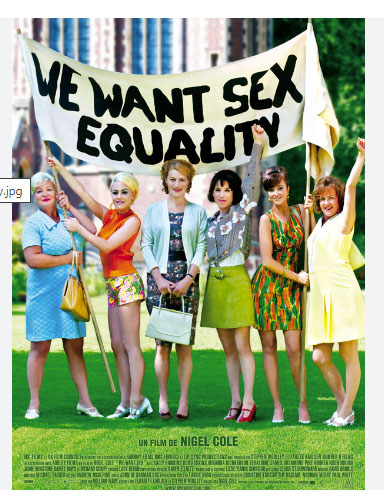
Made in Dagenham
Synopsis
Set in 1968, a spirited group of female sewing machinists working at the massive Ford motor factory in Dagenham, England, discover they are classified as unskilled workers while men doing equivalent labor are paid far more. Led by an ordinary, brave working-class mother named Rita O'Grady, the women walk off the assembly line to protest institutional gender discrimination. As their strike paralyzing the automotive plant sparks a national labor crisis, Rita faces enormous political and personal pressure. Their courageous stand ultimately changes British labor history and helps pass the landmark Equal Pay Act.
The Making of the Film
Director Nigel Cole helmed this inspiring historical comedy-drama, working from a smart screenplay by William Ivory that brought a lighter, crowd-pleasing touch to a watershed moment in labor history. The production was designed to celebrate working-class British grit and female solidarity during the swinging sixties. Filmmakers utilized authentic UK factories and period costumes to recreate the gritty industrial atmosphere of 1968 Dagenham. The project was built to be an uplifting, inspiring feminist triumph.
Critical Reception
Critics offered generally favorable reviews, praising Sally Hawkins's luminous, grounded lead performance and the film's charming, optimistic execution of historical labor rights. Reviewers commended Nigel Cole's sensitive direction, which balances serious political struggle with sharp British working-class humor. Some critics noted that the narrative occasionally leaned into predictable crowd-pleasing tropes, yet acknowledged its heartfelt emotional resonance. It emerged as a beloved crowd-pleasing hit.
Audiences embraced the movie with immense enthusiasm, praising its empowering message, uplifting romance, and Sally Hawkins's stellar acting as an accidental labor leader. Viewers found the depiction of ordinary women standing up to corporate giants and chauvinist unions deeply inspiring. The emotional speeches and period soundtrack generated warm praise across international audiences. Many praised it as a triumphant feel-good historical drama.
While traditional major film academies bypassed the British indie feature, it earned multiple BAFTA Award nominations, including Best British Film, Best Costume Design, and Best Supporting Actress for Miranda Richardson. Sally Hawkins earned widespread international acclaim. The project successfully established its reputation as an inspiring historical milestone.
Behind-the-Scenes Stories
Director Nigel Cole was inspired by the real-life 1968 Ford sewing machinists strike, wanting to honor the ordinary women who sparked national legislative change without seeking fame. He worked closely with Sally Hawkins to ensure Rita O'Grady felt like a relatable, authentic homemaker rather than a rehearsed politician. The production team collaborated with surviving strikers to ensure historical accuracy.
Shooting across authentic British industrial towns and factories required careful period dressing and vintage automobile coordination. Managing large ensemble strike protest sequences demanded rigorous crowd choreography and safety planning. Maintaining a bright, energetic visual palette required careful cinematography.
During the emotional union hall and parliamentary speech sequences, Sally Hawkins performed with raw vulnerability, capturing the authentic nervousness and courage of an accidental leader. The supporting cast brought wonderful British wit to the factory floor scenes. These practical efforts grounded the historical fight in human reality.
Sally Hawkins led the cast as Rita O'Grady, supported by Bob Hoskins, Miranda Richardson, Rosamund Pike, and Jaime Winstone. The casting process focused on finding actors who could project authentic British working-class credibility. The resulting ensemble delivered fantastic dramatic chemistry.
Themes Explored
The film explores gender equality, labor rights, female solidarity, working-class resilience, and political activism. It examines how ordinary citizens can challenge entrenched institutional discrimination through collective action. The narrative ultimately champions justice and equality.
Ending Explained
Following successful national strikes and emotional negotiations in Parliament with feminist leaders like Barbara Castle, the Ford executives finally capitulate, granting the female machinists equal pay classification. Rita stands proudly before cheering crowds and union workers, having permanently altered British labor legislation for future generations. She returns home to a supportive husband who finally recognizes her extraordinary strength. The ending offers a triumphant, life-affirming historical resolution.
Meaning of the Title
The title "Made in Dagenham" serves as a brilliant double entendre referring both to the manufactured Ford cars produced in the factory and the genesis of the British equal pay movement born from the women's strike in that town. It highlights the industrial and social roots of the narrative. The catchy title sets an inspiring historical tone.
Original Soundtrack
Composed by David Arnold and featuring upbeat 1960s soul, pop, and rock anthems, the soundtrack is an absolute delight. The energetic musical cues amplify the factory floor camaraderie and protest marches, delighting music lovers.
Latest News
- The film remains a beloved historical classic celebrated for inspiring modern conversations surrounding gender equality and equal pay.
Similar Films
Fans of inspiring historical dramas and underdog victories will enjoy Erin Brockovich (2000), Pride (2014), Hidden Figures (2016), and Norma Rae (1979), all celebrating change.