

 Français
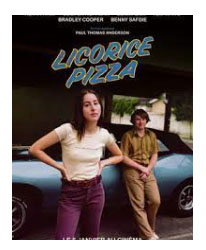
Licorice Pizza
Synopsis
This dazzling, nostalgic, and critically acclaimed coming-of-age comedy-drama film written and directed by Paul Thomas Anderson follows Alana Haim, a twenty-five-year-old restless photographic assistant, and Gary Valentine, an ambitious, confident fifteen-year-old child actor and entrepreneur living in California's San Fernando Valley during the sun-drenched summer of 1973. Despite their ten-year age gap, an unlikely, deeply complicated friendship and romance blossoms as Gary and Alana navigate various eccentric business ventures—including waterbed stores and pinball parlors—while running through the colorful streets of 1970s suburbia. Set against the backdrop of gas shortages, local politics, and Hollywood eccentricity, it is a brilliant, breezy trip down memory lane.
The Making of the Film
The project originated from visionary auteur Paul Thomas Anderson's deep personal nostalgia growing up in the San Fernando Valley during the 1970s, drawing heavily from real-life anecdotes told by his close friend, former child actor and producer Gary Goetzman. Anderson sought to capture the chaotic, carefree energy of youth by casting first-time feature film actors Alana Haim—from the Grammy-nominated band Haim—and newcomer Cooper Hoffman, son of the late legendary actor Philip Seymour Hoffman. Inspiration was drawn from classic 1970s youth culture, San Fernando Valley history, and classic rom-com traditions. The creative team aimed to produce an uncompromised artistic triumph.
Critical Reception
Critics offered widespread, rapturous acclaim, praising Paul Thomas Anderson's effortless stylistic direction, gorgeous 1970s cinematography, and the sensational breakout lead performances of Alana Haim and Cooper Hoffman. Reviewers noted that Anderson successfully bypassed traditional coming-of-age clichés, delivering instead a freewheeling, joyous, and occasionally melancholic episodic romance driven by incredible chemistry between two non-traditional leads. Bradley Cooper's hilarious supporting turn as volatile Hollywood hairdresser Jon Peters received universal applause. It was immediately recognized as an all-time classic.
Audience reception was warm and enthusiastic, driving strong specialty box office success and earning critical acclaim across global film festivals and Academy Award ceremonies. Viewers on public platforms praised the energetic running scenes, authentic 1970s soundtrack, and quirky encounters with eccentric Hollywood figures. Fans of Paul Thomas Anderson celebrated his uplifting, sun-drenched tonal departure from darker works like 'There Will Be Blood'. Word-of-mouth sustained strong long-term prestige.
Awards season brought major triumph, securing three Academy Award nominations including Best Picture, Best Director, and Best Original Screenplay for Paul Thomas Anderson, alongside numerous critics' association wins. Critics' associations praised the film for its stylistic brilliance and narrative originality. These accolades cemented its status as a premier masterpiece of modern cinema.
Behind-the-Scenes Stories
The director and production team drew visual inspiration from 1970s snapshot photography, classic coming-of-age films like 'American Graffiti', and sun-bleached San Fernando Valley architecture to establish a warm, nostalgic aesthetic. Every location—from the vintage record stores and pinball arcades to the sprawling suburban hills—was meticulously styled to reflect authentic 1973 pop culture. The production team collaborated with vintage car collectors and costume designers to ensure that period fashion and gas-crisis queues looked completely accurate. These artistic choices created an immersive historical world.
Production presented fascinating logistical and technical hurdles, requiring first-time actors Alana Haim and Cooper Hoffman to anchor a major studio film through sheer improvisational charm and natural chemistry under Anderson's steady direction. Because Anderson operated the camera himself on many setups, the production maintained a relaxed, intimate independent atmosphere. Furthermore, shooting on location across Los Angeles during pandemic restrictions required careful coordination. This rigorous dedication resulted in immortal cinematic moments.
Casting was anchored by discovering breakout star Alana Haim and newcomer Cooper Hoffman, whose electric on-screen partnership drove the entire narrative. Supporting roles featured an all-star ensemble including Bradley Cooper, Sean Penn, Tom Waits, and Maya Rudolph. This star-studded casting strategy was the absolute heartbeat of the film's success.
Themes Explored
The narrative deeply explores themes of youthful ambition, non-traditional romance, and the freewheeling spirit of 1970s America. It examines growing up, navigating the blurred lines between friendship and love, and chasing eccentric business dreams. Additionally, it highlights nostalgia, personal reinvention, and the magic of the San Fernando Valley. Ultimately, the film reflects on time passing, youthful energy, and the sweet unpredictability of first love.
Ending Explained
Alana and Gary finally run toward each other in a joyous sprint through a shopping center parking lot after months of emotional distance and missed connections, embracing passionately and committing fully to their unconventional romance as they walk off into the California night together. In the final heartwarming shot, the young couple laughs together while breathing heavily from their run. The joyful conclusion celebrates absolute romantic liberation.
Meaning of the Title
The title ("Licorice Pizza") refers to the name of a famous Southern California record store chain from the 1970s, reflecting the film's rich period nostalgia.
Original Soundtrack
The incredible soundtrack curated by Paul Thomas Anderson and featuring classic 1970s pop hits by artists like David Bowie, Paul McCartney, and Nina Simone received widespread acclaim for establishing the film's sunny retro rhythm.
Similar Films
Films sharing similar 1970s nostalgia, coming-of-age romance, and freewheeling storytelling themes include Dazed and Confused (1993), Almost Famous (2000), and Once Upon a Time in Hollywood (2019).