

 Français
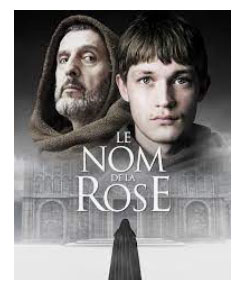
The Name of the Rose
Synopsis
The Name of the Rose follows Brother William of Baskerville, a brilliant, sharp-witted Franciscan friar, and his eager young novice Adso of Melk as they arrive at a remote, opulent abbey in the Italian Alps in 1327 to attend a theological debate. Upon arrival, the friars are thrust into investigating a series of bizarre, gruesome murders among the monks that mirror the apocalyptic prophecies of the Book of Revelation. As William uncovers forbidden books, heresy, and Inquisition politics in the labyrinthine abbey library, he races against time.
The Making of the Film
Directed by Giacomo Battiato, the lavish television miniseries adaptation was based on Umberto Eco's globally celebrated postmodern historical mystery novel. The inspiration stemmed from wanting to expand Eco's intricate philosophical and theological murder mystery into an immersive multi-episode canvas. The production utilized massive Cinecittà soundstages in Rome, medieval monastery sets, and lavish historical costume design.
Critical Reception
Critics offered generally positive reviews, praising John Turturro's intellectual lead performance as William of Baskerville, Rupert Everett's chilling turn as the Inquisitor, and the lavish historical production values. Reviewers noted that while the miniseries struggled to fully capture Eco's dense philosophical layers compared to the 1986 film adaptation, its atmospheric mystery made for compelling television. The grand tone received praise.
Audiences embraced the miniseries as an engrossing historical murder mystery.
The miniseries earned recognition across European television awards for its production design and costume styling.
Behind-the-Scenes Stories
Giacomo Battiato drew heavy inspiration from Umberto Eco's philosophical masterpiece and medieval historical archives.
Recreating the labyrinthine medieval monastery library required massive studio set construction and intricate lighting design.
During production, John Turturro studied medieval philosophy and Latin to authentically portray the Franciscan scholar.
Casting international stars like John Turturro and Rupert Everett brought prestige to the historical television event.
Themes Explored
The miniseries explores medieval monastic murder mysteries, Franciscan poverty, the Inquisition, heresy, forbidden knowledge, and labyrinthine libraries.
Ending Explained
The fiery climax reveals the murderous librarian setting fire to the library to protect a lost book by Aristotle, leading to the total destruction of the abbey in flames.
Meaning of the Title
Reference to the famous Latin phrase Stat rosa pristina nomine, nuda nomina tenemus (The pristine rose remains only by its name; we hold only naked names).
Original Soundtrack
The original musical score composed by Andrea Farri features haunting Gregorian chants, medieval choral arrangements, and atmospheric orchestral strings.
Similar series include The Name of the Rose (1986 film), The Pillars of the Earth, Medici, and Shōgun.