

 Français
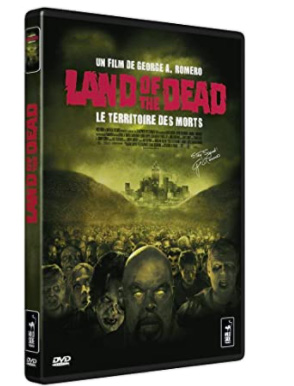
Land of the Dead
Synopsis
In a post-apocalyptic world where the undead have overrun civilization, the remnants of humanity live isolated inside a heavily fortified, walled city. While the wealthy elite reside in luxury skyscrapers untouched by the horrors outside, the impoverished working class struggles for survival in the slums below. Outside the walls, a group of intelligent zombies, led by a sentient walker named Big Daddy, begins to organize and learn tactics. When a heavily armed mercenary vehicle known as Dead Reckoning falls into the wrong hands, a desperate class war erupts inside and outside the fortified sanctuary.
The Making of the Film
Master of horror George A. Romero returned to his iconic zombie franchise after a long hiatus, driven by a desire to comment on contemporary socio-political anxieties, particularly post-9/11 security theater and widening wealth gaps. Romero conceived the story as a direct continuation of his social satire legacy, updating his undead metaphor to reflect modern corporate greed and militarized class divides. The idea of zombies evolving basic intelligence and memory provided a fresh narrative hook for the veteran director.
Critical Reception
Professional critics welcomed Romero's return to the genre he created, praising the film for its sharp political subtext, social commentary, and effective blend of horror and action. Reviewers appreciated how the movie used its monsters to critique consumerism, class stratification, and government surveillance, maintaining the intellectual edge of Romero's classic works.
The general public and horror enthusiasts responded positively, enjoying the high-production-value gore, practical special effects, and the novel concept of organized, thinking zombies. While some mainstream viewers felt the political messaging was heavy-handed, fan communities embraced it as a worthy addition to the zombie canon.
The film received several nominations within horror and fantasy film circles, earning praise for its makeup effects, stunt coordination, and Dennis Hopper's memorable portrayal of the ruthless corporate antagonist Kaufman. It remains respected as a smart, late-career entry in Romero's zombie saga.
Filming Anecdotes
George A. Romero drew inspiration from classic political thrillers, contemporary news headlines regarding urban segregation, and his own pioneering zombie mythos. He wanted the visual aesthetic to contrast the neon-lit luxury of the upper classes with the grim, industrial decay of the lower districts.
Production faced severe scheduling constraints and budget limitations, forcing the crew to utilize creative practical effects and smart editing to stage large-scale zombie horde attacks. Filming night scenes in chilly Canadian urban locations also tested the endurance of the cast and crew.
During the shooting of the massive city siege, hundreds of background extras had to be meticulously coordinated and made up as decomposing corpses while executing complex stumbling choreography.
Initially, various alternative script drafts featured different protagonists and settings before Romero streamlined the narrative to focus squarely on the conflict between the privileged enclave and the insurgent lower classes.
Themes Explored
The film explores rampant capitalism, class warfare, the dehumanization of the working poor, and the dangerous hubris of those who build walls to isolate themselves from societal problems.
Ending Explanation
The ending shows the surviving humans realizing that the zombies are not merely mindless monsters to be eradicated for sport, but a new species striving to carve out their own existence. As the walking dead migrate away toward open spaces, the survivors recognize that coexistence or mutual avoidance is the only path forward.
Title Significance
The title 'Land of the Dead' ironically highlights how the living inhabitants of the fortified city have become emotionally and morally dead inside, while the actual zombies show signs of evolving community, memory, and purpose.
Similar Films
Dawn of the Dead, 28 Days Later, Shaun of the Dead, Day of the Dead