

 Français
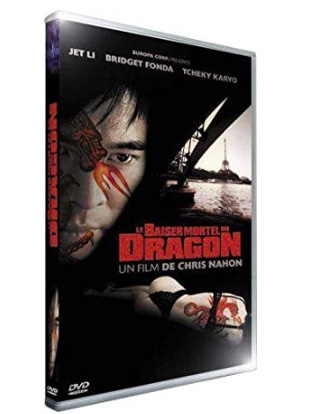
Kiss of the Dragon
Synopsis
Liu Jian is a Chinese intelligence officer sent to Paris to assist the French authorities in a sensitive investigation. After witnessing a murder and being framed for the crime, he becomes the target of corrupt police officers. With the help of Jessica, an American woman trapped in a dangerous situation, Liu must expose the conspiracy and protect her daughter. Using his exceptional martial-arts skills, he fights to survive and uncover the truth.
The Making of the Film
Kiss of the Dragon was developed as an international action film designed to introduce Jet Li to a wider Western audience. The project brought together French and American production interests, with Luc Besson writing and producing the screenplay. Director Chris Nahon was selected to deliver a fast-paced thriller combining martial arts with the atmosphere of a Parisian crime story. Jet Li plays Liu Jian, a Chinese intelligence officer whose professional mission becomes a fight for survival. The production also features Bridget Fonda and Tchéky Karyo in important supporting roles. The story was created specifically for the screen rather than adapted from a novel or a documented historical event. Its action design places particular emphasis on Jet Li's martial-arts abilities and relatively direct fight choreography. The filmmakers wanted to combine Hong Kong action influences with the locations and production resources of European cinema. The result is a compact revenge thriller built around corruption, betrayal and physical confrontation.
Critical Reception
Professional Reviews: Critics generally praised Jet Li's martial-arts performances and the film's energetic fight choreography. The action sequences were considered its strongest feature, particularly for their clarity and physical intensity. Some reviewers criticised the screenplay for relying on familiar action-film conventions and underdeveloped supporting characters. Tchéky Karyo's performance as the corrupt police officer received attention for its exaggerated villainy.
Audience Reception: Action-film fans responded positively to the opportunity to see Jet Li in a French-American production. The film attracted viewers interested in martial arts and fast-paced revenge stories. Some audiences appreciated its direct approach and relatively short runtime, while others found the plot predictable. Its international release helped strengthen Jet Li's visibility in Western action cinema.
Awards: Kiss of the Dragon did not receive major recognition from the principal international film-awards organisations. Its reputation developed mainly through its action sequences and its place in Jet Li's filmography. The choreography and physical performances remain the elements most frequently discussed by fans. Its influence is more closely associated with martial-arts entertainment than with awards success.
Behind-the-Scenes Facts
Director's Inspirations: Chris Nahon worked within an action tradition influenced by Hong Kong martial-arts cinema and international crime thrillers. The production aimed to give Jet Li opportunities to demonstrate his physical abilities while placing him in a European urban setting. Luc Besson's involvement helped shape the film's fast-moving narrative and its emphasis on spectacular action. The director sought to make the fight scenes readable and immediate rather than relying entirely on rapid editing.
Production Challenges: The film required coordination between martial-arts performers, stunt teams and camera operators. The action scenes had to accommodate Jet Li's precise movements while remaining convincing within the story's Parisian locations. The production also involved performers and technicians from different countries, creating logistical and language challenges. Maintaining a consistent tone between the crime thriller and the martial-arts sequences was another important consideration.
A Particular Scene: The confrontation involving the unusual acupuncture technique that gives the film its title is one of its most memorable elements. It combines martial-arts choreography with a fictionalised interpretation of pressure points and the human nervous system. The technique gives Liu Jian a distinctive method of incapacitating opponents. Its presentation reinforces the film's attempt to make traditional martial-arts knowledge part of a modern action thriller.
Casting: Jet Li was selected as the central performer because of his international martial-arts reputation and screen presence. Bridget Fonda was cast as Jessica, providing an emotional counterpart to the film's physical action. Tchéky Karyo took the role of the corrupt French police officer who becomes Liu's main antagonist. The combination of French and international actors reflects the film's cross-border production.
Themes Explored
Justice is the film's central concern, as Liu Jian discovers that the institutions meant to protect the public can also be corrupted. The story explores the difference between official authority and genuine moral responsibility. Betrayal drives the plot, forcing the protagonist to rely on his own judgment rather than trust the people around him. Loyalty becomes important through Liu's decision to help Jessica and protect her daughter despite the danger. The film also contrasts different cultural approaches to authority, discipline and personal honour. Martial arts are presented not only as a means of violence but also as an expression of training and self-control. Redemption is explored through characters who must confront the consequences of their actions. Ultimately, the story celebrates perseverance and the determination to expose injustice.
Ending Explained
The final confrontation brings Liu Jian face to face with the corrupt police officer responsible for framing him. By defeating his enemies, Liu exposes the conspiracy and clears his name. His actions also help Jessica escape the dangerous situation in which she has been trapped. The resolution is built around the classic action-film idea that physical courage can overcome institutional corruption when official channels have failed. Liu's success does not erase the suffering caused by the conspiracy, but it restores a measure of justice. His relationship with Jessica and her daughter gives the story an emotional dimension beyond revenge. The final scenes underline his commitment to protecting innocent people rather than simply completing his original mission. The ending provides a clear resolution while maintaining the film's focus on action and personal honour. It closes the story with the protagonist having survived both physical danger and political betrayal.
Meaning of the Title
The title Kiss of the Dragon refers to the distinctive technique used by Liu Jian during the film's action sequences. It suggests a precise and potentially devastating strike inspired by martial-arts traditions and pressure-point concepts. The word Kiss creates a contrast between the apparent gentleness of the action and its dangerous consequences. Dragon is a familiar symbol of Chinese culture and is associated with power, strength and martial skill. The title therefore connects the film's central character with his cultural background and fighting abilities. It also gives the technique a memorable identity within the story. The phrase has a dramatic quality suited to an international action thriller. It summarises the combination of Chinese martial-arts imagery and Western crime-film conventions.
Similar Films
- Romeo Must Die (2000), another international action film starring Jet Li.
- Unleashed (2005), a martial-arts thriller exploring violence and personal freedom.
- The Transporter (2002), a Luc Besson-produced action film set partly in France.
- The Raid (2011), an intense martial-arts action film built around close-quarters combat.