

 Français
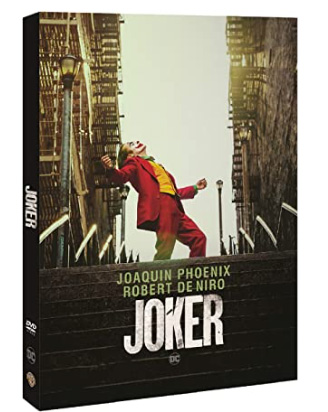
Joker
Synopsis
Arthur Fleck is a struggling comedian living in Gotham City, where poverty, inequality and indifference shape everyday life. Working as a clown and caring for his ill mother, he struggles with mental health problems and repeated humiliation. As his circumstances deteriorate, Arthur becomes increasingly isolated and begins to lose his connection with reality. His transformation into the criminal figure known as the Joker coincides with growing unrest throughout the city.
The Making of the Film
Joker was developed by director Todd Phillips and screenwriter Scott Silver as a character study centred on one of DC Comics' most famous villains. Rather than following the conventional structure of a superhero film, the filmmakers wanted to create a dark psychological drama about social alienation and personal collapse. The project drew inspiration from American cinema of the 1970s and 1980s, particularly character-driven films exploring loneliness, violence and urban decay. Martin Scorsese's Taxi Driver and The King of Comedy are frequently cited as important influences on the film's atmosphere and narrative approach. Joaquin Phoenix was selected to play Arthur Fleck, bringing an intense physical and psychological transformation to the role. The filmmakers created a fictional Gotham City that reflects the social tensions and economic difficulties of late twentieth-century urban America. The story was deliberately designed as a standalone interpretation rather than a direct adaptation of a specific comic-book storyline. Its release generated considerable discussion about the relationship between cinema, social violence and the portrayal of disturbed characters.
Critical Reception
Professional Reviews: Critics widely praised Joaquin Phoenix's performance, particularly his physical transformation and ability to communicate Arthur Fleck's emotional instability. The film's cinematography, production design and musical atmosphere also received strong recognition. Some reviewers admired its ambition as a dark character study, while others criticised its apparent dependence on earlier films and its treatment of mental illness. Its portrayal of social alienation and violence generated extensive debate among film critics.
Audience Reception: Joker attracted enormous public interest and became a major international box-office success. Many viewers connected with its depiction of isolation, humiliation and the feeling of being ignored by society. Others found the film disturbing and questioned the way it presents its central character's transformation. The movie became a widely discussed cultural phenomenon, extending beyond the usual audience for comic-book adaptations.
Awards: Joker won the Golden Lion at the Venice International Film Festival, an important achievement for a comic-book-inspired production. At the Academy Awards, Joaquin Phoenix won Best Actor and Hildur Guðnadóttir won Best Original Score. The film received eleven Oscar nominations in total, including Best Picture and Best Director. Its awards success confirmed its position as one of the most prominent and debated films of 2019.
Behind-the-Scenes Facts
Director's Inspirations: Todd Phillips drew inspiration from character-driven dramas of the 1970s and 1980s rather than conventional superhero cinema. Taxi Driver and The King of Comedy were particularly important references for the depiction of an isolated man whose frustrations gradually become destructive. The director wanted Gotham to feel recognisable as a city marked by inequality, deteriorating public services and social tension. Joaquin Phoenix also contributed ideas to the character's physical behaviour and psychological development.
Production Challenges: Joaquin Phoenix underwent a significant physical transformation for the role, losing a substantial amount of weight under professional supervision. The production also required careful work on the character's distinctive movements, laughter and appearance. Recreating a grimy version of Gotham involved detailed location work and extensive production design. The film's subject matter required a deliberate approach to violence and mental illness, both of which were central to its dramatic impact.
A Particular Scene: Arthur's improvised dance in a public bathroom became one of the film's defining moments. The sequence was developed with input from Joaquin Phoenix and composer Hildur Guðnadóttir, whose music helped establish the character's emotional state. Rather than relying on dialogue, the scene uses movement to show Arthur beginning to accept a new identity. Its unsettling atmosphere marks an important turning point in his transformation.
Casting Initially Considered: Leonardo DiCaprio was reported to have been considered during the early development of the project, although no casting agreement was reached. Joaquin Phoenix eventually became the filmmakers' preferred choice for the role. His involvement was central to the decision to make the story a psychologically focused character drama. Robert De Niro was also cast in a significant supporting role, creating a deliberate connection with the films that influenced the project.
Themes Explored
Social alienation is at the heart of Joker, showing how a person can become increasingly disconnected from the world around him. Arthur experiences poverty, humiliation and a lack of meaningful social support, all of which contribute to his deterioration. The film explores mental illness while questioning the consequences of a society that fails to provide adequate care. It also examines the relationship between personal responsibility and the social conditions that influence individual behaviour. The contrast between wealthy citizens and struggling residents gives Gotham a strong political dimension. Humiliation and the desire for recognition become powerful motivations in Arthur's transformation. The film also investigates the construction of identity, as Arthur gradually abandons the person he once tried to become. Ultimately, Joker presents a disturbing portrait of resentment, violence and the search for belonging.
Ending Explained
The final scenes take place after Arthur has become a symbol of rebellion for parts of Gotham's population. His appearance on a television programme turns a private psychological breakdown into a public spectacle. During the broadcast, Arthur openly rejects the social rules that he believes have humiliated him and kills Murray Franklin. The resulting unrest transforms him into an icon for a movement he does not fully control. Later, he appears to embrace the Joker identity while being celebrated by the crowds in the streets. The final sequence in the psychiatric institution introduces uncertainty about the reliability of the story, suggesting that some events may have been imagined or distorted. The film does not provide a definitive explanation of every detail, leaving viewers to question how much of Arthur's account can be trusted. This ambiguity reinforces the themes of unreliable perception and psychological instability. The ending leaves Arthur transformed into a symbol whose meaning extends beyond his individual life.
Meaning of the Title
The title Joker refers to the criminal identity that Arthur Fleck gradually adopts. In the beginning, the word is associated with his work as a professional clown, a role that requires him to entertain others despite his personal suffering. As the story progresses, the smiling mask becomes a symbol of the distance between his public appearance and inner distress. The Joker identity represents his rejection of the social expectations that have repeatedly humiliated him. It also connects the film to the larger DC Comics universe while offering a different interpretation of the character's origins. The title is deliberately simple because the transformation itself is the central subject of the narrative. It suggests both a theatrical performance and a dangerous disruption of social order. By the end, Joker has become the name of a figure who is simultaneously a criminal, a public symbol and an expression of Gotham's unrest.
Original Soundtrack
The score by Icelandic composer Hildur Guðnadóttir is one of the film's most distinctive elements. Built around dark cello textures and unsettling orchestral sounds, it reflects Arthur Fleck's psychological deterioration. The music often develops gradually, creating tension without relying on conventional action-film cues. Guðnadóttir's work received the Academy Award for Best Original Score and the Golden Globe in the same category. Its restrained and deeply atmospheric approach became central to the film's identity.
Similar Films
- Taxi Driver (1976), a character study of isolation and urban alienation.
- The King of Comedy (1982), a dark exploration of obsession and the desire for fame.
- American Psycho (2000), a psychological portrait of violence and social appearances.
- Nightcrawler (2014), a disturbing study of ambition and moral collapse.