

 Français
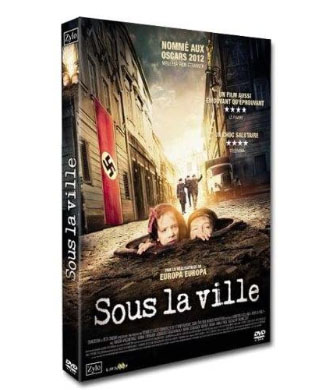
In Darkness
Synopsis
Set during the Nazi occupation of Poland in 1943, a petty criminal and sewer worker in the city of Lvov discovers a group of Jewish refugees hiding in the city sewers to escape impending deportation to concentration camps. Initially motivated purely by financial gain, the cynical worker agrees to hide and feed them in exchange for cash and valuables. However, as months stretch into years and the brutal occupation tightens its grip, his mercenary arrangement transforms into a profound moral commitment to protect his charges at the risk of his own life. Their claustrophobic underground existence becomes a testament to human survival and redemption.
The Making of the Film
Director Agnieszka Holland adapted the powerful historical drama from Robert Marshall's non-fiction book 'In the Sewers of Lvov' and actual historical survivor accounts. The inspiration stemmed from wanting to portray the harrowing, claustrophobic reality of Holocaust survival through an unexpected, morally complex protagonist. The production team aimed to construct a stark, authentic war drama shot on location in real sewer systems in Poland and Germany. The script focused heavily on moral transformation amidst extreme darkness.
Critical and Reception
Professional critics heaped widespread critical acclaim upon the film, praising its gripping tension, gritty realism, Robert Więckiewicz's powerhouse lead performance, and Holland's masterful direction. Audiences and international festivals embraced the historical drama warmly, earning an Academy Award nomination for Best Foreign Language Film. Reviewers noted that the film offered a harrowing yet ultimately uplifting portrayal of human resilience. Today, it is universally celebrated as a major work of Holocaust cinema.
Filming Anecdotes
Director Agnieszka Holland drew inspiration from historical survivor testimonies, classic European war cinema, and documentary realism. Production faced brutal physical challenges shooting on location in freezing, cramped, and muddy sewer sets constructed in Poland and Germany. During the subterranean water and hiding sequences, the cast and crew endured harsh damp conditions to maintain raw authenticity. The studio fully supported Holland's uncompromising historical vision.
Themes Explored
The film explores moral redemption, Holocaust survival, human altruism, wartime betrayal, and claustrophobia. It examines how a morally compromised individual discovers profound nobility under extreme pressure. Underground concealment serves as the primary metaphor for survival. Additionally, World War II Polish history provides a grim backdrop.
Explanation of the Ending
The narrative concludes with the Soviet liberation of Lvov in 1944, allowing the surviving Jewish refugees to finally emerge from the dark sewers into the blinding sunlight, reuniting with their savior who stands bruised, filthy, and triumphant in having successfully kept them alive. Though he faces initial misunderstanding from soldiers, the survivors embrace him with overwhelming gratitude as their life-saving protector. The final text cards detail the subsequent lives of the survivors. The resolution provides a deeply moving, cathartic closure to the historical drama.
Meaning of the Title
The Polish title 'W ciemności' and international English title 'In Darkness' refer literally to the pitch-black, subterranean sewer network where the refugees hid for over a year, while metaphorically representing the moral darkness of the Nazi occupation. It signifies concealment, underground survival, and moral awakening. The name creates a striking, atmospheric hook for a historical drama. It captures the primary setting of the narrative.
There are no recent major developments or active news items regarding this file.