

 Français
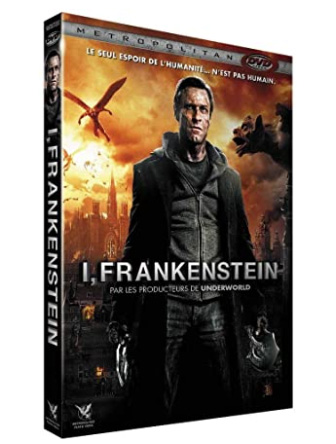
I, Frankenstein
Synopsis
Two centuries after his creation, Adam, the monster made by Victor Frankenstein, is still alive and wandering the earth. He is drawn into a secret war between two immortal factions: an order of gargoyles who protect humanity and an army of demons who want to destroy it. The demon prince Naberius wants to use Adam's unique body to create an army of reanimated corpses. Adam must decide whose side he is on and whether he is a monster or a man.
The Making of the Film
I, Frankenstein is based on the graphic novel of the same name by Kevin Grevioux, who also co-created the Underworld series. The story reimagines Mary Shelley's creature as an action hero caught in a hidden war between angels and demons. Stuart Beattie, who had written the first Pirates of the Caribbean film, wrote the screenplay and made his directorial debut. Aaron Eckhart was cast as Adam, and Bill Nighy played the villain Naberius. Yvonne Strahovski and Miranda Otto joined the cast as a scientist and a queen of the gargoyles. The film was produced by Lakeshore Entertainment and shot in Australia. It was released in January 2014.
Reviews and reception
Summary of professional reviews
The film was savaged by critics, who called it noisy, confusing and generic. Many said that its attempt to blend gothic horror and superhero action was unconvincing. A few reviewers noted that Aaron Eckhart and Bill Nighy did their best with the material.
Audience reception
The film was a commercial flop, earning about 71 million dollars worldwide on a budget of around 65 million. Audiences largely stayed away, and it quickly disappeared from theaters. Some fans of fantasy action later discovered it on home video. It has become an example of a failed attempt to start a franchise.
Awards and nominations
I, Frankenstein did not receive any significant awards. It was nominated for a few negative awards that highlight the year's worst films. Its only notable recognition was in the visual effects community for its demon designs.
Filming anecdotes
Director's inspirations
Beattie was drawn to the idea of giving a classic literary monster a new life as a modern hero. He was influenced by gothic fantasy and by action franchises of the 2000s. The film's production design combines Gothic cathedrals with futuristic effects.
Production difficulties
The film relied heavily on visual effects for its gargoyles and demons, which made post-production long and costly. It was shot in Melbourne, which doubled for a nameless European city. The mixture of horror, fantasy and action was difficult to balance in the final cut.
Anecdote about a particular scene
The film's opening features a voice-over that summarizes Mary Shelley's story in a few minutes before moving on to the new war. The fight scenes in which gargoyles turn into stone and then burst into flame are among the film's signature images. Aaron Eckhart reportedly trained extensively to perform the martial arts stunts.
Themes explored
The film is about identity and the question of what makes a person human. Adam, created from dead bodies, struggles to find his place in the world. It also explores the eternal battle between good and evil and the idea that a creature's nature depends on his choices. Immortality and loneliness play a role in his character. The story touches on the dangers of scientific hubris, a theme borrowed from Shelley's novel. It is above all an action film with a gothic flavor.
Ending explained
Adam defeats Naberius and destroys the research that would have allowed the demons to reanimate the dead. The gargoyles recognize him as a worthy ally. Adam decides to embrace his role as a protector of humanity. The film ends with him as a lone hero, ready for more adventures. It leaves the door open for a sequel that never happened.
Meaning of the title
The title I, Frankenstein is a play on Mary Shelley's novel, with the creature claiming the name of his creator. It recalls the way the monster is often wrongly called Frankenstein. The first-person phrasing also suggests that the story is told from the creature's perspective. It emphasizes the idea of identity.
Similar Films
- Underworld (2003): a gothic action film about vampires and werewolves.
- Van Helsing (2004): a monster-hunter story featuring classic creatures.
- Frankenstein (1931): the original film adaptation of the monster story.
- Hellboy (2004): a supernatural hero fighting demons.
- Constantine (2005): a dark fantasy about the battle between heaven and hell.