

 Français
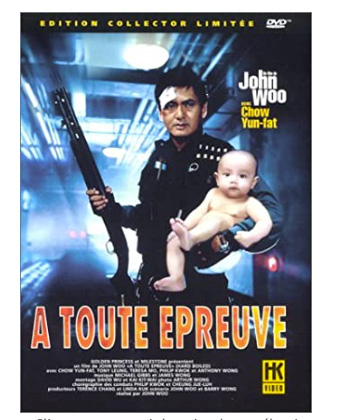
Hard Boiled
Synopsis
Inspector Tequila Yuen is a tough Hong Kong police officer whose investigation into an illegal firearms network takes a devastating turn when his partner is killed during a violent confrontation. Determined to bring the criminal organization to justice, Tequila becomes involved in a dangerous operation that leads him to an undercover officer named Alan. Working secretly inside the gang, Alan has earned the trust of its ruthless leaders while struggling to preserve his own identity. The two policemen gradually discover that their mission will require extraordinary courage as they confront an increasingly powerful criminal organization.
The film's origins
John Woo developed Hard Boiled as an ambitious action thriller that would push the visual possibilities of Hong Kong cinema to new heights. Following the success of The Killer, the director wanted to create a more expansive production featuring elaborate gun battles and an unusually intense police story. The screenplay was developed with the participation of Barry Wong, combining the conventions of the crime thriller with Woo's recurring interest in loyalty, sacrifice and moral responsibility. The story was also conceived as an opportunity to explore the difficult relationship between police officers and criminals operating within the same violent environment. Chow Yun-fat was brought back to collaborate with Woo after their earlier successful films together. Tony Leung Chiu-wai was selected for the role of the undercover officer, providing an emotional counterbalance to Chow Yun-fat's charismatic police inspector. The filmmakers wanted to create a film whose action sequences would feel both spectacular and carefully choreographed. The project became one of the defining examples of Hong Kong heroic bloodshed cinema.
Critical reception and audience response
Professional reviews: Critics praised the film for its extraordinary action choreography, inventive camera movements and relentless energy. John Woo's direction was widely recognized for transforming conventional gunfights into carefully orchestrated cinematic sequences. Chow Yun-fat received particular attention for his charismatic performance as Inspector Tequila. Tony Leung Chiu-wai also earned praise for bringing emotional complexity to the undercover officer. Some reviewers considered the violence excessive, but the film's technical achievements were widely admired.
Audience reception: The film became a landmark among fans of Hong Kong action cinema and developed a strong international following. Its spectacular set pieces, particularly the extended hospital sequence, became legendary among action enthusiasts. Although its initial commercial performance was not as strong as some of Woo's earlier productions, its reputation grew considerably through international distribution and home video releases. It is now frequently regarded as one of the greatest action films of its era.
Awards: The film received recognition at the Hong Kong Film Awards, particularly for its editing. John Woo and his collaborators were acknowledged for their technical work and the remarkable visual rhythm of the production. The film also attracted attention at regional international festivals. Its influence on action filmmaking became one of its most important lasting achievements.
Behind-the-scenes stories
Director's inspirations: John Woo wanted to create an action film that combined the emotional intensity of classical tragedy with the spectacular movement of Hong Kong crime cinema. He was influenced by the relationship between friendship, professional duty and personal sacrifice. The director also sought to create a more complex police story by introducing an undercover officer whose loyalties become increasingly difficult to maintain.
Production challenges: The elaborate action sequences required extensive planning and coordination between performers, stunt teams and technical departments. The filmmakers used numerous practical effects, including controlled explosions, squibs and carefully choreographed gunfire. The production also had to maintain continuity across complex sequences involving large numbers of performers and multiple camera positions. The enormous hospital set piece required particularly detailed preparation and became one of the most demanding action sequences of the film.
Memorable scene: The famous hospital sequence is widely considered one of the greatest action set pieces in Hong Kong cinema. The camera follows Tequila and Alan through corridors and rooms as they fight their way through an army of criminals. The extended movement creates the impression of a continuous action shot, even though the sequence uses carefully concealed editing techniques. The combination of explosions, gunfire and physical choreography gives the scene an extraordinary sense of momentum.
Original casting: Chow Yun-fat was cast as Inspector Tequila Yuen, while Tony Leung Chiu-wai played Alan, the undercover police officer. Anthony Wong portrayed Johnny Wong, the criminal leader. Teresa Mo also appears as Teresa Chang, while Philip Chan plays Superintendent Pang. The casting brought together several important figures from Hong Kong cinema.
Themes explored
The film explores loyalty, friendship and the difficult moral choices associated with undercover police work. Alan must maintain his criminal identity while trying to remain faithful to his responsibilities as a police officer. The relationship between Tequila and Alan develops into a partnership based on mutual trust and shared danger. The film also examines the destructive consequences of violence and the human cost of organized crime. Professional duty frequently conflicts with personal feelings, forcing the characters to make difficult decisions. Sacrifice is another central theme, particularly through the willingness of the protagonists to risk their lives for others. The contrast between law enforcement and criminal organizations is complicated by the emotional similarities between individuals on both sides. Ultimately, the film presents friendship and moral commitment as the only meaningful responses to a world dominated by violence.
Ending explained
The final confrontation takes place inside the criminal organization's headquarters, where Tequila and Alan must face an overwhelming number of armed enemies. Their cooperation becomes essential as they attempt to rescue innocent people and bring the organization down. Alan's undercover mission reaches its conclusion when his true identity can no longer remain hidden. The two officers must rely on their trust in one another to survive the final battle. The film resolves the central conflict through an explosive confrontation that exposes the criminal organization's brutality. Tequila's determination and Alan's sacrifices demonstrate the strength of their partnership. The conclusion emphasizes the human cost of police work and the importance of loyalty under extreme pressure. Rather than offering a purely triumphant ending, the film leaves viewers with the lasting impression of a dangerous world in which survival often requires extraordinary personal sacrifice.
Meaning of the title
The title Hard Boiled refers to the traditional image of a tough, emotionally hardened police officer who remains determined despite constant exposure to violence. The expression is also associated with the hard-boiled crime fiction tradition, in which morally complicated characters operate within dangerous urban environments. Inspector Tequila embodies this familiar archetype through his stubbornness, courage and refusal to surrender. However, the film also introduces a more vulnerable dimension through its characters' friendships and personal sacrifices. The title therefore reflects both the tough exterior of its protagonists and the emotionally difficult world in which they operate. It captures the uncompromising tone of the production and its connection to classic crime storytelling.
The original music was composed by Romeo Díaz and contributes to the film's energetic crime-thriller atmosphere. The score supports the rapid rhythm of the action sequences while providing a dramatic counterpoint to the characters' emotional struggles. Its musical approach complements the film's combination of tension, suspense and spectacular violence. Although the soundtrack is less internationally celebrated than the film's action choreography, it remains an integral part of the production. The overall sound design, including the powerful gunfire and explosions, also plays an essential role in creating its distinctive cinematic impact.
Similar films
The Killer, directed by John Woo, is an essential companion film featuring Chow Yun-fat in another morally complex action role. A Better Tomorrow explores loyalty and sacrifice within Hong Kong's criminal underworld. Bullet in the Head offers a darker and more tragic exploration of friendship and violence. City on Fire combines undercover police work with intense criminal confrontations. Infernal Affairs presents another complex story about police officers and criminals living under false identities. Police Story by Jackie Chan combines spectacular action choreography with police investigations. Point Break explores the relationship between an undercover officer and the criminal community he infiltrates. Lethal Weapon offers another memorable partnership between police officers confronting dangerous criminal organizations. These films share themes of loyalty, undercover operations, personal sacrifice and high-intensity action.