

 Français
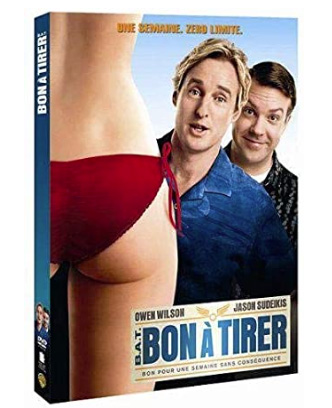
Hall Pass
Synopsis
Rick and Fred are two longtime friends whose marriages have settled into comfortable routines. Their wives decide to give them an unusual gift: one week of freedom from all marital responsibilities, during which they can do whatever they want without consequences at home. At first, the two men are convinced that this opportunity will transform their love lives. However, their attempts to enjoy their new independence quickly turn into a series of embarrassing failures and unexpected discoveries.
The Making of the Film
Hall Pass was developed by brothers Peter and Bobby Farrelly, filmmakers known for their irreverent comedies about relationships, social awkwardness and male friendship. The central idea revolves around a question that many couples might jokingly consider: what would happen if a married person were temporarily allowed to behave as though they were single? The Farrelly brothers turned this premise into a comedy about temptation, fidelity and the gap between fantasy and reality. The screenplay was written by Pete Jones, with contributions from the Farrelly brothers and other collaborators. Rather than presenting infidelity as a simple source of excitement, the film explores the consequences of taking romantic freedom for granted. Owen Wilson and Jason Sudeikis were cast as the two husbands at the centre of the story. Their contrasting comic personalities helped shape the dynamic between Rick and Fred. The project continued the directors' interest in characters whose confidence often exceeds their actual abilities.
Critical Reception
Professional Reviews
Professional critics generally gave Hall Pass mixed reviews. Some appreciated the Farrelly brothers' willingness to return to the broad, provocative comedy that had made their earlier films popular. The performances of Owen Wilson and Jason Sudeikis were frequently considered among the film's strongest elements. Other reviewers found the humour too dependent on sexual jokes, crude situations and predictable misunderstandings. Several critics also felt that the story struggled to balance its outrageous comedy with its more serious observations about marriage. The film was therefore viewed as entertaining in places but less consistently inventive than the directors' best-known work.
Audience Reception
Audience reactions were divided, with some viewers enjoying the energetic performances and deliberately outrageous situations. The premise appealed particularly to fans of adult-oriented romantic comedies and the Farrelly brothers' distinctive humour. Other viewers considered the jokes repetitive or found the characters difficult to sympathise with. The film nevertheless attracted attention from audiences familiar with Owen Wilson and Jason Sudeikis. Its commercial performance demonstrated that the premise had a recognisable mainstream appeal, even if it did not become one of the directors' most celebrated comedies.
Awards
Hall Pass did not receive major nominations at the Academy Awards or the principal international film festivals. It was not widely recognised by major critics' associations during the awards season. Its visibility came primarily from its theatrical release and its established comedy cast. The film's reception was therefore driven more by audience interest than by an awards campaign.
Behind the Scenes
Director Inspirations
Peter and Bobby Farrelly returned to a style of comedy built around uncomfortable situations, physical humour and characters who make increasingly disastrous decisions. Their interest lay in turning a familiar relationship fantasy into a chain of comic consequences. The film also reflects their recurring fascination with the difference between how people imagine themselves and how they behave in real life. The directors used exaggerated situations to examine the insecurities that can exist even in long-established marriages.
Production Challenges
One of the production challenges was finding the right balance between provocative comedy and a believable portrait of married life. The story required the audience to understand why the two wives would agree to such an unusual arrangement. The filmmakers also had to maintain a comic rhythm across several parallel situations involving the husbands and their families. The cast needed to make the increasingly absurd situations feel grounded in recognisable human behaviour. The film was shot primarily in Georgia, including locations around Atlanta.
Casting
Owen Wilson and Jason Sudeikis were selected to play Rick and Fred, while Jenna Fischer and Christina Applegate portrayed their wives. The casting brought together performers with different comic styles, allowing the two couples to develop distinct personalities. Richard Jenkins also appears as Coakley, a friend whose advice encourages the men to take full advantage of their week of freedom. No sufficiently documented original casting plan needs to be added here.
Themes
The film examines fidelity, temptation and the expectations that people place on marriage. Its central premise asks whether freedom from responsibility necessarily leads to happiness. Rick and Fred initially imagine that a week without marital restrictions will be an opportunity for unlimited pleasure. Their experiences gradually reveal that romantic relationships cannot be reduced to a list of rules or permissions. The story also explores male friendship, peer pressure and the tendency to exaggerate one's own attractiveness. Another important theme is the difference between fantasy and genuine emotional connection. The wives are not simply obstacles to the husbands' adventures; they also have their own frustrations and expectations. By turning a supposedly liberating arrangement into a comic ordeal, the film suggests that commitment can be more rewarding than the fantasies of unrestricted freedom.
Ending Explained
By the end of the week, Rick and Fred have discovered that their freedom has not delivered the effortless romantic adventures they imagined. Their encounters with other women expose their insecurities and make them reconsider what they value in their marriages. The arrangement also forces their wives to confront their own feelings about trust and commitment. The final developments bring the couples back to the central question of whether their relationships are worth preserving. Rather than presenting marriage as a perfect institution, the film suggests that lasting relationships require honesty, communication and mutual understanding. Rick and Fred learn that the excitement of an imagined alternative life does not necessarily compare with the emotional bond they already have. The conclusion restores the importance of personal responsibility after a week spent trying to escape it.
Meaning of the Title
The title Hall Pass refers to a permission slip that allows a student to leave a classroom temporarily. In the film, the expression becomes a metaphor for a temporary exemption from the rules of marriage. The wives give their husbands a week in which they are supposedly free to behave as single men. The title captures the absurdity of treating a serious relationship as though it could be suspended by a simple authorisation. It also suggests that the freedom offered by the arrangement comes with limits and consequences. The expression is deliberately playful, turning a familiar school-related phrase into an adult relationship joke. It summarises the film's central comic premise in just two words.
Similar Films
- The Heartbreak Kid (2007), another comedy about marriage, romantic expectations and disastrous decisions.
- Wedding Crashers (2005), which explores male friendship and the pursuit of romantic adventures.
- There's Something About Mary (1998), an earlier Farrelly brothers comedy built around awkward situations and outrageous humour.
- Couples Retreat (2009), a comedy about relationships, marital difficulties and the search for renewed intimacy.