

 Français
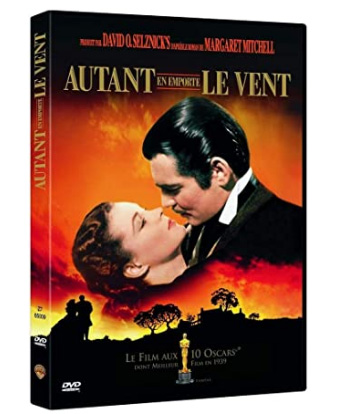
Gone with the Wind
Synopsis
Set in the American South during the tumultuous backdrop of the Civil War and Reconstruction era, Scarlett O Hara is a strong-willed, spoiled plantation belle living on Tara who learns the harsh realities of war. Desperately pining for Ashley Wilkes, a neighboring landowner married to gentle Melanie, Scarlett ignores the romantic advances of the cynical, dashing Rhett Butler. As Union troops march through Georgia and burn Atlanta, Scarlett fights with fierce determination to save Tara from starvation and ruin. Her turbulent romance with Rhett unfolds against a sweeping historical canvas.
The Making of the Film
Producer David O. Selznick purchased the film rights to Margaret Mitchell bestselling 1936 historical novel for a record sum before it was even published. Director Victor Fleming took over the chaotic production after original director George Cukor was fired. Selznick wanted to create the most lavish, monumental Technicolor epic in Hollywood history.
Critical Reception
Critics universally acclaimed Gone with the Wind upon its release, praising its breathtaking Technicolor cinematography, grand historical scale, and powerhouse performances by Vivien Leigh and Clark Gable. Reviewers lauded the film for capturing the romanticized mythology of the antebellum South and epic wartime destruction. It remains an all-time cinematic milestone.
Public reception was explosive and unprecedented, turning the historical epic into the highest-grossing film of all time when adjusted for inflation. Audiences flooded theaters for decades to witness Scarletts resilience and Rhett Butler charm. Its cultural impact is monumental.
The film won a then-record ten Academy Awards, including Best Picture, Best Director for Victor Fleming, Best Actress for Vivien Leigh, and Best Supporting Actress for Hattie McDaniel, who made history as the first African American Oscar winner. Its legacy is immense.
Behind-the-Scenes Stories
Director Victor Fleming drew inspiration from Margaret Mitchell historical novel, Civil War photography, and grand Hollywood traditions. He chose expansive Technicolor soundstages and outdoor backlot sets in Culver City to recreate burning Atlanta and Tara plantation. His direction pushed Vivien Leigh to endure grueling, exhausting shoot schedules.
Production faced legendary turmoil, including massive director shake-ups, script rewrites by numerous writers including F. Scott Fitzgerald, and intense battles with censorship boards over Rhett Butler famous profanity. Vivien Leigh brought fierce determination to Scarlett O Hara. Clark Gable brought roguish charm to Rhett.
A memorable sequence features Scarlett walking desolate through the burning, smoke-filled train yards of Atlanta surrounded by thousands of wounded soldiers. The scene showcases breathtaking Hollywood studio scale and practical pyrotechnics. Leigh performance anchored the epic tragedy.
The casting process for Scarlett O Hara became one of the most famous talent searches in Hollywood history, with over fourteen hundred actresses auditioning before British newcomer Vivien Leigh was selected late in pre-production. Clark Gable was the absolute first choice for Rhett Butler.
Themes Explored
The film explores survival, romantic obsession, the collapse of the Old South, resilience, and war trauma. It highlights how fierce personal determination can rebuild shattered lives. Passion defies historical tragedy.
NULL
Meaning of the Title
The title refers metaphorically to the romanticized, aristocratic way of life in the antebellum American South that was swept away forever by the Civil War. It highlights historical transience.
NULL
NULL
Similar Films
Other similar films include Doctor Zhivago, Titanic, and The Last of the Mohicans.