

 Français
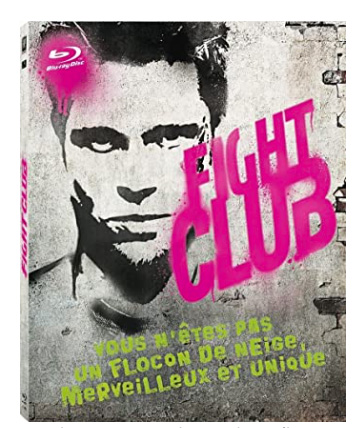
Fight Club
Synopsis
A disillusioned office worker suffering from chronic insomnia meets Tyler Durden, a charismatic and unconventional soap salesman. After his apartment is destroyed, he moves into Tyler's dilapidated house and discovers a new way of escaping the emptiness of modern life. Together, they create an underground fighting club where men can experience physical pain, release their frustrations and regain a sense of identity. But as the movement grows into something far more radical, the narrator begins to question Tyler's true intentions and even his own perception of reality.
The Making of the Film
David Fincher adapted the film from Chuck Palahniuk's 1996 novel of the same name. The book attracted attention for its dark humour, unconventional narrative and criticism of consumer culture. Fincher was particularly interested in its exploration of male identity, alienation and the search for meaning in a society dominated by advertising and material possessions. The director saw an opportunity to create a film that would challenge conventional storytelling while retaining the novel's provocative spirit. Screenwriter Jim Uhls worked on the adaptation, transforming the book's fragmented narrative into a cinematic structure built around an increasingly unreliable narrator. Fincher also wanted the visual style to reflect the protagonist's troubled mental state, using deliberately oppressive interiors, unusual camera movements and striking colour contrasts. The production brought together a cast capable of balancing psychological intensity with biting comedy. Although the film initially divided audiences and critics, its unconventional approach eventually helped it become one of the most discussed American films of its era.
Critical Reception
Professional critical response: Upon its release, Fight Club received sharply divided reviews. Some critics praised Fincher's bold direction, inventive visual language and fearless treatment of contemporary anxieties. Others considered its violence excessive or questioned whether its satire was sufficiently clear. Edward Norton and Brad Pitt were widely recognised for their performances and the chemistry between their characters. Over time, many critics reassessed the film and highlighted its complexity, dark humour and unusual narrative construction.
Audience reception: The film initially performed below the commercial expectations of its studio in the United States. However, its subsequent release on home video introduced it to a much wider audience. Viewers were fascinated by its memorable dialogue, unexpected revelations and unconventional philosophy. Its themes generated countless discussions about masculinity, consumerism and personal freedom. It gradually developed a devoted following and became a major cult film.
Awards and recognition: Fight Club received an Academy Award nomination for Best Sound Effects Editing. It also earned recognition from several critics' organisations and professional film associations. Its technical achievements, particularly its editing, sound design and visual effects, attracted considerable attention. Although it did not dominate the major awards ceremonies, its artistic influence has proved much greater than its initial awards record. The film is now frequently included in discussions of the most influential American films of the late 1990s.
Behind-the-Scenes Stories
Director's inspirations: David Fincher drew inspiration from the novel's criticism of consumer society and its exploration of modern alienation. He wanted the film to feel like an assault on the comfortable images and predictable rhythms of mainstream cinema. Its visual language reflects the narrator's psychological instability, with deliberately uncomfortable locations and restless camera movements. Fincher also used dark comedy to prevent the story from becoming a straightforward social manifesto.
Production challenges: The production required careful coordination between elaborate sets, practical effects and complex visual sequences. The filmmakers created the decaying house occupied by the two main characters as a physical expression of their rejection of conventional comfort. Fincher was known for his meticulous approach and his insistence on numerous takes. The actors had to maintain emotional and physical intensity throughout a demanding shooting schedule. The studio also faced the challenge of marketing a film whose subject matter was difficult to classify.
A memorable scene: The opening sequence takes viewers on a spectacular journey through the narrator's brain before emerging into the outside world. This combination of microscopic imagery and computer-generated movement immediately establishes the film's unusual visual identity. Another memorable moment involves the making of soap, an activity that becomes central to the film's symbolism. These scenes connect ordinary consumer products with the characters' increasingly destructive philosophy. The contrast between everyday objects and disturbing events is one of the film's defining characteristics.
Originally considered casting: The principal roles ultimately went to Edward Norton and Brad Pitt, whose contrasting screen personalities became essential to the film. The casting process involved discussions about how to balance the narrator's vulnerability with Tyler's confidence and charisma. The production also assembled a strong supporting cast, including Helena Bonham Carter and Meat Loaf. Their performances helped create the strange and unsettling social world surrounding the fighting club.
Themes Explored
Fight Club examines alienation, consumerism and the difficulty of constructing an identity in a society that defines success through possessions and professional status. The fighting club becomes a distorted attempt to rediscover physical existence in a world where people feel disconnected from their bodies and emotions. The film also questions traditional ideas of masculinity, presenting male aggression as both an expression of frustration and a dangerous substitute for genuine human connection. Its exploration of identity becomes increasingly disturbing as the narrator loses control over the boundaries between reality and imagination. Beneath its provocative surface, the story raises questions about loneliness, self-destruction, social conformity and the desire to belong.
Explaining the Ending
The final revelation establishes that Tyler Durden is not an independent person but a personality created by the narrator's fractured mind. The two characters represent conflicting aspects of the same individual: one is passive, anxious and trapped by routine, while the other embodies rebellion, confidence and destructive freedom. The narrator gradually understands that Tyler has been acting independently of his conscious control. Project Mayhem, which initially appeared to be a rebellion against consumer society, has become an authoritarian organisation demanding absolute obedience. By confronting Tyler, the narrator attempts to reclaim control over his own identity. His decision to shoot himself is presented as a desperate attempt to destroy the imaginary personality controlling him, rather than as a conventional act of violence against another person. The final image of the narrator and Marla watching the collapsing financial buildings leaves the consequences of Project Mayhem deliberately unsettling. The ending does not offer a simple victory, but shows the protagonist beginning to accept responsibility for his actions.
The Meaning of the Title
The title Fight Club refers directly to the underground organisation founded by the two central characters. At first, it describes a secret place where men meet to fight and escape their ordinary lives. As the story develops, however, the club becomes a symbol of a much broader revolt against social expectations and consumer culture. The word fight also reflects the narrator's internal struggle with his identity, his fears and his loss of control. The title therefore refers both to a physical activity and to the psychological conflict at the heart of the story.
The soundtrack features a distinctive score by the Dust Brothers, whose electronic textures, samples and unconventional rhythms reinforce the film's restless atmosphere. Rather than relying on traditional orchestral music, the composers created a sound that reflects urban alienation and psychological instability. The closing song, Where Is My Mind? by Pixies, became particularly associated with the film and its final images.
Similar films include American Psycho, directed by Mary Harron, which explores consumerism and disturbed identity; The Machinist, directed by Brad Anderson, which follows a man experiencing severe psychological deterioration; Taxi Driver, directed by Martin Scorsese, which examines isolation and alienation; and A Clockwork Orange, directed by Stanley Kubrick, which questions violence, social control and individual freedom.