

 Français
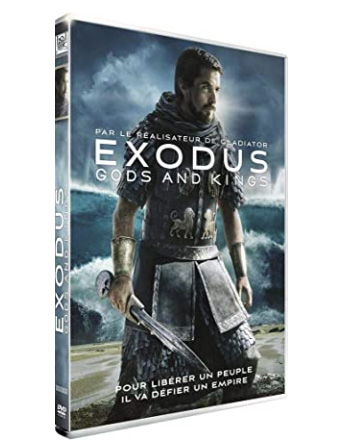
Exodus: Gods and Kings
Synopsis
Raised as a prince of Egypt alongside his brother Ramesses, Moses discovers his true Hebrew heritage and his divine calling. Cast into exile, he later returns to Egypt to confront Pharaoh Ramesses and demand the liberation of hundreds of thousands of enslaved Israelites. Backed by divine plagues and miracles, Moses leads his people on an epic and perilous exodus toward the Promised Land. A monumental clash of empires and faith unfolds across the ancient world.
The Making of the Film
Director Ridley Scott was inspired to tackle the classic biblical epic after reading about the historical and geopolitical complexities surrounding the story of Moses and the Exodus. He wanted to approach the narrative with a fresh, grounded perspective, blending grand cinematic spectacle with realistic historical interpretations of the plagues and miracles. Inspiration was also drawn from ancient Egyptian architecture, historical texts, and traditional scriptural accounts. 20th Century Fox financed the large-scale production to deliver a visually stunning cinematic spectacle for modern audiences.
Critical Reception
Professional critics gave the film mixed reviews, praising its breathtaking visual effects, grand production design, and Ridley Scott's ambitious scope. Many reviews highlighted Christian Bale's commanding lead performance as Moses and Joel Edgerton's intense portrayal of Pharaoh Ramesses. However, some critics felt the narrative pacing lagged during the middle acts and questioned certain creative interpretations of biblical events. Overall, it was received as a visually sumptuous yet dramatically uneven historical epic.
Public reception was moderate, with audiences enjoying the massive scale of the battle sequences, costume design, and the depiction of the Egyptian plagues. Spectators appreciated the darker, more grounded tone compared to classic cinematic adaptations like The Ten Commandments. While box office returns were solid internationally, controversies regarding casting choices sparked extensive public debate. Fans of historical epics generally found plenty of spectacle to enjoy on the big screen.
The film earned numerous technical award nominations, particularly recognizing its stellar costume design, set decoration, and visual effects artistry. The production design team received widespread industry praise for meticulously recreating ancient Egyptian monuments and cities on a massive scale. Its technical achievements remained a standout highlight of the production.
Filming Anecdotes
- The director drew inspiration from classical historical epics, ancient Egyptian art, and archaeological studies of the Ramesside period. He wanted the visual style to emphasize gritty realism, avoiding overly polished fantasy tropes in favor of tactile, dusty environments. Cinematic influences ranged from classic sword-and-sandal epics to modern historical war films. These artistic choices helped ground the mythical narrative in a believable historical context.
Production was massive in scale, utilizing expansive outdoor desert locations in Spain and Pinewood Studios in London for intricate indoor sets. Christian Bale and Joel Edgerton underwent rigorous physical training and sword-fighting preparation for months before principal photography began. Hundreds of extras were outfitted with custom-made historical armor and clothing to ensure the massive crowd scenes looked authentic. The physical demands of shooting under harsh desert sun conditions challenged the entire cast and crew.
One particularly memorable sequence involved the terrifying onslaught of the plagues upon Egypt, starting with the river turning to blood and swarms of locusts. This sequence required an intricate blend of practical animal handlers, special makeup effects, and massive digital visual enhancements. The actors had to perform amidst chaotic swarms of simulated insects and falling debris with intense concentration. Crew members often recalled this sequence as the most complex and logistically demanding part of the production.
The initial casting process sought high-profile international actors who could command the screen in large-scale dramatic roles. Christian Bale was Ridley Scott's top choice to portray Moses, bringing fierce intensity and psychological depth to the character. Joel Edgerton was cast as Ramesses, providing a complex and formidable antagonist rather than a one-dimensional villain. Supporting actors like Sigourney Weaver, Ben Kingsley, and Aaron Paul added further prestige to the sprawling ensemble.
Themes Explored
- Faith, divine intervention, and the relationship between humanity and higher powers.
- Freedom, oppression, and the universal struggle against tyranny and slavery.
- Brotherhood, betrayal, and the painful ideological divide between loved ones.
- Identity, destiny, and the burden of leadership.
Ending Explained
The climax features the dramatic parting of the Red Sea, where Moses and the Israelites successfully cross to safety while Pharaoh Ramesses' pursuing army is consumed by the rushing waters. Moses subsequently receives the Ten Commandments on Mount Sinai, solidifying the spiritual covenant between God and the liberated Hebrew people. In the final moments, Moses watches over the traveling caravan as they march onward toward the Promised Land, finding peace after a lifetime of turmoil. The film concludes on a triumphant note of freedom and spiritual renewal.
Title Significance
The title directly references the biblical event of the Exodus, highlighting the physical journey of the Israelites leaving bondage in Egypt. The subtitle "Gods and Kings" emphasizes the clash of mortal monarchs against divine celestial forces throughout the historical narrative.
Original Soundtrack
The soundtrack features a sweeping, majestic orchestral score composed by Alberto Iglesias that incorporates traditional Middle Eastern musical instruments and thunderous choral arrangements. The music enhanced the epic scale of the desert vistas and heightened the dramatic tension during the plagues and battle sequences. Critics frequently praised the score for providing an authentic cultural atmosphere to the historical epic.
Similar Films
- The Ten Commandments (1956)
- Gladiator (2000)
- The Prince of Egypt (1998)
- Noah (2014)
- Ben-Hur (1959)