

 Français
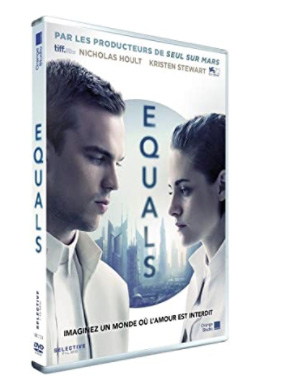
Equals
Synopsis
In a sleek, sterile future society, emotions have been eradicated and everyone lives in calm, orderly equality. Silas, a quiet illustrator, begins to feel something he has never felt before and discovers that he has contracted a condition called "Switched-On Syndrome". When he meets Nia, a colleague who is secretly suffering from the same condition, the two begin an illicit romance. As the authorities close in, they must choose between obedience and love.
The Making of the Film
Equals is a science-fiction romance directed by Drake Doremus, from a screenplay by Nathan Parker. The story belongs to the tradition of dystopian tales in which a society removes human feelings in the name of peace and stability. Doremus, whose earlier work such as Like Crazy focused on intimate romantic relationships, wanted to explore love in an extreme, futuristic context. The film premiered in competition at the Venice Film Festival in 2015 and was released more widely in 2016. Its minimalist, high-tech look was created using striking modern architecture in Japan.
Reviews and Reception
Summary of Professional Reviews
Reviews were mixed. Critics admired the film's striking visuals and its ambition, as well as the committed performances from Nicholas Hoult and Kristen Stewart. However, many felt the story was familiar and that its restrained tone kept the emotions at a distance.
Audience Reception
The film had a modest release and found its audience mainly among fans of dystopian sci-fi and romantic dramas. Viewers who enjoyed slow, atmospheric stories praised its mood and design. Others found it too slow and cold.
Filming Anecdotes
Director's Inspirations
Doremus has said that he wanted to make a story about the fragility of emotion and the danger of a world without feeling. The film's clean, white design was meant to represent a society that has erased everything messy about being human.
Production Difficulties
Because the film relies on subtle expression, the actors had to portray repressed emotions with very little dialogue. The team also had to build the futuristic world on a modest budget, using real locations instead of heavy special effects.
Themes Explored
Equals is a meditation on what it means to be human and whether a world without emotion is worth living in. It looks at conformity and control, showing how societies can suppress individuality in order to maintain order. Love is presented as both a disease and a cure, a dangerous force that gives life meaning. The film also touches on the nature of identity and the cost of freedom. In its quiet way, it argues that feeling, even when painful, is what makes us alive.
Ending Explained
In the final scenes, Silas and Nia manage to escape the controlling city and make their way toward the outside world. They find a place where emotions are not punished and where they can finally live as they are. The ending offers a hopeful but fragile note, suggesting that even in a cold society, love can survive. It is a gentle conclusion that emphasizes freedom over safety.
Meaning of the Title
The title refers to the society's ideal of perfect equality, where everyone is the same and no one stands out. It carries a bitter irony, since this equality has been achieved by erasing emotion and individuality. The word also describes the bond between the two lovers, who see each other as true equals.
Original Soundtrack
The film's moody, electronic score, composed by Dustin O'Halloran and Sascha Ring, adds an ethereal, melancholy atmosphere. The music works in harmony with the stark visuals to reflect the characters' suppressed emotions and slow awakening.
Similar Films
- Gattaca: a stylish dystopia about control and individuality.
- Never Let Me Go: a tender, tragic story in an unsettling society.
- Her: a quiet futuristic romance.
- Equilibrium: an action-driven tale of a world without feelings.