

 Français
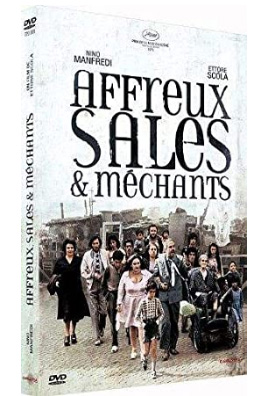
Down and Dirty
Synopsis
In the squalid, overcrowded shantytown slums on the outskirts of Rome, an extended peasant family lives under the tyrannical rule of their one-eyed patriarch, Giacinto Mazzatella. Giacinto keeps a massive stash of insurance payout money hidden in his shack, driving his greedy relatives to constantly plot murder and betrayal to steal it. Amidst bizarre daily chaos, poverty, and moral decay, family members scheme against each other in increasingly grotesque ways. The household remains locked in a relentless cycle of comical yet tragic survival.
The Making of the Film
Director and co-writer Ettore Scola conceived the biting satirical comedy to expose the forgotten underbelly of the Italian economic boom in the 1970s. Scola wanted to subvert traditional sentimental portrayals of Italian poverty by injecting grotesque realism and dark humor. Producer Carlo Ponti financed the provocative social satire.
Critical Reception
Critics praised the film upon its international release for its fearless dark humor, brilliant social satire, and Nino Manfredis powerhouse lead performance. Reviewers lauded Ettore Scola for winning the Best Director award at the Cannes Film Festival for his uncompromising vision of slum life. Some critics found the grotesque imagery shocking, but overall reception celebrated its artistic originality.
Public reception was strong in Europe, turning the gritty comedy into a major box-office success and sparking intense cultural debates about urban poverty. Audiences were captivated by the chaotic energy and unforgettable ensemble of eccentric characters. It remains a defining masterpiece of Italian grotesque cinema.
The film won the Best Director award for Ettore Scola at the 1976 Cannes Film Festival. Nino Manfredi earned widespread critical acclaim and Italian cinematic awards for his portrayal of Giacinto. Its legacy as a scathing social satire endures.
Filming Anecdotes
Director Ettore Scola drew inspiration from classic Italian commedia dell arte traditions and real sociological studies of Roman shantytowns. He chose to build a massive, detailed set representing the chaotic slum to maintain total control over the gritty visual atmosphere. His direction encouraged non-professional actors and veterans to blend seamlessly into the chaotic ensemble.
Production faced unique logistical hurdles managing large, unruly crowds of background extras and live animals on the dusty set. Nino Manfredi wore heavy makeup and an eyepatch, completely transforming his appearance and posture to play the eccentric patriarch. The cast maintained high comedic energy despite the bleak subject matter.
A memorable sequence involves the entire dysfunctional family engaging in a massive, chaotic dinner table brawl over food rations and hidden money. The scene encapsulates the brutal, animalistic survival dynamics operating within the household. Manfredis deadpan reactions highlight the dark humor.
The casting process prioritized authentic character faces over conventional movie stardom to maintain gritty realism. Nino Manfredi was cast as the patriarch, delivering a legendary performance against type. Supporting actors were selected from diverse regional backgrounds to represent varied immigrant experiences.
Themes Explored
The film explores urban poverty, greed, family betrayal, moral corruption, and the grotesque underside of modern society. It highlights how extreme deprivation destroys human solidarity and ethics. Survival instincts override all familial love.
NULL
Title Significance
The title directly translates the Italian idiom representing low-class, brutal existence in the mud of society. It highlights the unglamorous, filthy reality of life in the Roman shantytowns.
NULL
NULL
Similar Films
Other similar films include Ugly, Dirty and Bad, Divorce Italian Style, and The Birds, the Bees and the Italians.