

 Français
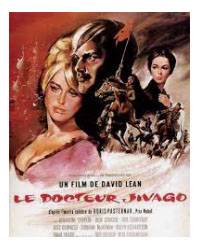
Doctor Zhivago
Synopsis
Set against the sweeping, turbulent backdrop of the Russian Revolution and World War I, a physician and poet named Yuri Zhivago finds his life irrevocably altered. Married to a traditional woman from a bourgeois family, Zhivago crosses paths with the independent and passionate Lara Antipova, sparking an all-consuming illicit romance. As war, civil war, and Bolshevik political purges tear Russia apart, the lovers are repeatedly separated and reunited across snowy Siberian landscapes. Ultimately, this timeless epic romantic drama explores love, art, and human survival amidst historical cataclysm.
The Making of the Film
Director David Lean collaborated with legendary screenwriter Robert Bolt to adapt Boris Pasternak's Nobel Prize-winning, internationally banned Russian novel. The project was conceived as a monumental, visually breathtaking historical epic exploring human passion against the cold machinery of revolution. Lean drew inspiration from epic cinematic storytelling, authentic Russian historical archives, and expansive widescreen cinematography. The production prioritized massive handcrafted winter sets in Spain, authentic period costumes, and Maurice Jarre's legendary musical score.
Critical Reception
Critics offered overwhelming critical acclaim upon release, praising its staggering visual beauty, emotional sweep, and Maurice Jarre's immortal musical score. Reviewers lauded David Lean for crafting a monumental historical epic that balanced sweeping geopolitical revolution with intimate human romance. The performances of Omar Sharif and Julie Christie received universal acclaim for embodying the star-crossed lovers with heartbreaking vulnerability. It established itself instantly as a towering triumph of world cinema.
Audiences flocked to theaters, turning the historical epic into a massive global blockbuster and one of the highest-grossing films of all time adjusted for inflation. Viewers worldwide were mesmerized by the breathtaking snowy landscapes, sweeping romance, and emotional tragedy of Zhivago and Lara's love story. It became a cultural phenomenon that defined the golden age of roadshow Hollywood epics. Many hailed it as an immortal masterpiece of cinematic art.
Doctor Zhivago won five Academy Award wins out of ten nominations, including Best Adapted Screenplay for Robert Bolt, Best Original Score for Maurice Jarre, and Best Art Direction. Omar Sharif won a Golden Globe Award for Best Actor in a Motion Picture – Drama. The film's stunning cinematography and costume design swept every major global honor. These prestigious accolades cemented its legacy as an immortal cinematic milestone.
Behind-the-Scenes Stories
David Lean was heavily inspired by Pasternak's poetic prose and the tragic human cost of the Russian Revolution, wanting to create a visual poem of love and history. He insisted on recreating revolutionary Russia with absolute visual grandeur, even though filming in the Soviet Union was impossible due to the book's ban. The visual style utilized Panavision widescreen framing, ice-covered winter sets built near Madrid, Spain, and iconic ice-encrusted window glass. The director also worked closely with composer Maurice Jarre to integrate the haunting balalaika theme.
Making the film presented massive logistical challenges, particularly because Spain experienced an uncommonly warm winter during production, forcing the crew to ship massive quantities of crushed marble, plastic, and salt to simulate endless Siberian snow. Omar Sharif spent months learning poetry, horse riding, and medical procedures to authentically portray the sensitive doctor-poet. Director David Lean maintained notoriously strict, demanding perfectionism on set, occasionally clashing with cast members over emotional nuances. Despite the grueling physical conditions and immense scale, the technical crew successfully delivered a breathtaking visual masterpiece.
During the filming of the heartbreaking parting sequences between Yuri and Lara, Omar Sharif and Julie Christie brought genuine, unscripted emotional sorrow to their farewells. Maurice Jarre composed the iconic "Lara's Theme" in secret, surprising David Lean with a melody that would become one of the most famous film scores in history. Crew members reported feeling spellbound on set watching the massive revolutionary battle sequences unfold. The profound dedication of the cast and crew gave the historical epic its immortal soul.
Casting directors searched for an international star who possessed exotic, soulful eyes and romantic vulnerability. Omar Sharif was secured for the lead role of Doctor Zhivago, transforming him into a global superstar. Julie Christie was cast as Lara, bringing radiant beauty and fierce independence. The supporting cast featuring Rod Steiger, Alec Guinness, and Geraldine Chaplin added stellar dramatic weight.
Themes Explored
The film heavily explores the destructive impact of political revolution and war on individual human lives and artistic freedom. It examines the timeless power of illicit romance and passion across impossible societal barriers. Another core motif is survival, memory, and poetry as a sanctuary against totalitarian brutality. It also touches upon fate, class collapse, and historical tragedy.
Ending Explained
The film concludes years after Yuri Zhivago's tragic death from a heart attack in a Moscow tram, when a Soviet interrogator interviews a young working-class woman who believes she might be Zhivago and Lara's long-lost daughter. As the official listens to her soulful story, he gently returns her personal belongings and lets her go, touched by the enduring poetic legacy of the doctor. The final breathtaking shots show a sweeping pastoral landscape under a bright summer sky, symbolizing hope and spiritual rebirth. This poetic finish transcends the tragedy of the revolution.
Meaning of the Title
The title refers directly to the full name of the protagonist, Doctor Yuri Zhivago, whose profession as a physician and soul as a poet anchor the sweeping historical narrative. The Russian surname Zhivago evokes the root word for life, symbolizing vitality and endurance amidst death and revolution. The straightforward naming sets an epic, biographical tone for the historical drama. It encapsulates the central figure whose life mirrors the tragedy of twentieth-century Russia.
Similar films include Gone with the Wind, Lawrence of Arabia, Titanic, and War and Peace, which feature sweeping historical epics, epic romance, and wartime tragedy.