

 Français
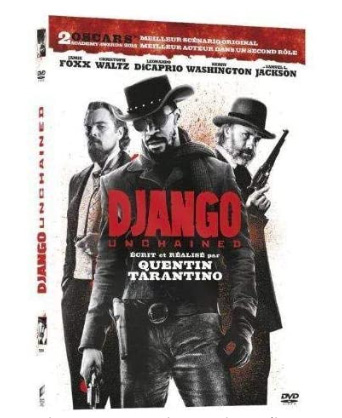
Django Unchained
Synopsis
Set in the American South in 1858, Django Unchained follows Django, an enslaved man who is freed by Dr. King Schultz, a German bounty hunter. Schultz offers to help Django locate and rescue his wife Broomhilda, who remains enslaved on a plantation. Together, they embark on a dangerous journey that eventually leads them to the estate of the wealthy and ruthless Calvin Candie. Their plan requires deception, courage and considerable patience as they attempt to infiltrate a world built on cruelty and exploitation. The film combines revenge, dark humor and western conventions in a brutal confrontation with the history of slavery.
The Making of the Film
Quentin Tarantino developed Django Unchained from his longstanding fascination with spaghetti westerns and the exploitation films of the 1960s and 1970s. He wanted to create a western that confronted the history of slavery in the United States while retaining the stylistic freedom of his previous films. The character of Django was conceived as a hero whose journey would combine the traditional western revenge narrative with a historical setting. Tarantino researched the American South and the brutality of plantation slavery while deliberately incorporating elements of genre cinema. The screenplay was written specifically for the project rather than adapted from a novel. Jamie Foxx was ultimately selected to portray Django, while Christoph Waltz took the role of Dr. King Schultz. Leonardo DiCaprio joined the production as Calvin Candie, creating one of the most memorable antagonists in Tarantino's filmography. The director also paid tribute to earlier westerns through the casting of Franco Nero, the actor who originally played Django in the 1966 Italian film.
Reviews and Reception
Professional reviews: Critics generally praised the film for its powerful performances, elaborate dialogue and distinctive visual style. Christoph Waltz received particular acclaim for his portrayal of Dr. King Schultz. Leonardo DiCaprio and Samuel L. Jackson were also recognized for their memorable supporting performances. Some critics questioned the film's treatment of slavery and its use of graphic violence, while others defended its deliberately provocative approach.
Audience reception: Django Unchained became a major international box-office success. Audiences responded positively to its mixture of western action, dark humor and revenge storytelling. The performances and memorable dialogue helped the film establish a strong cultural presence. It also generated considerable discussion about how historical atrocities can be represented through popular entertainment.
Awards: The film received five Academy Award nominations and won two. Christoph Waltz received the Oscar for Best Supporting Actor, while Quentin Tarantino won Best Original Screenplay. The production also received major recognition at the Golden Globes and BAFTA Awards. These honors confirmed its position as one of the most celebrated films of Tarantino's career.
Behind-the-Scenes Stories
Director's inspirations: Tarantino was particularly influenced by the original Django film directed by Sergio Corbucci in 1966. He also drew inspiration from Italian westerns, American exploitation cinema and historical revenge stories. His intention was to transform a traditional western hero into a character confronting the specific injustice of slavery. The director also used familiar genre conventions to create deliberate contrasts between entertainment and historical brutality.
Production challenges: The production involved extensive location work, period costumes and carefully designed plantation environments. Recreating the social atmosphere of the American South before the Civil War required substantial research. The violent scenes also required close coordination between stunt performers, actors and special effects specialists. Leonardo DiCaprio reportedly injured his hand during the dinner-table sequence but continued performing, and the incident was incorporated into the scene.
Notable scene: The dinner at Candyland is one of the film's most tense and memorable sequences. Calvin Candie gradually discovers that his guests are concealing their real intentions. The scene relies heavily on dialogue, facial expressions and the growing psychological pressure between the characters. Its combination of politeness and menace illustrates Tarantino's ability to build suspense without constant action.
Original casting: Will Smith was considered for the leading role before Jamie Foxx was ultimately cast as Django. Idris Elba and Chris Tucker were also associated with the project during its development. Christoph Waltz became an essential part of the production after Tarantino wrote the role of Dr. Schultz with him in mind. The final ensemble brought together major performers from several generations of American cinema.
Themes Explored
Django Unchained examines slavery, racism and the devastating consequences of treating human beings as property. The film portrays a society in which wealth and social status are built upon systematic violence. Freedom is presented as both a physical condition and a deeply personal achievement. Django's journey is driven by his determination to recover his wife and rebuild the life that was taken from him. Love becomes a powerful source of courage in a world designed to destroy human relationships. The film also explores revenge as a response to historical injustice, although its use of violence raises questions about the limits of retribution. Friendship and loyalty develop through the relationship between Django and Schultz. Ultimately, the story challenges the romantic mythology of the traditional western by placing the brutal reality of slavery at its center.
Ending Explained
The final confrontation at Candyland brings Django's personal mission to its conclusion. After escaping the plantation and surviving further attempts to capture him, he returns to rescue Broomhilda. His actions demonstrate how far he has moved beyond the frightened and powerless man introduced at the beginning of the film. Calvin Candie and his associates are destroyed through the consequences of their own cruelty and arrogance. Django ultimately succeeds in freeing Broomhilda and escaping with her. The destruction of the plantation symbolizes the collapse of a system built on violence and dehumanization, at least within the fictional world of the story. Their escape offers a moment of hope after an extended sequence of brutality. The ending also completes the transformation of Django into a legendary western hero. His victory is personal, but it also carries a symbolic meaning connected to resistance and freedom.
Meaning of the Title
The title Django Unchained refers to the liberation of the central character from slavery. The name Django recalls the famous western character portrayed by Franco Nero in Sergio Corbucci's 1966 film. The word unchained has both a literal and symbolic meaning, referring to the removal of physical restraints and the recovery of personal freedom. It also suggests that Django is no longer willing to accept the identity imposed on him by an oppressive society. The title evokes the transformation from an enslaved individual into an independent man capable of defending himself. Its simple construction reflects the directness of the revenge narrative. It also pays tribute to the traditions of spaghetti western cinema while giving them a new historical context. Ultimately, the title announces a story about liberation, resistance and the reclaiming of human dignity.
The soundtrack is a particularly important part of Django Unchained. Quentin Tarantino combines original compositions, songs from earlier westerns and contemporary musical selections. The soundtrack includes music associated with Ennio Morricone and other composers of classic spaghetti westerns. Luis Bacalov's music from the original Django also contributes to the film's historical references. The mixture of musical periods gives the production a deliberately unconventional atmosphere. The soundtrack is essential to the film's identity, particularly during its most spectacular action sequences.
Similar Films
Django, directed by Sergio Corbucci, is the original 1966 western that inspired the central character and title. The Good, the Bad and the Ugly is another essential example of the spaghetti western tradition. The Hateful Eight offers a similarly distinctive combination of western conventions, violence and extended dialogue. Inglourious Basterds explores revenge against historical oppression through an alternative-history narrative. Unforgiven examines violence, morality and the mythology of the western hero. The Revenant presents a brutal story of survival and revenge in an unforgiving historical setting. 12 Years a Slave offers a more historically grounded depiction of slavery in the American South. These films share Django Unchained's interest in revenge, historical injustice, violence and the transformation of individuals confronting oppressive systems.