

 Français
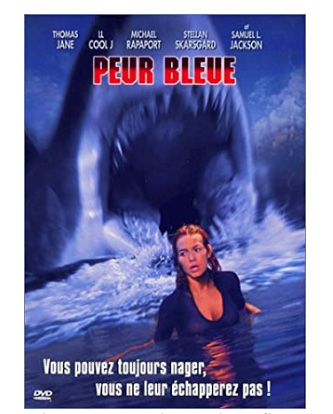
Deep Blue Sea
Synopsis
Dr. Susan McAlester is a brilliant marine biologist leading a secretive, state-of-the-art oceanic research facility called Aquatica located deep in the middle of the ocean. Desperate to find a revolutionary cure for Alzheimer's disease, Dr. McAlester illegally and dangerously genetically engineers the brain tissue of aggressive mako sharks, inadvertently increasing their intelligence and brain capacity far beyond normal limits. When a massive tropical storm strikes the isolated underwater facility, power fails and the super-smart sharks break out of their containment tanks, systematically hunting down and slaughtering the terrified research scientists one by one. Trapped in a flooding facility sinking into the ocean abyss, the surviving crew must use engineering wits and raw courage to escape the aquatic predators.
The Making of the Film
Directed by action filmmaker Renny Harlin, the science-fiction shark horror film was produced by Warner Bros. to capitalize on the monster-horror resurgence following Jurassic Park. Harlin sought to create an intense, fast-paced action-horror film featuring genetically altered sharks that outsmart human prey. Screenwriters Duncan Kennedy, Troy Kennedy Martin, and Donna Powers crafted a high-concept survival script where no character is safe from sudden shark attacks. The production utilized massive water tanks and animatronic sharks alongside CGI in Rosarito, Mexico.
Critical Reception
Critical reception for the film upon release was generally mixed, with reviewers praising its thrilling action set pieces, relentless suspense, and the infamous, shocking mid-film death of Samuel L. Jackson. However, some critics faulted its derivative creature-feature plot and cheesy dialogue. Over the decades, the film has developed a passionate cult following, celebrated as one of the most entertaining and inventive shark horror movies ever made. Audiences turned it into a solid box office success worldwide.
Behind-the-Scenes Stories
The production utilized state-of-the-art animatronic robotic sharks alongside CGI during underwater scenes, though mechanical failures in saltwater tanks required creative editing. Samuel L. Jackson's famous inspirational speech interrupted mid-sentence by a sudden mako shark attack became one of the most iconic shock deaths in cinema history. The cast underwent scuba diving training to perform underwater flood escape sequences in massive water tanks in Mexico. LL Cool J performed his own stunt work while playing the facility cook.
Themes Explored
The film explores genetic engineering hubris, playing God with marine life, oceanic survival, claustrophobia, and nature fighting back. It highlights scientific recklessness, teamwork, and facing terrifying apex predators. Flooding underwater facility drives the horror plot. It also touches upon sacrifice.
Ending Explained
Following a brutal battle in the flooded facility that claims the lives of most researchers, the surviving marine biologist and the facility cook use an electrical live wire and an explosive charge to blast the final giant genetically altered mako shark to pieces, destroying Aquatica completely. Swimming to the surface amidst the wreckage, the exhausted survivors are rescued by coast guard helicopters as the sun breaks over the ocean. The ecosystem is saved from further genetic tampering. The conclusion provides a triumphant, action-packed monster movie finale.
Meaning of the Title
The title "Deep Blue Sea" refers directly to the vast, isolated ocean abyss where the underwater research facility is located: the deep blue sea. It symbolizes isolation and oceanic danger. The phrase sets a creature-feature horror tone.
Trevor Rabin composed a thrilling, pounding orchestral and electronic action-horror score that amplified the shark attack suspense.
Jaws, 47 Meters Down, The Meg, Crawl