

 Français
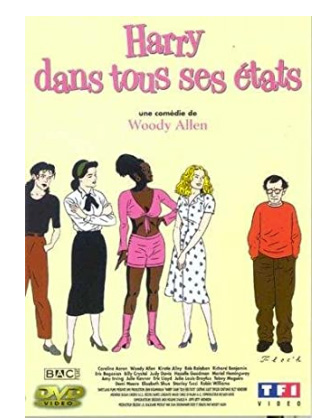
Deconstructing Harry
Synopsis
Harry Block is a successful but deeply troubled novelist whose fictional characters are often inspired by people from his own life. His habit of transforming private experiences into provocative literary material has damaged many of his personal relationships. When his former university decides to honor him, Harry struggles to find anyone willing to accompany him to the ceremony. He eventually sets off on a journey with an unexpected group of companions, including a friend, a prostitute and his young son. Along the way, memories, fantasies and scenes from his books become increasingly intertwined with reality. The film presents a comic and often uncomfortable portrait of a writer confronting the consequences of his own behavior.
The film's origins
Deconstructing Harry was conceived and written by Woody Allen as a dark comedy about the relationship between artistic creation and personal responsibility. Allen wanted to explore the life of a novelist whose fiction repeatedly exposes the private experiences of the people around him. The screenplay combines a central road-trip narrative with scenes drawn from the protagonist's books and memories. This unusual structure allowed the director to move between realistic situations and fictional episodes without maintaining a conventional narrative chronology. Harry Block is not intended to be a literal portrait of Woody Allen, although the character shares certain concerns associated with the director's recurring themes. The project was developed as an original screenplay rather than an adaptation of an existing novel. Allen was particularly interested in examining the uncomfortable question of whether artistic freedom can justify using other people's private lives as creative material. The cast includes a large number of recognizable actors, many appearing in short but memorable roles. The result is a self-reflective comedy that questions the relationship between the artist, the people who inspire him and the fictional worlds he creates.
Reviews and reception
Critical reception:
Deconstructing Harry received moderately positive but divided reviews from professional critics. Many appreciated Woody Allen's willingness to examine the selfishness and contradictions of his central character with unusual frankness. The performances of the ensemble cast, particularly Judy Davis, Kirstie Alley and Bob Balaban, were widely recognized. Some critics considered the film deliberately abrasive and morally uncomfortable, while others appreciated its unconventional narrative structure. Roger Ebert praised its humor while observing that the film was also sharply critical of its protagonist. Its reputation has remained associated with Allen's darker and more experimental comedies.
Audience reception:
The film attracted a more limited audience than some of Woody Allen's better-known romantic comedies. Its provocative humor and fragmented narrative made it less accessible to viewers expecting a conventional comedy. Nevertheless, it attracted a loyal audience interested in the director's reflections on relationships, artistic ambition and personal responsibility. Its numerous guest appearances also contributed to its appeal among fans of American cinema. Over time, the film has become an important entry in discussions of Allen's more autobiographical and self-critical work.
Awards and recognition:
Deconstructing Harry received recognition at several international film events. It was presented at the Venice Film Festival and received a Screen International Award nomination in 1998. The film also attracted attention for its ensemble performances and unconventional screenplay. Although it did not become a major awards-season success, it remains an important example of Woody Allen's experimental approach to comedy. Its critical reputation has been sustained by its unusual treatment of the relationship between fiction and personal experience.
Behind-the-scenes stories
Director's inspirations:
Woody Allen explained that the idea emerged from several writing concepts that he had previously considered too short to sustain individual feature films. He decided to connect them through the life of a novelist whose fictional creations reveal the people and situations that inspire his work. The director was interested in the relationship between personal experience and artistic invention. He also drew on his admiration for European filmmakers, particularly Ingmar Bergman and Federico Fellini. The film's journey structure and reflections on memory have often been compared with Bergman's Wild Strawberries, although Allen himself considered such comparisons less central to his intentions.
Production challenges:
The film's fragmented structure created particular challenges for editing and continuity. The production moves repeatedly between Harry's real experiences and scenes representing his fictional writing. These transitions needed to remain understandable while preserving the deliberately chaotic atmosphere. The large ensemble cast also required careful scheduling, especially because several well-known actors appeared in relatively short sequences. Another technical challenge involved the visual treatment of one fictional character who appears out of focus, a striking effect that required careful cinematographic planning.
A memorable scene:
The episode involving Harry's fictional character Ken, played by Richard Benjamin, is one of the film's most unusual visual sequences. Ken unexpectedly becomes blurred, creating a disturbing image that reflects his growing emotional instability. The people around him are unable to understand what is happening, and the situation becomes both absurd and unsettling. The visual effect turns an internal psychological crisis into something immediately visible to the audience. It also illustrates how the film uses fictional episodes to express emotions that cannot easily be represented through ordinary dialogue.
Originally considered casting:
Woody Allen wrote the central role for himself and ultimately portrayed Harry Block. The ensemble includes prominent actors such as Judy Davis, Kirstie Alley, Bob Balaban, Billy Crystal, Robin Williams, Demi Moore and Elisabeth Shue. Their participation helped create the impression of a fictional world populated by recognizable personalities. Some actors appear only briefly, reinforcing the episodic structure of the story. There is insufficient reliable documentation to establish a complete list of alternative actors initially considered for the principal roles.
Themes explored
Art and personal responsibility: Harry's writing raises questions about whether artistic freedom justifies exposing the private lives of other people.
Self-deception and hypocrisy: The protagonist frequently recognizes the weaknesses of others while refusing to acknowledge his own behavior.
Relationships and emotional damage: His personal life reveals the consequences of selfishness, dishonesty and repeated emotional neglect.
Memory and identity: The film explores how people reconstruct their past through stories, memories and selective interpretations.
Fiction and reality: The boundaries between Harry's literary creations and his everyday experiences constantly become blurred.
Mortality and fear: Beneath the humor lies an awareness of aging, loneliness and the difficulty of finding meaning in life.
Artistic creation: The film questions whether writers can separate their creative work from their personal relationships.
Ending explained
The final part of the film brings Harry closer to the university that once expelled him and now intends to honor his literary achievements. His journey has exposed the consequences of his behavior, particularly the damaged relationships that have left him isolated. The people who accompany him provide a temporary sense of connection, but they do not resolve the deeper problems in his life. His fictional characters and memories continue to invade his present, suggesting that he cannot easily separate his art from his personal history. During the ceremony, Harry receives recognition from an institution that previously rejected him, creating an ironic contrast with his failure to maintain stable relationships. The conclusion suggests that professional success cannot compensate for emotional immaturity or a lack of genuine intimacy. The final scenes also leave open the question of whether Harry has truly learned anything from his experiences. Rather than offering a conventional redemption, Allen presents a deliberately uncomfortable portrait of an artist who remains trapped between self-awareness and self-indulgence.
Meaning of the title
The title Deconstructing Harry refers to the process of examining the protagonist's personality by breaking it down into its different experiences, memories and fictional creations. The word deconstructing suggests that the film does not present Harry as a unified or entirely reliable individual. Instead, it reveals his character through fragmented stories and perspectives. His literary work becomes a tool for understanding his relationships, but also exposes the contradictions between his artistic ambitions and his personal behavior. The title therefore reflects both the film's unusual narrative structure and its critical examination of the central character.
Similar films
Stardust Memories (1980): Another Woody Allen film exploring an artist's personal crises, relationships and complicated relationship with fame.
Wild Strawberries (1957): Ingmar Bergman's influential film about memory, aging and the emotional consequences of a life examined.
8½ (1963): Federico Fellini's celebrated exploration of artistic creation, personal memories and creative uncertainty.
Manhattan (1979): A Woody Allen film examining romantic relationships, personal contradictions and intellectual self-justification.
Adaptation. (2002): A meta-cinematic comedy about a screenwriter struggling with creativity, identity and the relationship between fiction and reality.