

 Français
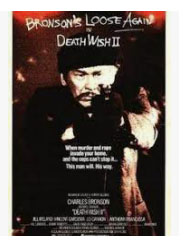
Death Wish II
Synopsis
Note: The film was released in 1982. Following the tragic murder of his wife and eldest daughter in New York, architect-turned-vigilante Paul Kersey has relocated to Los Angeles with his traumatized younger daughter, Carrie. When a sadistic gang of street thugs brutally assaults and murders Carrie, Kersey is thrust back into his bloody mission of vengeance. Armed with concealed firearms, he stalks the sun-drenched streets of Los Angeles at night to execute criminals. Once again, law enforcement trails close behind as he dispenses his own brand of lethal justice.
The Making of the Film
Following the massive box-office success of the original 1974 vigilante thriller, Cannon Films purchased the rights to produce a sequel. The project was conceived to capitalize on the public appetite for retributive action cinema during the early 1980s crime wave. Director Michael Winner returned to helm the sequel, bringing an even more aggressive and hard-boiled aesthetic to the franchise. Charles Bronson enthusiastically reprised his iconic role as the stoic vigilante seeking retribution for his shattered family.
Critical Reception
Critics universally panned the film upon its initial release, condemning its excessive violence, reactionary politics, and grim tone. Reviewers argued that it glorified extrajudicial murder and vigilante justice without offering any meaningful moral nuance. Some film critics also criticized Michael Winner's direction for leaning too heavily into exploitation tropes. Despite the harsh critical backlash, the movie found a receptive audience at the box office among fans of 1980s action cinema.
Audiences embraced the sequel as a satisfying and brutal revenge thriller that delivered precisely what action fans expected. Viewers cheered for Charles Bronson as he systematically hunted down the thugs responsible for destroying his family. It performed strongly at the box office, proving that the appetite for straightforward vigilante justice remained high in urban centers. Over time, it gained a cult following among enthusiasts of vintage 1980s grindhouse and action exploitation films.
Given its exploitative nature and critical revulsion, the film received no mainstream cinematic awards or festival recognition. However, it achieved commercial success that justified further sequels in the long-running Cannon Films franchise. Charles Bronson's enduring screen persona as the ultimate action avenger was celebrated by action film aficionados. These commercial milestones cemented its place in the history of 1980s action cinema.
Behind-the-Scenes Stories
Michael Winner was inspired by the growing urban crime concerns and public frustration with the legal system during the early 1980s. He wanted to escalate the emotional stakes for Paul Kersey by targeting his remaining family member in a brutal opening sequence. The visual style shifted from gritty 1970s New York grit to the bright, sunlit expanses of Los Angeles contrasted with shadowy night alleys. The director aimed to make the vigilante executions even more direct and uncompromising than the original film.
Shooting violent street crime scenes across various neighborhoods in Los Angeles required extensive coordination with local authorities and permit boards. The production faced occasional protests from community groups concerned about the depiction of urban violence and vigilantism. Charles Bronson maintained a professional and stoic demeanor on set, rarely speaking outside of his required dialogue takes. Despite these minor controversies, the production wrapped smoothly and delivered a commercially viable action sequel.
During the filming of the intense park assault sequence, stunt coordinators ensured the safety of the actors while maintaining brutal realism. Charles Bronson insisted on handling his firearms training personally to make his character's lethal efficiency look authentic. The climactic warehouse shootout featured heavy practical squibs and pyrotechnics that required precise timing from the special effects crew. The eerie silence maintained by Bronson on set between takes helped build his intense, menacing screen presence.
Charles Bronson was the absolute primary choice for Cannon Films to return as Paul Kersey, commanding a massive salary for the sequel. Laurence Fishburne was cast in an early supporting role as one of the street thugs before achieving major stardom. The casting team searched for imposing character actors to play the gang members, ensuring they looked genuinely menacing. The continuity of having Bronson return anchored the entire sequel for returning fans of the franchise.
Themes Explored
The film heavily explores the themes of grief, trauma, and the dark psychological desire for revenge outside the law. It examines the failure of the legal system to protect innocent citizens from violent crime. Another core motif is the transformation of an ordinary citizen into a cold, methodical instrument of execution. It also touches upon urban decay, fear, and the moral ambiguity of vigilante justice.
Ending Explained
The film concludes with Paul Kersey cornering the last remaining gang member in a power substation and executing him in a brutal trap. A police detective arrives on the scene and, recognizing the vigilante's motives, quietly turns a blind eye, allowing Kersey to walk away. Kersey boards a train out of Los Angeles, leaving his bloody trail behind as a solitary wanderer. The ambiguous ending suggests that his war against crime is far from over, cementing his eternal status as an urban avenger.
Meaning of the Title
The title refers directly to the continuation of Paul Kersey's lethal crusade against criminals, serving as the second chapter in the iconic franchise. It highlights the escalation of his revenge mission following a new personal tragedy. The minimalist numerical suffix established a commercial template for action sequels in the 1980s. It encapsulates the ongoing theme of deadly retribution that defines the protagonist's arc.
Similar films include Death Wish, The Exterminator, Dirty Harry, and Rolling Thunder, which explore vigilante justice and urban crime.