

 Français
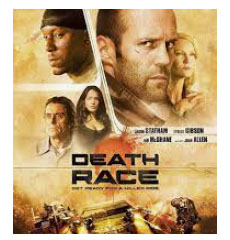
Death Race
Synopsis
In a dystopian near-future where privatized prisons have turned inmate blood sports into lucrative televised entertainment, framed ex-con Jensen Ames is given a brutal choice. Corrupt warden Hennessey forces him to race behind the wheel of a heavily armored, weaponized muscle car under the mask of the legendary masked driver Frankenstein. To win his freedom and see his young daughter again, Ames must survive a brutal three-stage vehicular demolition derby against violent psychopaths. Every lap is a lethal fight for survival on a high-octane asphalt track.
The Making of the Film
Director Paul W. S. Anderson conceived the project as a loose reimagining and spiritual prequel to the 1975 cult classic Death Race 2000. Seeking to combine high-octane automotive action with gritty prison survival themes, Anderson aimed for an adrenaline-fueled cinematic ride. The production team designed and built dozens of functional, heavily armored muscle cars equipped with actual working weaponry and defensive gadgets. The filmmakers prioritized practical stunt driving and explosive vehicular combat over excessive computer-generated effects.
Critical Reception
Critics offered mixed reviews upon release, praising its relentless action pacing, impressive stunt work, and muscular lead performance. Reviewers noted that Paul W. S. Anderson delivered a fun, brainless B-movie thrill ride that understood its genre roots. Some film critics, however, criticized the predictable plot points, thin character development, and excessive violence. Despite polarized critical opinions, action cinema enthusiasts embraced its unapologetic high-octane energy.
Audiences thoroughly enjoyed the high-octane spectacle, turning the action thriller into a solid box-office success worldwide. Viewers praised the thrilling car chase choreography, heavy metal soundtrack, and Jason Statham's commanding screen presence as an action hero. It gained a strong following among fans of vehicular combat games and visceral popcorn cinema. Many appreciated that it did not take itself too seriously, focusing purely on explosive entertainment.
Although mainstream dramatic awards bypassed the action movie, it earned recognition among stunt work and technical effect guilds. The precision driving team and stunt coordinators received praise for orchestrating the dangerous vehicular demolition sequences. Jason Statham's physical commitment to the grueling action role was celebrated by action film fans. These acknowledgments cemented its reputation as a standout modern vehicular combat film.
Behind-the-Scenes Stories
Paul W. S. Anderson was inspired by classic dystopian action films, vehicular combat video games, and the grindhouse exploitation cinema of the 1970s. He wanted to create an immersive, visceral experience that placed viewers directly in the driver's seat of heavily armed muscle cars. The gritty prison atmosphere was influenced by real-world maximum-security penitentiaries and industrial wasteland aesthetics. The director also drew inspiration from classic gladiator stories translated into a modern mechanical setting.
Building fully functional, weaponized cars that could withstand heavy stunt driving presented massive mechanical and safety challenges for the crew. Production took place in a real abandoned maximum-security prison in Montreal, providing an authentic and freezing shooting environment. Stunt drivers had to navigate treacherous obstacle courses and pyrotechnic explosions at high speeds with minimal margin for error. Despite these intense physical hazards, the technical crew successfully completed the demanding shoot on schedule.
During the filming of the high-speed race sequences, Jason Statham performed many of his own precision driving stunts under expert supervision. The crew utilized specialized camera rigs mounted directly onto the armored muscle cars to capture dizzying, ground-level action shots. In one explosive crash scene, a pyrotechnic miscalculation triggered a larger fireball than anticipated, adding genuine adrenaline to the actors' reactions. The camaraderie among the stunt drivers created a tightly knit, high-energy environment throughout production.
Casting directors sought an elite action star who possessed both authentic toughness and driving capability to anchor the high-concept premise. Jason Statham was the immediate top choice for the lead role of Jensen Ames due to his established action pedigree. Joan Allen and Ian McShane were brought in to add gravitas and dramatic weight as the corrupt warden and veteran mechanic. The supporting cast of ruthless inmates was handpicked to provide a diverse and intimidating lineup of rival racers.
Themes Explored
The film heavily explores the commodification of human life and violence for corporate entertainment and profit. It examines systemic corruption within the privatized prison-industrial complex and the fight for personal redemption. Another core motif is the protection of family against insurmountable odds and institutional oppression. It also celebrates resilience, mechanical ingenuity, and survival in a brutal dystopian society.
Ending Explained
The film concludes with Jensen Ames executing a daring escape plan during the final death race by swapping cars and faking his death alongside his loyal mechanic partner. Warden Hennessey unknowingly triggers an explosive device planted in her own office, sealing her corrupt downfall. Ames successfully reunites with his young daughter in a safe haven outside the prison system, finally finding peace. The final shots show him living a free life, leaving the brutal prison blood sport far behind.
Meaning of the Title
The title refers directly to the lethal, televised vehicular tournament where inmates race armored cars to the death for a chance at freedom. It evokes the high-stakes gladiatorial nature of the competition combined with automotive destruction. The straightforward phrasing sets immediate expectations for a high-octane action thriller. It captures the grim reality of a sport where survival is the only winning condition.
Similar films include Death Race 2000, Mad Max: Fury Road, The Running Man, and Death Sentence, which feature dystopian survival and vehicular combat.