

 Français
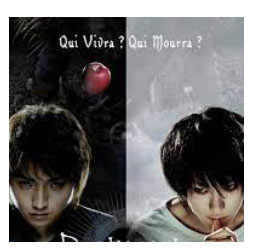
Death Note
Synopsis
When brilliant high school student Light Yagami finds a mysterious black notebook dropped by a death god, his life changes forever. The notebook grants him the power to kill anyone simply by writing their name while picturing their face. Disgusted by rampant crime, Light begins executing criminals, adopting the moniker Kira to purge the world of evil. Soon, an enigmatic and eccentric global detective known only as L is tasked with hunting down the elusive serial killer. A high-stakes intellectual cat-and-mouse game ensues as both geniuses try to outsmart each other.
The Making of the Film
Based on the immensely popular manga series by Tsugumi Ohba and Takeshi Obata, the film adaptation condensed a sprawling narrative into a cinematic format. The project was conceived as a psychological thriller that would test the moral boundaries of justice and absolute power. Director Shûsuke Kaneko aimed to maintain the intellectual intensity of the source material while delivering compelling live-action performances. The production utilized cutting-edge computer-generated imagery to bring the supernatural death god, Ryuk, to life alongside human actors.
Critical Reception
Critics praised the film for being one of the most faithful and successful live-action adaptations of a manga series. Reviewers commended the tense psychological duel between the two main characters and the sharp, engaging screenplay. The performances of Tatsuya Fujiwara as Light and Kenichi Matsuyama as L received widespread critical acclaim for capturing the essence of the beloved characters. Some critics noted that pacing felt slightly rushed due to compressing multiple manga volumes, but overall praised its entertainment value.
Audiences adored the live-action adaptation, turning it into a massive box-office hit in Japan and gaining an international cult following. Viewers praised the brilliant chemistry between the lead actors and the faithful recreation of the dark, intellectual atmosphere. Fans of the original manga appreciated the clever narrative adjustments made to fit a feature-length film format. It cemented its status as a benchmark for successful live-action anime adaptations.
Death Note achieved massive commercial success and received nominations at various Japanese domestic film ceremonies for its visual effects and popularity. The lead performances by Tatsuya Fujiwara and Kenichi Matsuyama earned high praise from cinema guilds. The film's innovative integration of CGI characters with live-action settings was recognized for setting a new technical standard. These accolades highlighted the cultural triumph of bringing a complex manga masterpiece to the big screen.
Behind-the-Scenes Stories
Shûsuke Kaneko drew heavy inspiration from classic psychological crime thrillers and detective dramas centered around intellectual warfare. He wanted to explore the philosophical question of whether absolute power inevitably corrupts absolute justice. The visual style emphasized stark contrasts between light and shadow to mirror the duality of Light Yagami's dual persona. The director also studied the original manga panels meticulously to replicate iconic camera angles and character poses in live action.
Integrating a fully computer-generated shinigami character named Ryuk into live-action scenes presented a major technical hurdle for the special effects team. Actors had to interact with invisible reference points on set, requiring immense concentration to make conversations feel natural. The production schedule was tightly managed to ensure seamless synchronization between practical performances and digital animation layers. Despite these technical demands, the crew successfully delivered a visually cohesive cinematic world.
During the filming of the intense psychological showdowns between Light and L, Tatsuya Fujiwara and Kenichi Matsuyama stayed intensely focused between takes. Matsuyama famously adopted L's signature squatting posture even off-camera to stay fully immersed in the eccentric character. The scenes involving the supernatural apple cravings of Ryuk required precise timing with physical props on set. The palpable tension between the two genius actors created an electric atmosphere that translated directly onto the screen.
Casting directors searched extensively for actors who could embody the contrasting brilliance and moral decay of Light Yagami and the eccentric genius of L. Tatsuya Fujiwara was chosen for Light due to his proven ability to portray complex psychological transformations. Kenichi Matsuyama underwent a physical and behavioral transformation to capture the quirky, unorthodox mannerisms of the detective L. The meticulous casting choices were widely credited as a major factor in the film's widespread success.
Themes Explored
The film heavily explores the corrupting nature of absolute power and the philosophical definition of true justice. It examines the eternal struggle between ends and means when attempting to eliminate crime from society. Another core theme is the intellectual rivalry between two brilliant minds operating outside conventional systems. It also touches upon morality, ego, and the psychological toll of playing god.
Ending Explained
The film concludes with a brilliant tactical maneuver orchestrated by Light and L that leaves the ultimate outcome hanging in a tense balance. While Light manages to temporarily evade capture, the psychological web surrounding him tightens significantly. The final moments underscore the lingering philosophical conflict between their opposing definitions of righteousness. It sets the stage for a continuation while delivering a satisfying and intellectually stimulating climax.
Meaning of the Title
The title refers directly to the supernatural notebook dropped by the death god, which serves as the central weapon and catalyst for the entire story. It highlights the fatal consequence associated with every name written inside its pages. The minimalist phrasing carries a heavy, ominous weight that perfectly complements the dark psychological tone. It encapsulates the core premise of a book that decides who lives and who dies.
Similar films include Battle Royale, Oldboy, The Devotion of Suspect X, and Death Note: The Last Name, which feature psychological suspense and intellectual duels.