

 Français
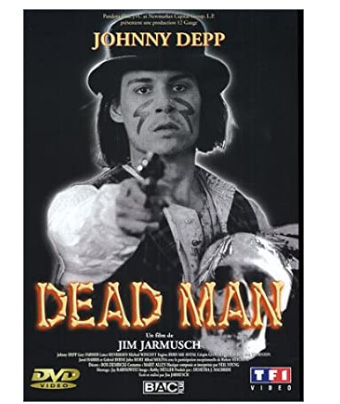
Dead Man
Synopsis
In the nineteenth century, a timid accountant named William Blake travels by train from Cleveland to the frontier town of Machine, where he has been promised a job. When he arrives, he finds that the position has been given to someone else, and a chain of events leaves him wounded and on the run. He is taken in by a Native American man named Nobody, who becomes convinced that Blake is the reincarnation of the English poet of the same name. Together, they embark on a strange, spiritual journey through the wilderness.
The Making of the Film
Dead Man was written and directed by Jim Jarmusch, who set out to make a revisionist Western with a dreamlike and poetic style. Johnny Depp played the title role, with Gary Farmer as Nobody, and a cast full of memorable faces including Crispin Glover, Lance Henriksen, Michael Wincott, Iggy Pop and John Hurt. The film was shot in black and white by Robby Müller, who gave it its haunting, stark beauty. Robert Mitchum appeared in his final film role as the powerful industrialist. The film was presented in competition at the Cannes Film Festival in 1995 and reached theaters in 1996.
Reviews and Reception
Summary of Professional Reviews
The film divided critics when it was released, with some finding it slow and obscure and others hailing it as a masterpiece. Many praised its photography, its deadpan humor and its reinvention of Western imagery. Over the years, critical opinion has grown increasingly favorable, and it is now widely regarded as one of the great films of the 1990s. Johnny Depp's quiet performance is often singled out.
Audience Reception
The film did not do well at the box office and was overlooked by mainstream audiences. Over time, however, it has developed a devoted cult following. Viewers who enjoy slow, contemplative cinema often rank it among their favorites. It continues to be discovered by new audiences through screenings and home video.
Filming Anecdotes
Production Challenges
The film's score was improvised by Neil Young, who watched scenes from the film and played his electric guitar in response. This approach produced the distinctive, raw soundtrack that is inseparable from the film's mood. The black-and-white photography and slow pace made the film a difficult sell, but they also became its most celebrated qualities.
Themes Explored
The film is a meditation on death, identity and the myths of the American West. It follows a man who is declared dead from the very beginning and who travels toward the end of his life. The influence of the poet William Blake gives the film a mystical dimension, linking poetry, spirituality and violence. The story also criticizes the brutality of the frontier and the destruction of Native American culture. Nobody serves as a guide between worlds, challenging Blake's assumptions. Overall, it is a dreamlike reflection on mortality.
Ending Explained
In the final scenes, Nobody prepares Blake for his journey to the spirit world, placing him in a canoe and pushing him out to sea. As the canoe drifts away, Blake lies down, and the film closes on a shot of the water. The ending represents Blake's passage from life to death, in keeping with Native American traditions. It gives the story a quiet and poetic conclusion.
Meaning of the Title
The title refers to the fact that Blake is mortally wounded early in the film and treated as a dead man from that point on. It sets up the story as a journey toward death rather than an adventure of survival. The phrase also echoes the Western tradition of the "dead man walking".
Soundtrack
The score by Neil Young, played solo on electric guitar, is one of the most celebrated aspects of the film. Young improvised his music while watching the images, creating a raw and haunting sound. The result is an unforgettable accompaniment that has been widely praised and imitated.
Similar Films
- Ghost Dog: The Way of the Samurai (1999): another Jarmusch film mixing genres.
- The Wild Bunch (1969): a classic revisionist Western.
- Unforgiven (1992): a reflection on violence in the Old West.
- El Topo (1970): a surreal and mystical Western.