

 Français
Clerks
Synopsis
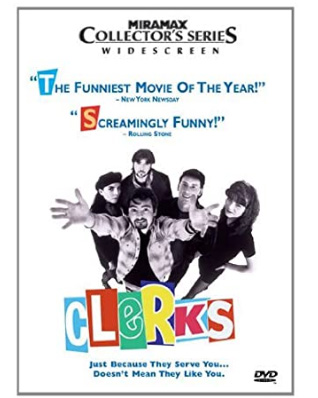
Dante Hicks is called in to work at the Quick Stop convenience store on his day off, and what follows is a long, strange day in the life of a clerk. Between customers, he trades banter with his friend Randal, who works at the video store next door and has little interest in doing his job. Dante's love life is complicated by his relationships with his girlfriend, Veronica, and his ex, Caitlin. Shot in black and white on a tiny budget, the film is a raw, hilarious portrait of working-class slackers.
The Making of the Film
Clerks was the debut feature of Kevin Smith, who wrote and directed it while working at the real Quick Stop store in New Jersey. Smith financed the film with around twenty-seven thousand dollars, raised through credit cards and the sale of his comic book collection. The movie was shot at night in the store where he worked during the day, using friends and local actors. It premiered at the Sundance Film Festival in 1994 and was picked up by Miramax. The film became a landmark of American independent cinema.
Reviews and Reception
Summary of Professional Reviews
Critics praised the film's sharp dialogue, its authentic feel and its bold, low-budget style. Many saw Smith as a new and exciting voice in American comedy. Some reviewers noted its rough edges, but most felt that its raw energy was part of its charm.
Audience Reception
The film was a huge success relative to its tiny budget, and it became a cult favorite among viewers who related to its slacker humor. Its quotable lines and offbeat characters made it a favorite of 1990s indie culture. It launched Smith's career and the long-running View Askewniverse.
Awards Won
Clerks won the Filmmakers Trophy at the Sundance Film Festival and the Award of the Youth at the Cannes Film Festival. It also earned several other independent film honors. These awards helped establish Smith as a rising filmmaker.
Filming Anecdotes
Director's Inspirations
Kevin Smith drew inspiration from his own experiences working in a convenience store, which gave the film its authentic, everyday feel. He was also influenced by independent filmmakers such as Richard Linklater and Jim Jarmusch.
Production Difficulties
Because Smith worked at the Quick Stop during the day, the film had to be shot overnight, with the shutters closed to hide the fact that it was nighttime. The tiny budget meant that the crew had to rely on friends, borrowed equipment and improvisation. The black-and-white look helped to hide technical limitations and gave the film a distinctive style.
Anecdote About a Particular Scene
The original ending was much darker than the one in the final film. In the first cut, Dante was shot dead by a robber, but Smith decided to remove the scene after feedback. The change gave the film a more open and ambiguous conclusion.
Themes Explored
Clerks is a comedy about work, boredom and the sense of being stuck in a dead-end life. It examines the way people deal with frustration through humor and sarcasm. The film also explores love and relationships, particularly Dante's confusion over his two romantic interests. Responsibility and personal growth are central, as Dante is forced to ask whether he wants to remain in his rut. Beneath the profanity and jokes lies a thoughtful look at young adulthood and the fear of the future.
Ending Explained
The film closes with Dante facing the choices he has made, both in his love life and in his career. Rather than offering a neat resolution, it leaves him at a crossroads, reflecting the uncertainty of life for a young man in his twenties. The more upbeat ending that Smith chose lets the audience imagine that Dante might finally take control of his future. It remains a quiet, ambiguous finale to a day of chaos.
Meaning of the Title
The title refers to the main characters, who work as clerks in a convenience store and a video rental shop. It captures the everyday, working-class setting of the story. The word also hints at the way the characters feel about themselves: small figures in a routine that seems to have no end.
Original Soundtrack
The film features a soundtrack of 1990s alternative rock, including bands such as Soul Asylum and Alice in Chains. The music helped define the film's slacker atmosphere and made it a cultural touchstone of its generation.
Similar Films
- Clerks II: the sequel.
- Slacker: Richard Linklater's portrait of Austin's drifters.
- Reality Bites: a comedy about young adults in the 1990s.
- Office Space: a comedy about workplace boredom.