

 Français
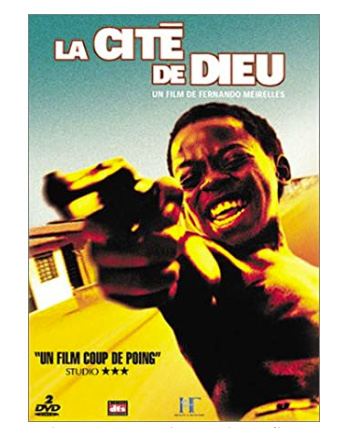
City of God
Synopsis
Set in the impoverished neighborhoods of Rio de Janeiro, City of God follows several generations of young people growing up surrounded by violence, poverty and organized crime. The story is told through the eyes of Rocket, a young aspiring photographer who dreams of escaping the dangerous environment in which he was raised. As rival gangs fight for control of the neighborhood, the ruthless Li’l Zé gradually becomes one of the most feared criminals in the area. Rocket attempts to build a different future while documenting the escalating violence around him. Their contrasting destinies reveal the devastating influence of social inequality and the difficulty of escaping a cycle of crime.
The The Making of the Film
City of God is based on the 1997 novel Cidade de Deus by Brazilian writer Paulo Lins. The novel draws on real events and experiences connected to the development of Rio de Janeiro’s housing projects and criminal networks. Paulo Lins grew up in the Cidade de Deus neighborhood and drew on extensive knowledge of its social environment. His book reconstructs several decades of violence, poverty and the rise of organized gangs. Producer Andrea Barata Ribeiro and director Fernando Meirelles recognized the cinematic potential of this complex literary material. Bráulio Mantovani adapted the novel into a screenplay that concentrates numerous characters and events into a more focused narrative. Kátia Lund also played an important role in the development of the project, bringing experience of working with young people from disadvantaged communities. The filmmakers wanted to portray the neighborhood without reducing its inhabitants to stereotypes. They therefore organized an extensive casting process involving many young performers with little or no professional acting experience. The result was an intense crime drama combining social observation, historical inspiration and highly energetic filmmaking.
Critical Reception
Professional critics widely praised City of God for its extraordinary visual energy, powerful performances and innovative editing. The direction of Fernando Meirelles and Kátia Lund creates a dynamic narrative that moves rapidly between different periods and characters. César Charlone’s cinematography gives the film a distinctive visual identity, using handheld camerawork and striking compositions to immerse viewers in the neighborhood. The screenplay was also praised for transforming a complex social history into an accessible and emotionally compelling story. Some critics nevertheless questioned whether its stylized violence risked making the criminal world appear excessively spectacular.
The film received an exceptional response from international audiences and became a major success beyond Brazil. Its powerful storytelling attracted viewers who might not normally watch Brazilian cinema. The characters, performances and depiction of life in the favelas generated considerable discussion. Its international popularity helped introduce a wider audience to contemporary Brazilian filmmaking. Over time, it has become widely regarded as one of the most influential crime dramas of the early 2000s.
City of God received four Academy Award nominations at the 76th Academy Awards, including Best Director, Best Adapted Screenplay, Best Cinematography and Best Film Editing. It also received international recognition from numerous critics associations and film institutions. Its nominations were particularly significant because they brought Brazilian cinema considerable visibility in Hollywood. The film has since become a reference point in discussions about international filmmaking and socially engaged cinema.
Filming Anecdotes
Fernando Meirelles and Kátia Lund wanted the film to feel authentic rather than resemble a conventional studio crime production. Their preparation included workshops with young people from Rio de Janeiro, many of whom had no previous professional acting experience. The filmmakers used these workshops to identify performers who could bring genuine energy and natural dialogue to the characters. Several members of the cast came from communities similar to the fictional neighborhood depicted in the story.
The production faced considerable logistical challenges because filming in locations associated with poverty and organized crime required careful planning. The filmmakers had to work with local communities and coordinate shooting in densely populated areas. The film was shot largely in Rio de Janeiro, with particular attention to the visual atmosphere of the Cidade de Deus neighborhood. The production also had to recreate different periods spanning several decades.
The editing is one of the film’s most recognizable technical achievements. Daniel Rezende assembled a complex narrative using rapid transitions, flashbacks and changes in perspective. The famous opening sequence, involving a chicken escaping from a group of armed criminals, establishes the frantic atmosphere of the film. It also introduces the visual language that characterizes the rest of the story.
The casting process was particularly unusual because the directors sought authenticity rather than relying exclusively on established Brazilian stars. Many young performers were selected through workshops and auditions. This approach helped create believable relationships between characters and gave the film much of its distinctive personality.
Themes Explored
Social inequality is one of the central themes of City of God. The film depicts how poverty, inadequate opportunities and institutional neglect can create conditions in which organized crime becomes deeply rooted. Violence is presented as a cycle that reproduces itself from one generation to another. Young people are confronted with a world in which power is frequently measured through weapons, fear and reputation. The contrast between Rocket and Li’l Zé illustrates two different responses to the same environment. Rocket attempts to escape through photography and creativity, while Li’l Zé seeks control through intimidation and violence. Friendship and loyalty are constantly tested by the demands of survival. The film also explores ambition, identity, corruption and the fragility of innocence. Photography becomes a powerful symbol of memory and the possibility of telling a different story. Ultimately, the film questions whether individuals can escape a social environment that seems determined to repeat its own violence.
Explanation of the Ending
At the end of the film, Rocket obtains photographs documenting the violence and criminal activities of the neighborhood. These images offer him an opportunity to establish himself as a photographer and escape the dangerous environment in which he grew up. Meanwhile, Li’l Zé loses control as younger criminals begin to challenge his authority. His power, once seemingly absolute, proves temporary and fragile. The final scenes show the emergence of a new generation of armed children who are already preparing to continue the cycle of violence. Rocket faces an important moral decision when he chooses which photographs to publish. Images exposing the police corruption could put him in danger, while photographs of Li’l Zé provide a safer route to professional success. His decision reveals the compromises required to survive. The ending is deliberately unsettling because Rocket escapes personally, but the neighborhood remains trapped in the same destructive system.
The Meaning of the Title
City of God is the English translation of Cidade de Deus, the name of the real housing neighborhood in Rio de Janeiro where the story is set. The title initially refers to a specific geographical location rather than an abstract religious idea. Its meaning becomes increasingly ironic as the film reveals the extreme violence and social abandonment experienced by its inhabitants. The contrast between the word God and the brutality of everyday life creates a powerful symbolic tension. The title therefore represents both the actual setting and the failure of society to provide dignity and protection to its residents.
Original Soundtrack
The soundtrack of City of God is particularly memorable for its combination of Brazilian musical traditions and contemporary sounds. Antonio Pinto and Ed Cortes contributed to the original score, which supports the film’s changing moods and historical periods. The selection also incorporates Brazilian popular music, including samba, funk and other rhythms associated with urban culture. These musical choices help establish the atmosphere of Rio de Janeiro and give the film a strong cultural identity. Rather than relying exclusively on orchestral music, the soundtrack reflects the diversity and energy of the neighborhood. Music becomes an essential part of the film’s rhythm and storytelling.
Similar films include Elite Squad, Pixote, Central Station, Carandiru, The Motorcycle Diaries and Tropa de Elite 2: The Enemy Within. These films explore Brazilian society, urban inequality, criminal organizations and the lives of people confronted with difficult social circumstances.