

 Français
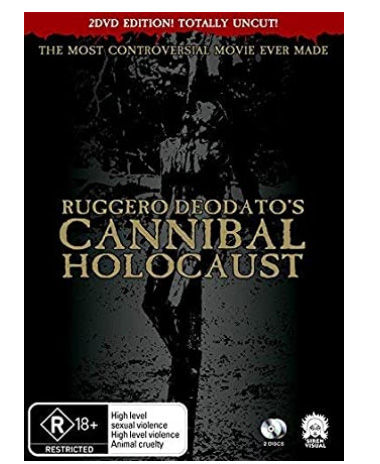
Cannibal Holocaust
Synopsis
Set in New York City and the uncharted Amazon rainforest, a team of four ambitious American documentary filmmakers ventures deep into the jungle to shoot a sensational television special on indigenous cannibal tribes and vanishes without a trace. Months later, a rescue and anthropology expedition led by Professor Harold Monroe retraces their steps into the tribal interior. They recover the lost film cans left behind by the missing crew and return to New York to screen the footage. As television executives and academics watch the horrific, uncensored reels, they uncover a chilling revelation: the documentary crew did not merely record the atrocities of cannibal tribes; they actively provoked, tortured, and murdered the natives to stage shocking footage for ratings. The grim found-footage masterpiece exposes the absolute savagery of civilized humanity.
The Making of the Film
Director and cinematographer Ruggero Deodato conceived the extreme exploitation horror film inspired by Italian media sensationalism and television news coverage of violent global conflicts. Deodato wanted to craft a biting satirical critique of modern media voyeurism and documentary ethics by pioneering the cinematic found-footage narrative style years before The Blair Witch Project. Italian and Colombian studios financed the notorious production.
Critical Reception
Critics universally condemned Cannibal Holocaust with intense revulsion and outrage upon its release due to its extreme graphic violence, sexual assault, and genuine slaughter of live animals on screen. Director Ruggero Deodato was actually arrested and put on trial in Italy for murder and obscenity because the gore effects were so convincing that authorities believed actors had actually been killed. Over subsequent decades, however, film historians and horror cinephiles reappraised the film as a brilliant, visionary masterpiece of satirical found-footage horror that savagely indicted media exploitation.
Public reception was explosive, sparking worldwide censorship bans, moral panic, and notoriety that made it one of the most banned films in cinema history. Cinephiles respect its narrative structure while deploring its animal cruelty. Its legacy is uniquely controversial.
The film did not receive any mainstream award recognition, reflecting its extreme exploitation standing. Its pioneering of the found-footage genre is universally acknowledged by film historians. Its dark notoriety remains unmatched.
Behind-the-Scenes Stories
Director Ruggero Deodato drew inspiration from Italian media sensationalism, Amazon anthropological documentaries, and yellow journalism. He chose authentic, dangerous location shooting in the deep Amazon rainforests of Colombia, enduring harsh heat and insect swarms. His direction pushed the unknown international cast to portray documentary crew members with obnoxious realism.
Production faced legendary legal nightmares, censorship trials, and intense public backlash because Deodato included real footage of animals being killed on screen, which he later expressed deep regret over. The actors were legally required by Italian courts to sign contracts disappearing from public view for a year after release to maintain the illusion that they were actually dead. Riz Ortolani composed a hauntingly beautiful orchestral score that shockingly contrasted with the brutal gore.
A memorable sequence involves Professor Monroe viewing the recovered film reels in a sterile New York editing room while watching the documentary crew burn down a native village alive. The scene delivers a devastating indictment of Western savagery. The framing device created chilling realism.
The casting process prioritized unknown international actors to enhance the documentary hoax illusion. Robert Kerman was cast as Professor Harold Monroe, bringing a grounded, horrified academic authority to the grim proceedings.
Themes Explored
The film explores media sensationalism, documentary ethics, Western imperialism, animal cruelty, civilization versus savagery, and voyeurism. It satirizes how civilized society creates monsters for television ratings. Humanity is the true cannibal.
NULL
Meaning of the Title
The title refers directly to the horrific holocaust of violence inflicted upon both indigenous tribes and the documentary crew in the Amazon. It highlights the brutal savagery explored in the found footage.
NULL
NULL
Similar Films
Other similar films include The Blair Witch Project, Cannibal Ferox, and Man Bites Dog.