

 Français
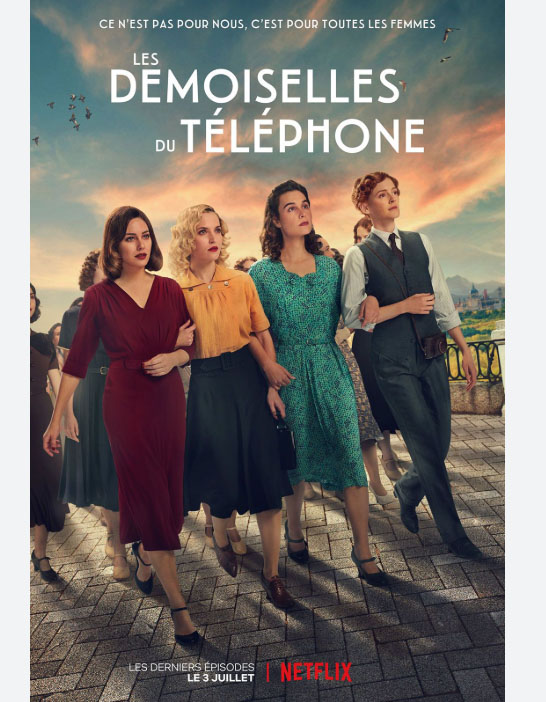
Cable Girls
Synopsis
Set in 1920s Madrid, four women working at a modern telecommunications company form a strong bond while dealing with romance, jealousy, and betrayal in a changing society. As they navigate the strict expectations of the era, they strive for independence and personal freedom against all odds. Their daily lives at the switchboard become intertwined with dangerous secrets, corporate espionage, and revolutionary political movements. Ultimately, their loyalty to one another proves to be their greatest strength in a world dominated by men.
The Making of the Film
The series was created by Ramón Campos and Teresa Fernández-Valdés, who wanted to explore the dawn of female empowerment in Spain through a high-end period drama. The idea stemmed from a desire to highlight the historical transformation of women entering the modern workforce during the 1920s. The creators drew inspiration from real-life social changes in Madrid when telephone companies began employing women, which provided a unique window into personal liberation. Although entirely fictional in its plotlines, the show's backdrop is deeply rooted in the historical reality of early telecommunications infrastructure.
Critical Reception and Reviews
Professional critics praised the series for its lavish production design, stunning 1920s costumes, and its bold attempt to blend traditional melodrama with modern feminist themes. Many reviewers highlighted the strong chemistry among the lead actresses and the fast-paced narrative that kept viewers hooked from the very first episode. However, some critics pointed out that certain plot twists leaned heavily into soap-opera clichés, occasionally overshadowing the historical depth. The audience reception was overwhelmingly positive worldwide, especially on streaming platforms where it gained a massive and dedicated following. Viewers connected deeply with the emotional struggles, romantic triangles, and themes of female solidarity. While it did not sweep major international television awards, it received several nominations and won domestic recognition for its popular appeal and cultural impact.
Filming Anecdotes
The directors and creators were heavily inspired by classic Hollywood melodramas as well as contemporary European period series that prioritize visual style and character-driven tension. Production faced significant challenges due to the elaborate recreation of 1920s Madrid, requiring extensive set construction and meticulous wardrobe coordination for hundreds of extras. During the shooting of a tense switchboard room sequence, a minor technical malfunction on set accidentally created a remarkably authentic reaction from the cast, which was kept in the final cut. Initially, some of the main lead roles were envisioned for a different set of younger actors before the final casting choices were locked in after rigorous chemistry readings.
Themes Explored
The series primarily explores female emancipation, solidarity, and the struggle for independence in a rigidly patriarchal society. It also delves into class disparity, political corruption, and the high cost of forbidden love during a time of great social upheaval.
The final episodes bring the dramatic narrative arcs to a climactic conclusion where the characters must make ultimate sacrifices for freedom and justice. The resolution ties up longstanding mysteries while leaving a poignant tribute to the enduring power of friendship.
The title refers to the pioneering female operators who connected calls at the central telephone exchange, symbolizing a new era of communication and female presence in the workforce.
The series concluded its run on Netflix, cementing its legacy as one of Spain's most successful international period dramas.
Grand Hotel, Velvet, The Baker and the Beauty