

 Français
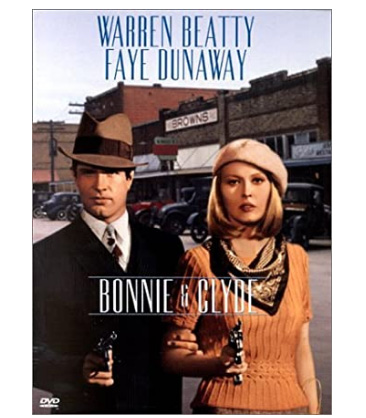
Bonnie and Clyde
Synopsis
Set during the Great Depression, Bonnie Parker is a bored small-town bored waitress who meets an ex-con named Clyde Barrow outside her mothers home. Impressed by his outlaw swagger, Bonnie joins Clyde in a passionate, cross-country crime spree involving bank robberies, car chases, and escalating violence across the American Midwest. As they recruit an awkward mechanic and Clyde brother and sister-in-law into their growing Barrow Gang, law enforcement closes in on their trail. Their romanticized fugitive lifestyle culminates in a tragic, bullet-riddled ambush on a dusty rural road.
The Making of the Film
Screenwriters David Newman and Robert Benton conceived the biographical crime drama inspired by French New Wave cinema and 1930s outlaw lore. Director Arthur Penn joined the project to bring a fresh, countercultural sensibility that challenged traditional Hollywood censorship. Warren Beatty championed the production as producer and star, revolutionizing modern American cinema.
Critical Reception
Critics initially greeted Bonnie and Clyde with divided reviews upon its release due to its unprecedented blend of graphic violence, dark comedy, and sexual liberation, but opinion quickly shifted into universal acclaim. Reviewers lauded Arthur Penn visionary direction, the snappy screenplay, and electrifying lead performances by Warren Beatty and Faye Dunaway. It is celebrated as a cornerstone of the New Hollywood movement.
Public reception was phenomenal, turning the violent outlaw drama into a massive cultural phenomenon and box-office blockbuster among rebellious youth audiences. Audiences were captivated by the stylish fashion and anti-establishment attitude. Its cultural footprint is monumental.
The film earned ten Academy Award nominations, winning two: Best Supporting Actress for Estelle Parsons and Best Cinematography for Burnett Guffey. Warren Beatty and Faye Dunaway received widespread acting honors. Its legacy as a cinema milestone is secure.
Behind-the-Scenes Stories
Director Arthur Penn drew inspiration from French New Wave cinema, Depression-era photographic archives, and counterculture rebellion. He chose authentic rural Texas locations to create a sun-baked, gritty historical atmosphere. His direction pushed Warren Beatty and Faye Dunaway to cultivate effortless 1930s outlaw style.
Production faced heavy resistance from conservative studio executives who initially wanted a minor release, but Beatty persistence forced Warner Bros. to back it fully. Faye Dunaway studied Bonnie Parker historical photographs meticulously. Gene Hackman brought rugged energy to his role as Buck Barrow.
A memorable sequence involves the climactic police ambush where Bonnie and Clyde are riddled with bullets in slow-motion photography. The scene revolutionized action editing and graphic violence in Hollywood. The cinematic poetry shocked and thrilled audiences.
The casting process brought together electrifying young talent. Warren Beatty was cast as Clyde Barrow, also serving as producer. Faye Dunaway was chosen for Bonnie Parker, launching her into global superstardom. Michael J. Pollard and Gene Hackman rounded out the outlaw gang.
Themes Explored
The film explores anti-establishment rebellion, economic depression desperation, media celebrity notoriety, violence, and fatalistic romance. It highlights how societal disenfranchisement fuels outlaw mythology. Freedom ends in tragedy.
NULL
Meaning of the Title
The title refers directly to the legendary historical criminal couple Bonnie Parker and Clyde Barrow whose notorious crime spree defined Depression-era American folklore. It highlights their inseparable outlaw bond.
NULL
NULL
Similar Films
Other similar films include Natural Born Killers, Badlands, and Public Enemies.