

 Français
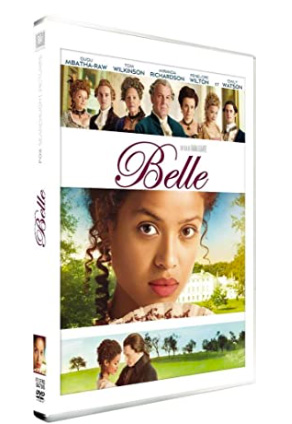
Belle
Synopsis
Set in eighteenth-century England, Belle tells the story of Dido Elizabeth Belle, the mixed-race daughter of a British naval officer and an enslaved African woman. Raised by her aristocratic great-uncle, Lord Mansfield, she enjoys privileges that are unusual for a woman of her background, yet continues to experience the limitations imposed by racial prejudice. As she grows older, Dido struggles to understand her place within a society deeply shaped by class distinctions and the slave trade. Her growing awareness of injustice becomes connected to an important legal controversy involving the fate of enslaved Africans aboard the ship Zong. At the same time, she develops feelings for an idealistic young man who encourages her to question the established social order.
The film's origins
Belle was inspired by the extraordinary historical life of Dido Elizabeth Belle, an eighteenth-century woman whose existence is documented by a remarkable family portrait. Screenwriter Misan Sagay became interested in her story after discovering the famous painting depicting Dido alongside her white cousin, Lady Elizabeth Murray, at Kenwood House. The portrait offered an unusual image of a mixed-race woman occupying a position within the British aristocracy at a time when slavery and racial discrimination were deeply embedded in society. Director Amma Asante recognized the potential for a historical drama exploring identity, gender and social injustice through Dido's perspective. The screenplay combines documented historical figures and events with fictionalized relationships and dramatic situations. In particular, the filmmakers connected Dido's story with Lord Mansfield's involvement in important legal cases concerning slavery. Gugu Mbatha-Raw was selected for the leading role, bringing emotional depth to a character whose historical record leaves many aspects of her personality unknown. The film was not adapted from a novel, but grew from historical research and the desire to bring a relatively overlooked figure into international cinema. Its central ambition was to show how personal identity and social position could intersect in a society structured by racial hierarchy.
Reviews and reception
Critical reception:
Belle received generally favorable reviews from professional critics. Gugu Mbatha-Raw was particularly praised for her performance, which combines intelligence, emotional sensitivity and quiet determination. Amma Asante was recognized for bringing an important and relatively unfamiliar chapter of British history to the screen. The costumes, cinematography and production design were also widely appreciated. Some historians and critics questioned the film's historical liberties, particularly its portrayal of Dido's influence on the Zong case and the fictionalization of certain relationships. Nevertheless, many reviewers considered it an engaging and worthwhile historical drama.
Audience reception:
The film attracted a strong audience among viewers interested in historical dramas and stories addressing racial inequality. Its international release helped introduce Dido Elizabeth Belle to audiences who had never heard of her before. Viewers particularly appreciated the combination of romance, aristocratic intrigue and questions about justice. Gugu Mbatha-Raw's performance became one of the principal reasons for the film's positive reception. Its success also contributed to wider discussions about the representation of Black historical figures in British cinema.
Awards and recognition:
Belle received several awards and nominations following its international release. Gugu Mbatha-Raw won Best Actress recognition from the African-American Film Critics Association and the Black Reel Awards. The film also received nominations for its direction, performances and overall production. Amma Asante attracted significant international attention for her work, further establishing her reputation as a filmmaker interested in historical and social subjects. The film was also selected for prestigious international festival screenings, helping strengthen its international profile.
Behind-the-scenes stories
Director's inspirations:
Amma Asante was attracted to Dido's story because it offered an opportunity to explore a woman living between two different social worlds. The director also recognized a personal connection with the character's experience of navigating identity and cultural expectations. The famous portrait of Dido and Elizabeth became a central visual inspiration for the production. Asante wanted to present the protagonist as a fully developed individual rather than simply as a symbol of racial injustice. Her approach combines the elegance of a traditional costume drama with a contemporary awareness of equality and personal freedom.
Production challenges:
Recreating eighteenth-century aristocratic England required extensive research into costumes, architecture and social customs. The production needed to represent Kenwood House and the world of the British aristocracy convincingly. The filmmakers also faced the challenge of presenting complex historical legal questions in a way that remained understandable to a general audience. Another difficulty was balancing the documented aspects of Dido's life with the fictional elements necessary to construct a coherent dramatic narrative. The production therefore combined historical research with artistic interpretation.
A memorable scene:
The famous portrait of Dido Elizabeth Belle and Lady Elizabeth Murray is central to the film's visual identity. The painting provides a powerful image of two young women occupying an unusual position within eighteenth-century aristocratic society. Their presence together challenges assumptions about race, social status and belonging. The film repeatedly returns to the idea that Dido's identity cannot be reduced to her racial background or her position within the family. The portrait also symbolizes the historical importance of preserving the stories of people whose lives were often overlooked.
Originally considered casting:
Gugu Mbatha-Raw was selected to play Dido Elizabeth Belle, while Sarah Gadon portrayed Lady Elizabeth Murray. Tom Wilkinson and Emily Watson were cast as Lord and Lady Mansfield. The casting brought together British performers with experience in historical and dramatic productions. The production was built around the importance of finding an actress capable of conveying Dido's intelligence and emotional complexity. There is insufficient reliable documentation to establish a definitive list of alternative actresses initially considered for the leading role.
Themes explored
Racial identity and belonging: Dido occupies an unusual position in aristocratic society, experiencing both privilege and discrimination because of her background.
Slavery and justice: The film examines the moral and legal questions surrounding the slave trade in eighteenth-century Britain.
Women's independence: Dido and Elizabeth face different limitations imposed by gender and social expectations.
Love and equality: The developing relationship between Dido and John challenges established assumptions about class and social status.
Family and acceptance: Dido's upbringing reveals the contradictions of being loved and protected while still being treated differently.
Historical memory: The story highlights the importance of recovering the lives of individuals whose contributions have been overlooked.
Ending explained
The conclusion centers on Lord Mansfield's handling of the legal controversy surrounding the Zong slave ship. The film presents Dido as an important emotional influence on his thinking, encouraging him to recognize the human consequences of decisions concerning enslaved people. Historically, the Zong case was a real legal dispute involving the killing of enslaved Africans and an insurance claim, although Dido's direct involvement in the proceedings is not established by historical evidence. In the film, the legal outcome becomes a symbolic moment in the struggle against slavery. Dido also finds the courage to pursue a relationship with John Davinier, choosing emotional honesty over the expectations imposed by aristocratic society. Her personal happiness and the wider question of justice are brought together in the final scenes. The ending suggests that individual dignity and social change are connected, even when the people involved cannot immediately transform the entire world around them.
Meaning of the title
The title Belle refers to the nickname associated with Dido Elizabeth Belle and also carries the French meaning of beautiful. It reflects both the protagonist's physical appearance and the broader idea of beauty as something that extends beyond social expectations. The title is particularly meaningful because Dido lives in a society that often judges people according to race, wealth and ancestry. Her story challenges these superficial classifications by emphasizing her intelligence, dignity and individuality. The title also recalls the famous portrait that helped inspire the film and remains an important historical image of Dido and her cousin.
Original soundtrack
The original score was composed by Rachel Portman, whose music provides the film with an elegant and emotionally expressive atmosphere. Her compositions combine orchestral arrangements with delicate themes that reflect Dido's personal development and the tensions surrounding her identity. Portman developed a musical theme for the protagonist that emphasizes her emotional independence and growing confidence. The soundtrack also reinforces the contrast between the formal world of aristocratic society and the more intimate moments of the story. Its restrained romantic style is particularly effective in the film's emotional and courtroom sequences.
Similar films
12 Years a Slave (2013): A historical drama examining the brutality of slavery and the struggle for human dignity.
Amazing Grace (2006): A British historical film about the abolitionist movement and the campaign against the slave trade.
The Duchess (2008): A costume drama exploring the restrictions imposed on women within eighteenth-century aristocratic society.
Pride and Prejudice (2005): A romantic historical drama examining love, class and social expectations.
The Help (2011): A drama about racial discrimination and the courage of women challenging established social structures.