

 Français
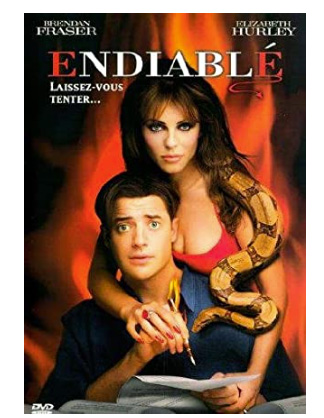
Bedazzled
Synopsis
Elliot Richards is an awkward and frustrated computer technician who desperately wants to win the affection of his colleague Alison. His life changes when he encounters the Devil, who offers him seven wishes in exchange for his soul. Elliot accepts and repeatedly tries to design a version of himself that Alison will love. Each wish produces an unexpected consequence, teaching him that happiness cannot be created simply by changing external circumstances.
The Making of the Film
Bedazzled is a modern remake of the 1967 British comedy starring Peter Cook and Dudley Moore. The new version was developed to update the story for contemporary American audiences while retaining the basic idea of a desperate man making a deal with the Devil. Brendan Fraser was chosen to play Elliot because the role required a mixture of physical comedy, vulnerability and multiple character transformations. Elizabeth Hurley was cast as the Devil, giving the character a glamorous and playful personality. Director Harold Ramis was experienced in combining fantasy concepts with comedy after his work on films such as Groundhog Day. The screenplay adapted the original premise while expanding the number of wishes and comic situations. The filmmakers used the supernatural structure to explore romantic insecurity, self-image and the desire to become someone else.
Reviews and reception
Professional critics gave the film mixed reviews. Some praised Brendan Fraser physical comedy and his ability to portray several radically different versions of Elliot. Elizabeth Hurley performance was also frequently mentioned as one of the films most entertaining elements. Other critics felt that the episodic structure made the story repetitive and less effective than Groundhog Day. Audiences generally appreciated the accessible humor and the chemistry between Fraser and Hurley. The film became a recognizable fantasy comedy of the early 2000s despite receiving only moderate critical enthusiasm. Its visual transformations remain among its most memorable features. The movie has maintained a modest cult following among fans of Brendan Fraser comedies.
Filming anecdotes
Brendan Fraser had to portray several completely different versions of Elliot during the course of the film. Each transformation required changes in costume, voice, body language and comic timing. Elizabeth Hurley deliberately played the Devil with a mixture of elegance, sarcasm and playful manipulation. The production used makeup, costumes and visual effects to distinguish the different wish scenarios. Some versions of Elliot were intentionally exaggerated to parody stereotypical ideas of masculinity. Harold Ramis used the supernatural premise to create situations that could change tone rapidly from romantic comedy to broad physical humor. The production also relied on careful editing because Fraser often had to appear as multiple versions of himself within the same narrative sequence. The remake therefore required considerable coordination between actors, makeup artists, costume designers and visual-effects teams.
Themes addressed
The film explores desire, self-image, romantic obsession, temptation and the search for personal fulfillment. Elliot repeatedly believes that becoming more attractive, powerful or successful will make Alison love him. Each wish demonstrates that external transformation cannot solve his deeper insecurity. The Devil functions as a comic representation of temptation and immediate gratification. The film ultimately argues that authentic relationships require acceptance rather than manipulation. Personal identity becomes more important than the superficial qualities Elliot initially believes he needs.
Explanation of the ending
After repeatedly failing with his wishes, Elliot begins to understand that none of his transformations can create genuine love. He finally rejects the fantasy of controlling Alison and accepts that he cannot force another person to love him. His relationship with the Devil reaches its conclusion as Elliot becomes less dependent on supernatural solutions. The experience changes his understanding of himself and his own desires. The ending emphasizes personal acceptance rather than the achievement of a perfect romantic outcome. Elliot emerges from the experience more mature and aware of the difference between desire and genuine connection.
Meaning of the title
The word bedazzled suggests being dazzled, fascinated or overwhelmed by something attractive and powerful. It is especially appropriate because Elliot becomes fascinated by the promises offered by the Devil. The title also reflects the visual spectacle of the wishes and transformations. At a deeper level, Elliot is bedazzled by the idea that another version of himself will automatically solve his problems. The title therefore captures both the supernatural comedy and the psychological temptation at the heart of the story.
News
There has been no confirmed major remake or sequel to the 2000 version. Brendan Fraser later experienced renewed public attention through his dramatic work, leading to renewed interest in several of his earlier comedies. Bedazzled continues to be remembered for the contrast between Fraser multiple comic transformations and Elizabeth Hurley playful performance. The film remains a recognizable example of early-2000s Hollywood fantasy comedy.
Similar films
Fans of Bedazzled may enjoy Groundhog Day, also directed by Harold Ramis and built around a supernatural mechanism that forces personal transformation. Bruce Almighty similarly gives an ordinary man extraordinary powers and teaches him about responsibility. The Devil Advocate explores temptation and supernatural manipulation in a much darker manner. Liar Liar provides another comparison because it uses an unusual premise to force its protagonist to confront his behavior. Click also examines the dangers of trying to control life through a magical device.