

 Français
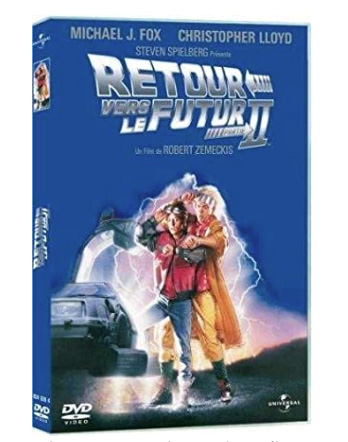
Back to the Future Part II
Synopsis
Marty McFly and Doc Brown travel to the year 2015 to save Marty's future son from trouble. There, the old Biff Tannen steals the time machine and gives his younger self a sports almanac from the future. When Marty and Doc return to 1985, they find a dark, corrupt Hill Valley ruled by Biff. To repair the timeline, they must go back to 1955 and retrieve the almanac, without crossing paths with their earlier selves.
The Making of the Film
The first Back to the Future was such a hit in 1985 that a sequel seemed inevitable, even though Robert Zemeckis and Bob Gale had originally conceived it as a self-contained story. After the success of the first film, the creators decided that a continuation could explore the consequences of time travel. They imagined sending the characters into the future and then back to the past, creating a puzzle of overlapping timelines. Gale wrote a script in which the events of the first film could be revisited from a different angle. The story was so large that it was split into two parts, with the third film filmed at the same time. The idea of visiting 2015 allowed the filmmakers to speculate about technology and society thirty years ahead. They also wanted a darker version of Hill Valley, showing what could happen if the wrong person controlled history. The result is a sequel that is more complex and daring than most.
Reviews and reception
Professional critics' summary
Critics gave the film mixed to positive reviews, admiring its imagination but finding the plot convoluted. Many applauded the vision of the future, with its hoverboards and flying cars, as well as the clever use of the first film's scenes. Some found the story too busy and the ending too abrupt, since it sets up a third part. Over time, the film has been reappraised as an ambitious and inventive sequel.
Audience reception
The film was a major success, grossing more than 330 million dollars worldwide. Audiences loved the playful predictions of the future and the opportunity to see the events of 1955 from another angle. Many fans have since compared the film's 2015 with the real one, which has become a popular tradition. The hoverboard has become one of the most iconic gadgets in popular culture.
Awards
The film received an Academy Award nomination for Best Visual Effects. It also earned several nominations at the Saturn Awards and other genre ceremonies. Its special effects, especially the split-screen techniques used to put Michael J. Fox in several roles in a single scene, were widely praised. The film remains a landmark in visual effects history.
Filming anecdotes
Director's inspirations
Zemeckis and Gale were inspired by the idea of what would happen if a person with bad intentions got hold of time travel. They imagined a vision of the future that was optimistic and satirical, rather than gloomy. The alternate 1985 was inspired by the cynical atmosphere of films about corrupt tycoons. The decision to revisit scenes from the first film was a technical and creative challenge that had never been tried to this scale.
Production difficulties
The production shot the second and third films back to back, which required careful planning and a long shoot. To recreate the 1955 scenes, the filmmakers had to rebuild sets and match the lighting and camera work of the original. Michael J. Fox played several roles in the 2015 scenes, including Marty, Marty Junior and Marlene, which demanded complex effects. The hoverboard sequences required elaborate wire work and special rigs, which made the scenes difficult to film.
Anecdote about a particular scene
One of the best-known moments is the chase through the 2015 town square, in which Marty rides a hoverboard to escape Biff's gang. The scene mixes comedy and action, and it inspired a generation to dream of real hoverboards. Another unforgettable sequence shows Marty and Doc watching the events of the first film from the shadows. Fans also love the gag with the sports almanac, which becomes the key to the entire plot.
Originally planned casting
Crispin Glover, who played George McFly in the first film, did not return for the sequel because of a disagreement over his fee. The production used another actor with prosthetics and old footage to portray George, which led to a legal dispute. Elisabeth Shue replaced Claudia Wells as Jennifer Parker, since Wells was unavailable. Michael J. Fox, Christopher Lloyd, Lea Thompson and Thomas F. Wilson reprised their roles.
Themes explored
The film explores the dangers of tampering with time and the unexpected consequences of even small changes. It also looks at the idea of destiny, as Marty fears that his family's future may repeat the same mistakes. The story shows how greed and power can corrupt a society, as seen in the nightmarish version of Hill Valley under Biff. Another theme is the relationship between generations, with Marty facing the future of his own children. It also reflects on the pressure of reputation and pride, since Marty is easily provoked into doing foolish things. The film plays with the idea that the future is not written, and that we can shape it by our choices. It also pokes fun at consumer culture and the obsession with new technology. At its heart, it remains a playful adventure about responsibility.
Ending explained
After retrieving the almanac from young Biff in 1955, Marty burns it and restores the original timeline. Just as he thinks everything is solved, a lightning bolt strikes the DeLorean and sends Doc Brown back to 1885. Marty is left stranded in 1955 with no way home. Soon after, he receives a letter from the Western Union office, written by Doc in 1885, telling him that he is safe and has settled in the Old West. Marty then runs to the younger Doc of 1955 to seek help. The film ends on a cliffhanger, as the 1955 Doc realises that he must help Marty to repair the DeLorean and send him to rescue his future self. A preview of the next film follows. This ending links the second film directly to the third.
Meaning of the title
The title is a simple continuation of the first film's name, with Part II indicating the second chapter. Back to the Future is a play on the idea of going forward in time instead of returning to the past, as the original did. In the sequel, the characters indeed travel to the future, giving the title a new and literal meaning. It also reflects the film's structure, which loops back to the past of the first film. The words Part II highlight that this is a direct continuation, not a stand-alone story. The sequel therefore uses its title to promise more time travel and more twists. Fans consider the series name one of the most memorable in popular cinema.
Original Soundtrack
Alan Silvestri composed the score, building on the heroic main theme of the first film. His music adds a feeling of futuristic adventure and dark tension for the alternate 1985. The film also features songs that evoke the 1950s and 1980s. The soundtrack contributes greatly to the trilogy's timeless appeal.
News
The trilogy remains hugely popular, and its legacy continues through merchandise, anniversary re-releases and a stage musical. Back to the Future: The Musical has played in London and on Broadway. The creators have said that they have no plans for a remake or a new film.
Similar Films
Back to the Future and Back to the Future Part III are the natural companions. Looper and Predestination offer more mature tales of time paradoxes. Bill and Ted's Excellent Adventure is a more comic take on time travel. Terminator 2 and Avengers: Endgame also explore the idea of changing the past.