

 Français
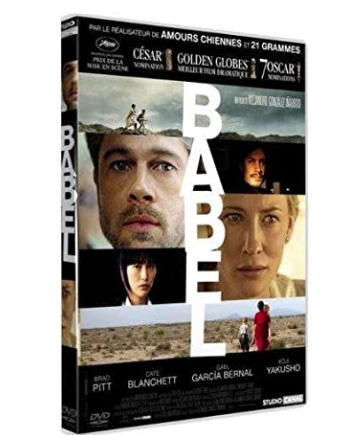
Babel
Synopsis
A tragic accidental gunshot in the remote Moroccan desert sets off a dramatic chain of events connecting four disparate groups of people across three different continents. In Morocco, two young shepherd boys accidentally fire a rifle that strikes an American tourist on a tour bus. In Tokyo, a grieving deaf-mute Japanese teenager struggles with profound isolation and alienation following her mother's suicide. Meanwhile, an illegal Mexican nanny working in California takes her two American charges across the border for a family wedding, leading to a perilous border patrol crisis. Their lives become globally intertwined through fear, misunderstanding, and cultural divides.
The Making of the Film
Director Alejandro González Iñárritu and writer Guillermo Arriaga completed their acclaimed "Death Trilogy" with this ambitious multi-narrative masterpiece, inspired by the theme of human miscommunication across global societies. Iñárritu wanted to explore how a single isolated incident in one corner of the world can ripple outward with devastating consequences across borders. The screenplay was meticulously structured across four distinct languages and cultures to highlight the universal nature of pain and isolation. The production involved massive international filming across Morocco, Mexico, and Japan.
Critical Reception
Professional critics overwhelmingly praised the film for its visionary direction, sweeping emotional power, stellar ensemble performances, and brilliant thematic ambition. Reviewers lauded Iñárritu's mastery in weaving four complex, culturally distinct stories into a cohesive, gripping meditation on modern globalization and isolation. The cinematography and Gustavo Santaolalla's haunting musical score received universal critical acclaim.
Public reception was strong among arthouse and international cinephiles who appreciated the film's epic scope, emotional gravity, and poignant social commentary. It became a significant critical and commercial success worldwide, cementing Iñárritu's status as a major auteur filmmaker.
The film achieved massive award season success, winning the Best Director prize at the Cannes Film Festival and receiving seven Academy Award nominations, including Best Picture. Gustavo Santaolalla won the Oscar for Best Original Score. These accolades cemented its legacy as a modern classic of global cinema.
Behind-the-Scenes Stories
Director Alejandro González Iñárritu drew inspiration from global news events, cultural misunderstandings, and the philosophical concept of the Tower of Babel.
Production faced immense logistical challenges coordinating complex film crews and non-professional actors across remote Moroccan deserts, bustling Tokyo streets, and desert Mexican borders.
During the casting process, the filmmakers discovered hearing-impaired newcomer Rinko Kikuchi, whose powerful performance as Chieko earned her widespread international acclaim.
The production brought together a stellar star-studded international cast including Brad Pitt, Cate Blanchett, Gael García Bernal, and Adriana Barraza.
Core Themes Explored
The film explores global miscommunication, isolation, cultural barriers, parental responsibility, grief, and interconnected humanity.
Themes Explored
Global communication failure, cultural isolation, parental love, borders and immigration, tragedy, and interconnected destiny.
The conclusion brings resolution to each harrowing storyline: the injured American tourist reunites with her husband, the shepherd boys face justice, the Japanese teenager connects with her grieving father, and the nanny is deported after a harrowing ordeal. The final moments emphasize that despite vast geographic and cultural divides, all human beings share the same fundamental vulnerability and need for connection.
The title references the biblical story of the Tower of Babel, symbolizing the confusion of languages and the tragic communication barriers separating human beings across the globe.
The film features a haunting, atmospheric musical score composed by Gustavo Santaolalla, utilizing acoustic guitars and ambient textures that earned an Academy Award.
Crash, Traffic, 21 Grams, Cloud Atlas