

 Français
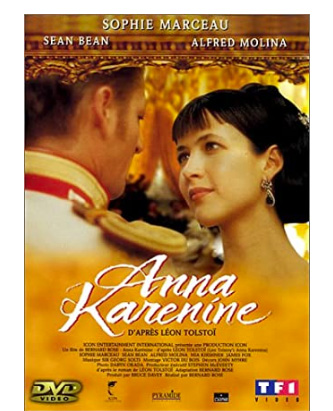
Anna Karenina
Synopsis
Set in 19th-century imperial Russia, Anna Karenina is a wealthy, beautiful aristocrat trapped in a loveless marriage with an older, rigid government official named Alexei Karenin. During a train journey to Moscow, Anna meets the dashing, charismatic military officer Count Alexei Vronsky, and an immediate, overwhelming passion ignites between them. Defying strict societal conventions and risking the loss of her beloved young son, Anna embarks on a scandalous affair that scandalizes high society. As isolation, jealousy, and social ostracism close in, Anna spirals into emotional despair and tragedy.
The Making of the Film
Adapted from Leo Tolstoy's monumental 1878 literary masterpiece, the film was directed by Bernard Rose as an ambitious independent period adaptation. Rose sought to capture the authentic emotional intensity and psychological realism of Tolstoy's tragic novel by filming entirely on location in Russia. The production aimed to bypass Hollywood conventions to deliver a faithful, European-style literary adaptation. Casting Sophie Marceau in the lead role brought international star power and emotional vulnerability to the tragic heroine.
Critical Reception
Critical reception for the film was generally mixed to positive, with reviewers praising Sophie Marceau's mesmerizing lead performance and the gorgeous Russian locations. Critics noted that while condensing a massive 800-page novel into a feature film runtime required significant narrative omissions, the romantic tragedy retained its emotional core. Audiences appreciated the lavish period costumes and classic storytelling. It remains celebrated as a solid, faithful cinematic translation of Tolstoy's work.
Behind-the-Scenes Stories
The production secured rare official permission to film major historical sequences inside authentic Russian palaces and landmarks in St. Petersburg and Moscow. Sophie Marceau and Sean Bean spent weeks studying 19th-century Russian aristocratic etiquette to ensure period authenticity in their romantic interactions. The horse-riding and winter sleigh scenes required careful coordination amidst freezing Russian winter weather conditions. Costume designers meticulously crafted hundreds of hand-stitched period gowns.
Themes Explored
The film explores forbidden passion, marital hypocrisy, societal judgment, and the rigid moral codes of 19th-century Russian aristocracy. It highlights the destructive nature of jealousy, social isolation, and maternal heartbreak. Personal freedom versus societal duty drives the tragic narrative. It also touches upon infidelity and psychological despair.
Ending Explained
Consumed by intense paranoia, drug addiction, and the agonizing separation from her son, Anna realizes Vronsky's love is slipping away. Overcome by despair, she rushes to the railway station and throws herself beneath the wheels of a moving freight train, ending her tragic life. Vronsky is left shattered and desolate, haunted by her memory as he departs for military service. The conclusion delivers a heartbreaking, faithful adaptation of Tolstoy's iconic tragic finale.
Meaning of the Title
The title refers directly to the name of the tragic protagonist, Anna Karenina, symbolizing her central role in the novel's exploration of love and society. It highlights her individual rebellion against oppressive aristocratic conventions. The name evokes classic literary tragedy.
Dmitri Shostakovich's classical orchestral compositions were utilized to create a haunting, emotionally resonant period soundtrack.
Madame Bovary, The Age of Innocence, Wuthering Heights, Anna Karenina (2012)