

 Français
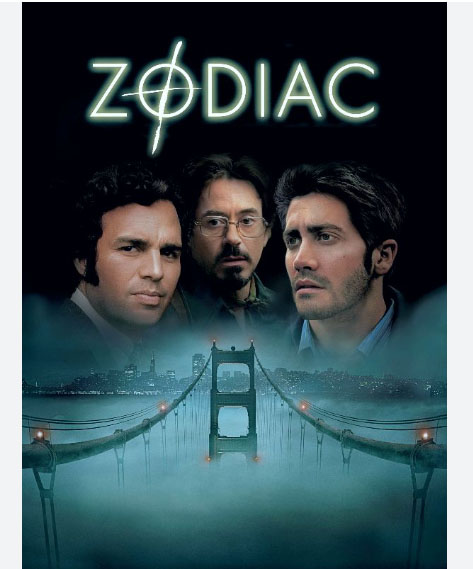
Zodiac
Synopsis
Set in San Francisco during the late 1960s and 1970s, the film chronicles the intensive, decades-long manhunt for the elusive serial killer known as 'Zodiac,' who terrorizes Northern California with taunting cipher letters and brutal murders. Robert Graysmith, a mild-mannered political cartoonist for the San Francisco Chronicle, becomes obsessively consumed by the cryptic clues and ciphers sent to the newspaper office. Alongside hard-boiled crime reporter Paul Avery and tenacious homicide inspector David Toschi, Graysmith dives deeper into the labyrinthine investigation as the years stretch on and official leads grow cold. The meticulously researched psychological thriller explores how an unsolved obsession can distort a man's entire life.
The Making of the Film
Director David Fincher adapted the gripping true-crime procedural from Robert Graysmith's bestselling 1986 and 2002 investigative books documenting the real Zodiac murders. Fincher sought to craft the definitive cinematic account of the investigation, prioritizing painstaking historical accuracy, forensic detail, and psychological realism over Hollywood action clichés. Paramount Pictures and Warner Bros. co-financed the production. The screenplay by James Vanderbilt was built upon thousands of pages of actual police case files and interviews.
Critical Reception
Résumé des critiques professionnelles : Critics offered widespread critical acclaim, praising David Fincher's meticulous direction, Harris Savides' stunning digital cinematography, Robert Downey Jr.'s charismatic performance, and the immersive 1970s period detail. Reviewers commended the film for avoiding sensationalism, opting instead for a chilling, methodical procedural about obsession and bureaucracy. Over subsequent decades, 'Zodiac' has been universally reevaluated by film critics as one of the greatest masterpieces of the 21st century.
Réception du public : Audiences in 2007 responded with moderate box-office returns, as viewers expecting a fast-paced slasher film encountered a slow-burn, cerebral investigative procedural instead. However, home video and streaming over subsequent years turned it into a massive cult classic and critical darling among cinephiles.
Récompenses obtenues : While the film was surprisingly shut out of major Academy Award nominations, it earned numerous top-ten critic listings, film festival accolades, and guild recognition for its revolutionary use of digital cameras and meticulous sound design.
Behind-the-Scenes Stories
Inspirations du réalisateur : David Fincher drew inspiration from classic investigative procedurals like 'All the President's Men', wanting to capture the tedious, frustrating, and all-consuming nature of real police work. He insisted on unprecedented historical accuracy down to the exact brand of cigarettes smoked by detectives and the precise fonts used on newspaper typewriters. Visual styling favored cold digital palettes and subtle CGI enhancements to recreate 1970s San Francisco.
Difficulties de production : Shooting extensive forensic dialogue scenes with massive amounts of technical detail required rigorous rehearsal and dozens of takes to achieve Fincher's trademark perfectionism. Managing the massive span of over a decade of real-time aging across characters demanded meticulous wardrobe, hair, and makeup coordination. Relying heavily on pioneering digital RED cameras for night shoots presented technical challenges for the crew.
Anecdote sur une scène particulière : The terrifying opening Lake Berryessa knife-attack sequence was filmed with chilling realism and minimal musical score, forcing the audience to sit in agonizing silence with the victims. Jake Gyllenhaal spent hours interviewing the real Robert Graysmith to capture his nervous, obsessive energy. Mark Ruffalo shadowed real-life homicide inspector Dave Toschi, learning how Toschi characteristically wore his shoulder holster and ate hot dogs.
Casting initialement prévu : Jake Gyllenhaal, Mark Ruffalo, and Robert Downey Jr. were cast early to anchor the central trio of investigator-journalist-cartoonist, bringing incredible chemistry to the methodical procedural.
Themes Explored
The film explores obsession, paranoia, the pursuit of truth, bureaucratic frustration, and how unsolved mysteries alter human psychology. It examines the obsessive toll that investigative journalism and amateur sleuthing take on personal lives. Another core theme is the passage of time. Ultimately, it is a masterclass in procedural realism.
Ending Explained
The narrative concludes in 1983, years after active investigations have slowed down, with Robert Graysmith finally tracking down Arthur Leigh Allen—whom Graysmith remains convinced was the Zodiac killer—to a hardware store and staring him down face-to-face, finding a quiet sense of personal closure despite a lack of definitive legal confession. A text epilogue notes that the Zodiac case remains officially open in multiple jurisdictions to this day. It signifies an ambiguous, realistic resolution to an unwieldy real-life nightmare.
Meaning of the Title
The title 'Zodiac' refers directly to the self-chosen moniker of the elusive Northern California serial killer who taunted police and newspapers with cryptic astrological symbols and ciphers, setting the central enigma of the procedural.
Original Soundtrack
David Shire composed a subtle, moody, and atmospheric orchestral and synthesizer score that utilized sparse musical cues to maintain relentless psychological tension without melodramatic exaggeration.
["All the President's Men", "Memories of Murder", "Se7en"]