

 Français
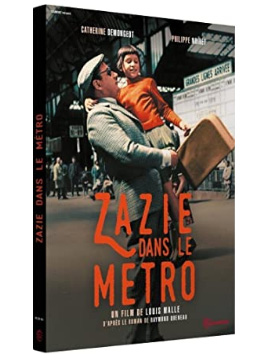
Zazie in the Metro
Synopsis
A precocious, sharp-tongued nine-year-old country girl named Zazie is sent by her mother to spend a weekend in Paris with her eccentric uncle Gabriel. Zazie has only one obsessive dream during her visit: to ride the legendary Paris Métro underground subway. However, due to a massive transit strike, the metro stations are closed, frustrating her plans. Accompanied by her tolerant uncle and a colorful array of bizarre Parisian characters, Zazie embarks on a frantic, anarchic, and surreal slapstick tour across the city, leaving a trail of comedic chaos in her wake.
The Making of the Film
Director Louis Malle boldly adapted Raymond Queneau's famously untranslatable avant-garde satirical novel into a visually dazzling, frenetic cinematic farce. Producers utilized experimental filmmaking techniques inspired by the French New Wave, including accelerated motion, jump cuts, hand-painted colors, and absurdist sound effects. The production utilized real Parisian tourist landmarks and constructed studio sets. Child actress Catherine Demongeot was cast as Zazie, delivering an unforgettable, irreverent lead performance. Nouvelles Éditions de Films backed the daring art-house project.
Critical Reception
Critics offered mixed reviews upon release, with some baffled by its anarchic slapstick editing and absurdist humor, while avant-garde critics praised its exhilarating cinematic freedom. Over subsequent decades, the film achieved recognized status as a brilliant precursor to modern postmodern comedy. Audiences delighted in its anarchic disrespect for bourgeois Parisian traditions. It stands as a landmark of French New Wave cinema.
Behind-the-Scenes Stories
Louis Malle drew visual inspiration from silent film slapstick comedians like Buster Keaton, Keystone Cops, and French New Wave editing experiments. Catherine Demongeot was discovered through open casting in schools and brought unscripted, natural mischief to the set. During filming across Paris, crowds gathered to watch elaborate street stunts and car chases. The cinematography utilized wide-angle lenses to exaggerate comedic spatial proportions.
Themes Explored
The narrative explores childhood anarchy, post-war French consumerism, linguistic play, and adult hypocrisy. It examines how children view adult social rituals with irreverent skepticism. Furthermore, it highlights surrealism.
Ending Explained
Zazie finally returns to her mother at the train station after her chaotic weekend, and when asked what she did, she casually replies, 'Vieillie' (aged), having survived a surreal Parisian rite of passage. An absurdist comedic conclusion closes the film.
Meaning of the Title
The title 'Zazie dans le métro' refers to the young protagonist and her unfulfilled quest to ride the Parisian subway during the transit strike.
Other surreal French New Wave and absurdist comedies such as Playtime, Le Dîner de Cons, and Pierrot le Fou.