

 Français
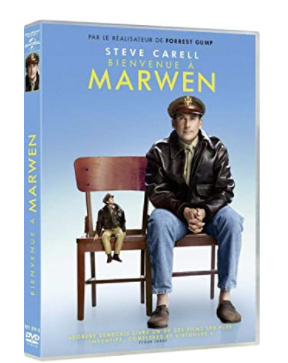
Welcome to Marwen
Synopsis
After a brutal attack leaves him with severe brain damage and lost memories, Mark Hogancamp rebuilds himself by creating Marwen, a miniature Belgian village from the Second World War in his own backyard. The village is populated by dolls inspired by the women in his life, and by Mark himself as a heroic pilot. As the line between his fantasy world and reality blurs, the arrival of a new neighbor and the approaching trial of his attackers force him to confront his past. Robert Zemeckis blends live action and performance-capture animation to tell this unusual true story.
The Making of the Film
The film is inspired by the 2010 documentary "Marwencol" by Jeff Malmberg, which told the real story of Mark Hogancamp. In 2000, Hogancamp was beaten by a group of men outside a bar in New York State, an attack that left him with serious injuries and large gaps in his memory. Unable to afford long-term therapy, he began building a scale-model village as a way to heal, photographing his dolls in elaborate scenes. Robert Zemeckis, who had already explored performance capture in films like "The Polar Express" and "Beowulf", saw in this story a perfect way to bring the dolls to life. The screenplay was co-written by Zemeckis and Caroline Thompson, and Steve Carell took the lead role. The film was released at the end of 2018.
Reviews and Reception
Summary of Professional Reviews
Critics were largely divided, with many reviews leaning negative. Some felt the film struggled to balance the darkness of real trauma with the whimsical tone of the fantasy sequences. Others praised the technical ambition of the doll sequences and the commitment of Steve Carell, who carries the film with sincerity. Many critics also noted that the documentary it is based on was considered more powerful and more intimate.
Audience Reception
The public response was mixed, and the film did not find a large audience in theaters. Its box-office results fell far short of its budget, making it a disappointment for the studio. Over time, some viewers have defended it as an earnest and moving film about healing through art. It remains a curious, divisive work that people tend to either admire or reject.
Filming Anecdotes
Director's Inspirations
Zemeckis drew heavily on the visual language of Hogancamp's own photographs, which stage World War II scenes with remarkable detail. He was fascinated by the idea that a man could use art as a form of therapy, transforming trauma into storytelling. The look of the doll world was designed to feel like photographs brought to life, with glossy plastic textures and exaggerated expressions.
Production Challenges
The doll sequences relied on performance capture, which meant the actors had to perform scenes that were later transformed into digital dolls. Combining these animated segments with the live-action scenes required careful work to keep the two worlds consistent. The film also had to find a respectful way to portray a real man's trauma while still allowing room for imagination and humor.
Themes Explored
The film is a study of trauma and the many ways people try to survive it. It explores how fantasy can become a refuge, and what happens when that refuge begins to replace reality. Art is presented as a form of therapy, a way of regaining control after a loss of memory and identity. The story also deals with masculinity, vulnerability and gender expression, since the main character's attackers targeted him for how he chose to dress. Friendship and kindness emerge as essential forces in recovery, represented by the women who appear both in his life and in his imaginary village. Finally, the film asks whether imagination can help us face the past or only help us avoid it.
Ending Explained
The final stretch brings together the two threads of the story: Mark's fantasy world and the real-life confrontation with his attackers. By facing the legal process and sharing his work publicly, he takes a step out of the protective shell he built around himself. The film suggests that Marwen has helped him heal enough to begin living in the real world again. The fantasy does not disappear, but it no longer needs to control him.
Meaning of the Title
"Marwen" is the name Mark Hogancamp gave to his imaginary village. It comes from the original "Marwencol", a name that combines the first names of Mark and two women in his life. The title therefore points to a private world built from personal memories and affection. "Welcome to Marwen" is also an invitation for the audience to step into the mind of its creator.
Soundtrack
The score was composed by Alan Silvestri, a longtime collaborator of Robert Zemeckis who also wrote the music for "Back to the Future" and "Forrest Gump". His music moves between wartime adventure and fragile emotion, matching the film's double nature. It plays a key role in making the dream world feel warm and alive, while keeping the real-world scenes grounded.
Similar Films
- Marwencol (2010): the documentary that inspired the film.
- Big Fish (2003): a story where imagination and reality blend together.
- Lars and the Real Girl (2007): a tender look at a man coping through an unusual fantasy.
- Forrest Gump (1994): another Zemeckis film combining emotion and technical innovation.