

 Français
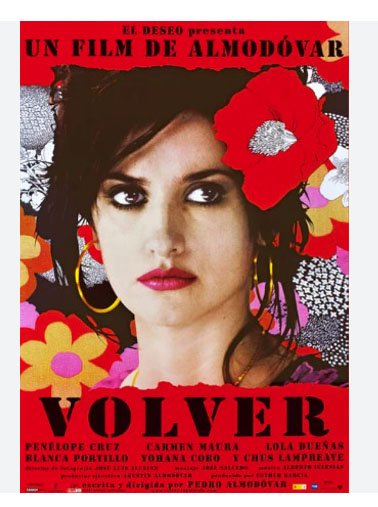
Volver
Synopsis
Raimunda is a resilient, hardworking working-class mother living in Madrid with her teenage daughter, struggling to make ends meet while hiding a dark family secret. When her eccentric mother Irene tragically reappears as a ghost from the dead to reconcile past wrongs, the family is plunged into a whirlwind of emotional revelations. Set against the sun-baked, windy backdrop of La Mancha, the women of the family must navigate domestic abuse, grief, and long-buried tragedies with fierce solidarity. The film is a vibrant celebration of female resilience and sisterhood.
The Making of the Film
Director Pedro Almodóvar helmed this deeply personal masterpiece, crafting a poignant tragicomic melodrama that pays loving homage to his native La Mancha roots and classic Hollywood women's pictures. The production was designed to reunite Almodóvar with his frequent muse Penélope Cruz, creating a star-driven vehicle celebrating multi-generational sisterhood. Filmmakers utilized vibrant color palettes, wind-swept rural landscapes, and melodramatic plotting to construct the emotional world. The project was built as a majestic tribute to mothers.
Critical Reception
Critics offered widespread critical acclaim, hailing the film as a masterpiece of contemporary European cinema and praising Penélope Cruz's towering, career-defining lead performance. Reviewers commended Almodóvar's brilliant direction, which effortlessly weaves dark comedy, supernatural ghost elements, and harrowing domestic drama into a seamless emotional tapestry. Some critics noted its heightened melodramatic twists, yet celebrated its profound warmth and feminist empathy. It emerged as a major international critical darling.
Audiences embraced the movie with immense enthusiasm, turning it into a major global box office hit and a beloved favorite among art-house cinephiles. Viewers were captivated by the powerhouse performances of the ensemble cast, the gorgeous cinematography, and the empowering celebration of resilient women. The emotional reconciliation scenes left festival audiences deeply moved. Many praised it as one of Almodóvar's finest achievements.
The film achieved ultimate awards-season triumph, premiering in competition at the Cannes Film Festival where it won Best Screenplay and the entire female cast shared the Best Actress prize. Penélope Cruz earned her first Academy Award nomination for Best Actress, making history as the first Spanish actress nominated in that category. The project cemented its status as a modern cinematic classic.
Behind-the-Scenes Stories
Director Pedro Almodóvar drew inspiration from his childhood memories of the strong, superstitious women of La Mancha who dealt with grief and ghosts with matter-of-fact practicality. He wrote the lead role of Raimunda specifically for Penélope Cruz, asking her to study the iconic Italian neorealist performances of Sophia Loren and Anna Magnani. The production team designed striking red and pastel wardrobe styling to make every frame pop with emotional energy.
Shooting across dusty La Mancha villages and Madrid neighborhoods required meticulous color grading and lighting design to capture the region's famous scorching winds. Managing the delicate tonal shifts between domestic abuse trauma and comedic ghost antics demanded rigorous directorial precision. Maintaining a warm, theatrical atmosphere on set united the cast.
During the famous restaurant kitchen cooking sequences, Penélope Cruz performed with earthy, magnetic authority, channeling generations of working-class Spanish mothers. The ensemble cast shared deep emotional bonds, translating into authentic on-screen sisterly warmth. These practical efforts resulted in masterclass cinema.
Penélope Cruz, Carmen Maura, Lola Dueñas, and Chus Lampreave led the legendary cast, supported by Yohana Cobo and Blanca Portillo. The casting process gathered Spanish cinematic royalty. The resulting ensemble delivered peerless dramatic chemistry.
Themes Explored
The film explores female resilience, generational trauma, domestic abuse survival, motherhood, sisterhood, and the comforting presence of ghosts. It examines how women band together to bury family secrets and protect one another against abusive men. The narrative ultimately champions love and solidarity over past pain.
Ending Explained
Irene reveals that she never truly died in the fire years ago, but rather went into hiding after murdering her abusive husband, returning now as a "ghost" out of desperate maternal guilt to care for her troubled daughter Raimunda. Raimunda finally forgives her mother, understanding the heavy sacrifices made to protect the family. They embrace a healed future built on truth and reconciliation. The ending offers a breathtaking, deeply emotional climax.
Meaning of the Title
The title "Volver" (translating from Spanish as "To Return") serves as a poignant thematic thesis referring to the return of the deceased mother, the return to hometown roots, and the return of past secrets. It encapsulates the emotional journey of the entire narrative. The classic title set an evocative art-house tone.
Original Soundtrack
Composed by Alberto Iglesias and featuring the iconic title song "Volver" passionately performed by Estrella Morente (with Penélope Cruz lip-syncing), the soundtrack is an absolute masterpiece of flamenco-infused orchestral drama. The soaring melodies elevate the emotional highs and lows of the melodrama, delighting music lovers.
Latest News
- The film remains an immortal milestone in Pedro Almodóvar's filmography and a celebrated triumph of modern European feminist cinema.
Similar Films
Fans of Pedro Almodóvar and emotional dramas will enjoy All About My Mother (1999), Pain and Glory (2019), Women on the Verge of a Nervous Breakdown (1988), and Parallel Mothers (2021), all exploring women.