

 Français
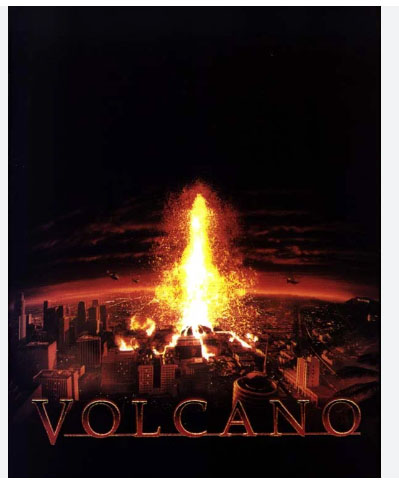
Volcano
Synopsis
When a massive underground earthquake triggers a terrifying geological anomaly beneath Los Angeles, a newly formed active volcano begins erupting lava through the city streets. Mike Roark, the head of the city's Office of Emergency Management, must team up with a brilliant seismologist to orchestrate a desperate city-wide defense. As rivers of molten magma flow toward populated residential areas and subway lines, they race against time to divert the deadly flow. The film delivers a thrilling disaster-blockbuster spectacle.
The Making of the Film
Director Mick Jackson helmed this high-concept disaster blockbuster produced by Lauren Shuler Donner, capitalizing on the 1990s Hollywood craze for massive natural-disaster thrillers. Screenwriters Jerome Armstrong and Billy Ray conceived the wild premise of a volcano bursting through urban Los Angeles streets. The production utilized massive studio sound stages in Los Angeles and intricate practical miniature models alongside early CGI to recreate flowing lava. The project was built to deliver pulse-pounding summer blockbuster thrills.
Critical Reception
Critics offered mixed reviews, praising Tommy Lee Jones's grounded, commanding lead performance and the impressive scale of the practical city-destruction sequences. Reviewers commended the fast-paced disaster setup, but many pointed out the scientific absurdity of a volcano erupting in the middle of La Brea Tar Pits. Some critics compared it unfavorably to simultaneous disaster rival Dante's Peak released the same year, yet acknowledged its high entertainment value. It emerged as a solid box office success.
Audiences embraced the movie for its popcorn-blockbuster thrills, thrilling subway rescues, and epic magma-flow diversions across city landmarks. Viewers enjoyed the suspenseful disaster pacing and Tommy Lee Jones playing a weary hero barking orders. The chaotic street-level destruction kept disaster-film fans thoroughly entertained. Many praised it as a fun, brainless 90s classic.
While traditional major film academies bypassed the disaster feature, it earned Saturn Award nominations for its visual effects and action sequences. Tommy Lee Jones's performance earned warm fan appreciation. The project successfully secured its legacy as a quintessential 90s disaster blockbuster.
Behind-the-Scenes Stories
Director Mick Jackson wanted to make the urban destruction feel as tangible and terrifying as possible, relying heavily on practical physical effects and massive sets rather than pure CGI. He worked closely with geological consultants—though they readily admitted volcanoes in LA were scientifically impossible—to make the emergency response procedures look authentic. The production team constructed massive street sets flooded with thick, glowing methyl-cellulose artificial lava.
Shooting elaborate street-level disaster sequences across Los Angeles required complex street closures, fire department cooperation, and massive stunt coordination. Managing actors near high-temperature practical lava rigs demanded strict safety protocols. Maintaining high physical energy throughout grueling night shoots tested the entire crew.
During the dramatic subway rescue tunnel scenes, Tommy Lee Jones and Anne Heche performed amidst real heat and ash debris, maintaining intense focus. The special effects crew utilized hundreds of gallons of safe, glowing orange sludge to simulate flowing magma. These practical efforts brought visceral realism to the disaster.
Tommy Lee Jones and Anne Heche led the cast as Mike Roark and Dr. Amy Barnes, supported by Don Cheadle, Keith David, and Gaby Hoffmann. The casting process focused on gathering respected dramatic actors to anchor the absurd premise. The resulting ensemble delivered fantastic disaster chemistry.
Themes Explored
The film explores urban disaster management, emergency heroism, scientific skepticism, municipal solidarity, and racial harmony during crises. It examines how diverse communities unite when facing catastrophic natural destruction. The narrative ultimately champions human resilience over geological terror.
Ending Explained
Mike successfully orchestrates a massive dynamite blast at a luxury hotel, creating a final channel that diverts the remaining river of lava harmlessly into the Pacific Ocean just before it engulfs a hospital. Los Angeles is saved from total destruction, and emergency workers celebrate their hard-won victory amidst the smoking rubble. Mike reunites safely with his daughter. The ending delivers a classic, triumphant disaster-movie resolution.
Meaning of the Title
The title "Volcano" directly names the geological terror erupting through the asphalt streets of Los Angeles, driving the entire disaster plot. It signals a high-concept threat that subverts urban normalcy. The concise title sets an instant disaster-blockbuster tone.
Original Soundtrack
Composed by Alan Silvestri, the musical score is a thrilling orchestral triumph featuring pounding percussion, urgent brass fanfares, and suspenseful electronic synth beats. The dramatic musical cues heighten the rushing magma sequences, delighting action fans.
Latest News
- The film remains a beloved nostalgia watch for fans of 1990s practical-effects disaster cinema on streaming platforms.
Similar Films
Fans of 1990s disaster blockbusters will enjoy Dante's Peak (1997), Independence Day (1996), Twister (1996), and Armageddon (1998), all featuring massive catastrophes.