

 Français
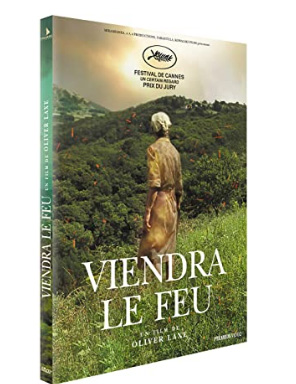
Fire Will Come
Synopsis
After serving a prison sentence for arson, a convicted pyromaniac returns to his remote, mist-shrouded mountain village in Galicia to live quietly with his aging mother. The local community greets him with deep suspicion and cold silence, treating him as an outsider despite his roots. As he attempts to rebuild his daily routines surrounded by his livestock and peaceful landscapes, the heavy shadow of his past looms large. When a devastating new wildfire erupts and threatens to consume the mountain valleys, suspicion immediately falls upon him once again. Oliver Laxe's meditative masterpiece explores human isolation, nature, and elemental fury.
The Making of the Film
Director Oliver Laxe wanted to create a hypnotic, deeply atmospheric cinematic experience that explored humanity's complex relationship with fire and rural isolation. The inspiration stemmed from Laxe's own deep connection to the rugged mountain landscapes of Galicia and the recurring trauma of seasonal wildfires. Producers aimed to cast non-professional local actors to maintain absolute authenticity in speech, mannerisms, and regional culture. The production placed intense focus on natural lighting, lingering pacing, and capturing the terrifying, unvarnished reality of real forest fires.
Critical Reception
Résumé des critiques professionnelles : Critics universally acclaimed the film for its mesmerizing cinematography, uncompromising realism, and profound atmospheric tension. Reviewers praised Oliver Laxe's visionary direction, noting how the film treats nature as an overwhelming, living entity rather than a mere backdrop. The performances of the non-professional lead actors received high praise for their raw, unspoken authenticity. Publications hailed it as a towering achievement in contemporary European art-house cinema.
Réception du public : Audiences drawn to contemplative, slow-cinema masterpieces appreciated the film's immersive pacing and hypnotic visual poetry. While not a commercial popcorn blockbuster, it captivated art-house crowds and film festival attendees worldwide. Viewers found the visceral wildfire sequences deeply haunting and unforgettable. Word-of-mouth cemented its status as a critical darling of the festival circuit.
Récompenses obtenues : Film triumphed at the Cannes Film Festival, winning the Jury Prize in the Un Certain Regard section to widespread critical acclaim. It earned multiple prestigious Goya Award nominations, capturing wins for its breathtaking cinematography and technical craft. Various international film critics associations honored its unique artistic vision and sound design. Its legacy remains firmly secured as a modern masterwork of environmental cinema.
Behind-the-Scenes Stories
Inspirations des réalisateurs : Director Oliver Laxe drew inspiration from the stark isolation of rural Galician mountain life and the ancient folklore surrounding fire and destruction. He wanted to examine how communities scapegoat individuals when faced with inexplicable natural disasters. Documentaries on real-life rural firefighters and forest management heavily influenced the authentic depiction of firefighting.
Difficultés de production : Filming actual forest fires alongside professional firefighting units required extreme caution, specialized safety equipment, and unpredictable scheduling. Working with non-professional local actors meant adapting the shooting style to capture natural, unforced performances rather than rigid script memorization. Capturing the shifting mountain weather and sudden fog banks presented continuous logistical hurdles for the camera crew.
Anecdote sur une scène particulière : During the filming of the terrifying nighttime wildfire descent, the crew operated cameras dangerously close to active flames to capture the genuine heat and terror on screen. The non-professional lead actor drew upon his own real-life familiarity with regional forestry work to ground his physical movements. The haunting sound design utilized authentic recordings of crackling timber and roaring windstorms mixed live.
Casting initialement prévu : Instead of pursuing mainstream celebrity actors, the casting director scoured remote mountain villages in Galicia to find authentic locals. The lead role was given to a real former convict and carpenter from the region who brought genuine lived-in gravity to the character. This unconventional casting choice was hailed by critics as one of the film's greatest artistic triumphs.
Themes Explored
The film explores themes of societal alienation, prejudice, ecological destruction, human complicity, and the sublime power of nature. It examines how rural communities project their deepest fears and anxieties onto misunderstood outsiders. The narrative highlights the terrifying indifference of natural elements when confronted with human vulnerability. Through minimal dialogue, it meditates on cycles of creation and annihilation.
Ending Explained
The conclusion leaves the ultimate fate of the protagonist ambiguous as the raging wildfire engulfs the mountain slopes, threatening the entire village. Rather than offering a neat moral resolution, the narrative fades out amidst the overwhelming smoke and roaring flames, symbolizing humanity's ultimate helplessness against elemental forces. The haunting final imagery suggests that judgment and absolution are ultimately decided by nature itself. It leaves viewers grappling with a profound sense of awe and existential quiet.
Meaning of the Title
The title translates poetically from the Galician and French origins to evoke the inevitable arrival of destruction and rebirth through fire. It symbolizes both the literal threat of the approaching wildfire and the psychological burden of the protagonist's past. The phrase establishes an eerie, prophetic tone.
Latest News
The film continues to be studied in film academies and screened at international environmental cinema festivals as a benchmark for modern art-house storytelling.
Similar Films
Fans of slow cinema, environmental dramas, and contemplative art-house masterpieces will appreciate films like First Cow, Nomadland, and Winter Sleep. These movies share a similar meditative pacing, stunning natural cinematography, and deep focus on human isolation.