

 Français
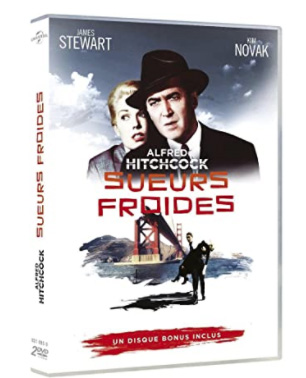
Vertigo
Synopsis
John "Scottie" Ferguson, a retired San Francisco detective who suffers from a crippling fear of heights, is hired by an old friend to follow his mysterious wife, Madeleine. Scottie becomes obsessed with the beautiful, haunted woman, and when tragedy strikes, he is left shattered. Later, he meets a woman who bears an uncanny resemblance to her and tries to remake her in the image of his lost love. The film is a hypnotic study of desire, deception and obsession.
The Making of the Film
Vertigo is based on the French novel D'entre les morts, written by Pierre Boileau and Thomas Narcejac, the same duo behind the book that inspired Les Diaboliques. Alfred Hitchcock was fascinated by its idea of a man who falls in love with a woman and then tries to recreate her after her death. He acquired the rights and worked with screenwriters on adapting the story to San Francisco, a city he used as a character in its own right. The film was shot in VistaVision, giving it its lush, saturated colors. Though it was not a major hit on release, it would eventually be recognized as one of his greatest achievements.
Reviews and Reception
Summary of Professional Reviews
At the time of its release in 1958, the film received mixed reviews, with some critics finding the plot too slow and farfetched. Over the following decades, its reputation grew dramatically, and critics came to see it as a profound work about obsession and identity. It is now frequently ranked among the greatest films of all time.
Audience Reception
The film was only moderately successful at the box office, and Hitchcock was disappointed by its reception. Rights issues kept it out of circulation for years, which only added to its legend when it returned in the 1980s. Today it is a favorite of film lovers and a key reference point for filmmakers.
Awards Won
The film received two Academy Award nominations, for Best Art Direction and Best Sound. Its biggest honor came in 2012, when it topped the Sight and Sound critics' poll of the greatest films ever made, replacing Citizen Kane.
Filming Anecdotes
Director's Inspirations
Hitchcock was drawn to the story's theme of obsessive love and the idea that a man could fall for an illusion. He treated the film as a kind of dream, using color, music and camera movement to blur the line between reality and fantasy.
Production Difficulties
Vera Miles, whom Hitchcock had planned to cast in the lead female role, became pregnant and had to withdraw. Kim Novak replaced her, but Hitchcock was reportedly less than thrilled and had arguments with her over costumes, including her famous gray suit. Hitchcock himself also underwent surgery during pre-production, which delayed the shoot.
Anecdote About a Particular Scene
To show Scottie's dizzying fear of heights, the filmmakers used a new camera technique that zooms in while the camera simultaneously moves backward. This "Vertigo effect" or dolly zoom has since become a classic technique, imitated by countless directors.
Originally Planned Casting
Vera Miles was the original choice for the dual role eventually played by Kim Novak. Her departure changed the film's tone and gave Novak the chance to deliver one of her most celebrated performances.
Themes Explored
Vertigo is a haunting reflection on obsession, illusion and the desire to bring the past back to life. It explores identity through its double role, asking whether we ever truly know the people we love. The film also deals with guilt, control and manipulation, as Scottie tries to remake a woman according to his fantasy. Fear, both physical and emotional, runs through its imagery, from literal heights to the heights of passion. Beneath its mystery plot lies a bleak meditation on the cost of refusing to accept reality.
Ending Explained
In the final scene, Scottie brings Judy to the mission tower, where he forces her to confess the truth about the earlier "death" and the deception that was used against him. At the moment when he finally overcomes his vertigo, a shadowy figure appears, startling Judy, who falls to her death. Scottie is left standing on the ledge, cured of his fear but devastated by the loss of the woman he loved twice. The ending is bleak and ambiguous, suggesting that obsession has destroyed everything.
Meaning of the Title
The English title refers to Scottie's condition, an intense fear of heights that causes dizziness and panic. The word also describes the emotional state of the film, in which characters are swept up in a spiral of desire and confusion. In France, the film was released as Sueurs froides, meaning "cold sweats", which evokes the physical sensation of fear and anxiety.
Original Soundtrack
Bernard Herrmann's score is one of the most celebrated in film history, with its swirling, obsessive strings echoing the spiral motifs of the story. Saul Bass's hypnotic title sequence, combined with Herrmann's music, immediately sets the tone of vertigo and unease. The music is considered an essential part of the film's emotional power.
Similar Films
- Rear Window: another Hitchcock study of obsession and voyeurism.
- Psycho: a darker, more shocking Hitchcock classic.
- Mulholland Drive: a dreamlike story of identity and illusion.
- Basic Instinct: an erotic thriller shaped by Hitchcock's influence.