

 Français
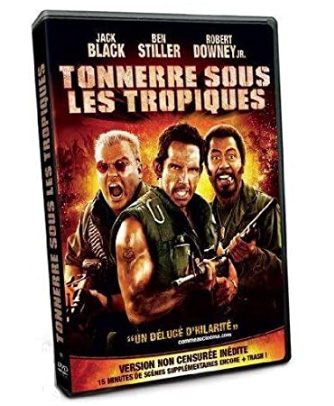
Tropic Thunder
Synopsis
A group of actors arrives in the jungles of Southeast Asia to film an ambitious war movie, but their production quickly becomes chaotic. The director decides to place the cast in a real jungle environment in an attempt to provoke more authentic performances. Unbeknownst to the actors, the area is controlled by dangerous criminals who mistake them for genuine soldiers. The performers suddenly find themselves in a situation far more dangerous than anything they have experienced on a film set. Their survival depends on cooperation, courage and the ability to distinguish reality from the roles they have been playing.
The Making of the Film
Tropic Thunder was directed by Ben Stiller, who also co-wrote the screenplay with Justin Theroux and Etan Cohen. The project began as a satire of Hollywood war movies and the inflated egos often associated with major film productions. Stiller wanted to examine the contradictions of an industry in which actors and filmmakers frequently confuse artistic ambition with personal importance. The screenplay follows a group of performers whose carefully constructed screen identities become useless when they encounter genuine danger. Ben Stiller, Jack Black and Robert Downey Jr. were cast in the central roles, each playing an exaggerated version of a familiar Hollywood personality. The production used locations in Hawaii to create the dense jungle environment required by the story. Elaborate practical sets and visual effects were combined to reproduce the scale of a large war film. The opening sequences parody the promotional materials and dramatic conventions of Hollywood action cinema. The film also features numerous celebrity appearances that reinforce its satirical approach. Its mixture of action, absurd comedy and industry criticism made it one of the most talked-about studio comedies of 2008.
Critical Reception
Professional critical response: Tropic Thunder received generally positive reviews, with many critics praising its energetic satire and ensemble performances. Robert Downey Jr. attracted particular attention for his deliberately exaggerated portrayal of an actor who undergoes a controversial transformation for a role. Tom Cruise's supporting performance was also widely discussed because of its unexpected comic characterisation. Some critics considered the humour uneven or deliberately provocative, but many appreciated the film's willingness to mock Hollywood conventions. Its opening fake trailers were frequently highlighted as especially effective satire.
Audience reception: The film performed strongly at the box office and attracted audiences interested in action comedies and Hollywood satire. Viewers responded to its outrageous characters, celebrity cameos and parody of war-film clichés. Its humour generated considerable discussion, particularly around the lengths to which actors go to transform themselves for prestigious roles. The film became a popular reference point for discussions about Hollywood egos and the entertainment industry. Its memorable supporting characters also helped maintain its popularity after its theatrical release.
Awards and recognition: Tropic Thunder received several award nominations, including an Academy Award nomination for Best Supporting Actor for Robert Downey Jr. The film also received recognition from the Golden Globes, Critics' Choice Awards and other organisations. Tom Cruise attracted award nominations for his comic supporting performance. Its makeup, production design and ensemble work were also recognised. Although its provocative humour divided some viewers, the film achieved significant recognition within the comedy genre.
Behind-the-Scenes Stories
Director's inspirations: Ben Stiller drew inspiration from the conventions of Hollywood war films and from the personalities often associated with major productions. He wanted to parody the idea that actors must suffer or radically transform themselves in order to achieve artistic credibility. The film also mocks the promotional machinery surrounding expensive productions. Its exaggerated characters reflect familiar industry stereotypes while remaining fictional comic creations.
Production challenges: Filming in dense jungle locations required extensive coordination of equipment, cast members and stunt personnel. The production had to create the impression of a large-scale war film while maintaining the comic timing of the story. The actors performed in difficult outdoor conditions, with mud, heat and demanding action sequences. The visual effects team also had to combine explosions and combat scenes with the film's deliberately exaggerated tone.
A memorable scene: The fake trailers shown at the beginning of the film introduce the exaggerated personalities of the actors before the main story begins. Each trailer parodies a different Hollywood genre and reveals the characters' inflated sense of their own importance. The sequence establishes the film's satirical approach immediately. It also demonstrates how promotional images can become part of the comedy rather than simply serving as background information.
Originally considered casting: Ben Stiller played Tugg Speedman, Jack Black portrayed Jeff Portnoy and Robert Downey Jr. played Kirk Lazarus. The production also featured Brandon T. Jackson, Jay Baruchel and Nick Nolte. Tom Cruise made a particularly memorable appearance as studio executive Les Grossman, a character whose appearance and behaviour were deliberately far removed from his usual screen image. The casting was designed to bring together performers with very different comic styles.
Themes Explored
Tropic Thunder explores celebrity culture, vanity, artistic ambition and the gap between fictional heroism and real courage. The actors begin the story convinced of their own importance, but their carefully constructed identities become meaningless when they face genuine danger. The film also examines the commercial pressures of Hollywood, where artistic decisions are often influenced by money, publicity and personal reputation. Its satire questions the tendency to glorify actors for simulated suffering while overlooking the real experiences that inspire their performances. Beneath the absurd humour, the story celebrates humility, cooperation and the ability to recognise one's limitations.
Explaining the Ending
The surviving actors finally confront the criminals and manage to escape the dangerous situation created by their misguided production. Their experience forces them to recognise the difference between acting brave and actually taking responsibility for others. Tugg Speedman begins to understand that his career ambitions have distorted his sense of identity. Kirk Lazarus and the other performers also emerge with a more realistic understanding of their abilities and limitations. The conclusion returns the characters to the world of entertainment, where their extraordinary experiences are transformed into a successful film narrative. This creates an ironic ending because the genuine danger they experienced becomes another commercial opportunity. The story suggests that Hollywood can turn almost any experience into a product, even when the people involved have barely understood what happened to them. The ending maintains the film's satirical tone while giving its characters a degree of personal growth.
The Meaning of the Title
The title Tropic Thunder is the fictional name of the war film being produced by the actors at the beginning of the story. It evokes the familiar language of large-scale military action movies, with tropical settings and explosive combat. As the fictional production becomes entangled with genuine danger, the title takes on an ironic meaning. The thunder of the jungle becomes more than a cinematic effect, while the actors discover that reality is far less controllable than the scenes they were hired to perform.
The soundtrack includes an original score by Theodore Shapiro, which combines action-film conventions with comic orchestral elements. The music supports the parody of large-scale war movies while maintaining the tension of the jungle sequences. The film also uses songs and musical references that reinforce its exaggerated Hollywood atmosphere. The score is designed to sound convincingly dramatic while remaining part of the film's satirical approach.
Similar films include Three Amigos!, directed by John Landis, which follows performers mistaken for real heroes; Galaxy Quest, directed by Dean Parisot, which satirises actors and fictional heroism; Bowfinger, directed by Frank Oz, which mocks Hollywood filmmaking; and Wag the Dog, directed by Barry Levinson, which examines the manipulation of public perception through entertainment and media.