

 Français
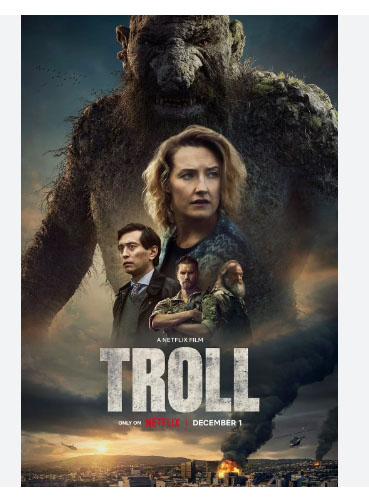
Troll
Synopsis
Deep inside the Dovre mountains of Norway, a massive explosion awakens an ancient, giant troll that has been trapped in folklore for a thousand years. As the gigantic creature marches relentlessly toward Oslo leaving total devastation in its wake, the Norwegian government panics. To stop the unstoppable mythical beast, a fearless paleontologist, a quirky government advisor, and a hardened military officer must team up. They race against time to uncover the creature's ancient secrets before the military obliterates it with catastrophic force.
The Making of the Film
Director Roar Uthaug helmed this high-concept fantasy monster film, returning to his native Norway after directing Hollywood blockbusters like Tomb Raider. Uthaug conceived the project as a passion project inspired by Norwegian folklore and his childhood fascination with giant mythical trolls. The production utilized stunning Norwegian mountain landscapes and cutting-edge digital creature effects to bring the massive monster to life. The project was built to be a thrilling, blockbuster-scale monster movie rooted in Scandinavian mythology.
Critical Reception
Critics offered generally favorable reviews, praising the film's impressive digital creature design, stunning Norwegian mountain cinematography, and fresh spin on classic monster-movie tropes. Reviewers commended Roar Uthaug's efficient pacing, which balances blockbuster destruction with playful nods to Scandinavian fairy tales. Some critics noted that the narrative followed familiar monster-disaster formulas, yet acknowledged its high entertainment value and technical polish. It emerged as a massive streaming hit for Netflix.
Audiences embraced the movie with immense enthusiasm, turning it into one of the most-watched non-English language films on Netflix globally. Viewers loved the scale of the massive monster rampaging through modern cities, thrilling action sequences, and the cultural Nordic mythology backdrop. The blend of disaster spectacle and folklore mystery kept monster-movie fans thoroughly entertained. Many praised it as a fun, well-executed creature feature.
While traditional major film academies bypassed the monster feature, it earned high viewership metrics and global streaming engagement for Netflix. The visual effects team earned praise for rendering a convincing giant troll. The project successfully established a thrilling Scandinavian monster franchise.
Behind-the-Scenes Stories
Director Roar Uthaug drew inspiration from classic monster films like Godzilla and King Kong while grounding the narrative deeply in Norwegian folklore and geography. He wanted the troll to feel not like a mindless evil villain, but like a tragic creature displaced from its ancient mountain home by modern human civilization. The production team collaborated with top Scandinavian visual effects artists to design the stone-like skin and movement physics.
Shooting massive disaster sequences and mountain expeditions across rugged Norwegian terrain required rigorous logistical coordination and stunning aerial cinematography. Managing digital creature integration with practical military vehicle explosions demanded precise visual effects planning. Maintaining high tension throughout destruction scenes required careful editing.
During the intense military confrontation sequences, actors performed amidst practical smoke rigs and intense action choreography, maintaining convincing terror. The sound design team meticulously crafted thunderous footsteps and roaring vocalizations to give the giant creature physical weight. These practical efforts brought cinematic scale to the Nordic myth.
Ine Marie Wilmann, Kim Falck, and Mads Sjøgård Pettersen led the cast, supported by Gard B. Eidsvold. The casting process focused on finding talented Norwegian actors who could anchor high-concept disaster in emotional realism. The resulting ensemble delivered fantastic dramatic chemistry.
Themes Explored
The film explores ancient folklore versus modern technology, environmental displacement, government bureaucracy during crises, and human hubris. It examines how modern civilization often destroys the ancient natural world without understanding its history. The narrative ultimately champions empathy for misunderstood natural forces over total destruction.
Ending Explained
Nora discovers that the troll is driven by a deep ancestral rage triggered by the church bells and Christianization of Norway that destroyed its ancient kin. Using sunlight as a weapon—the ultimate mythical weakness of trolls—they lure the monster into the open daylight where it turns into stone, saving Oslo from total annihilation. As the stone troll crumbles into dust in the morning sun, Nora realizes a vital piece of ancient history has also vanished. The ending offers a thrilling, bittersweet conclusion to the monster rampage.
Meaning of the Title
The title "Troll" directly names the gigantic mythical creature of Scandinavian folklore that drives the entire disaster and fantasy plot. It signals a thrilling homage to Nordic fairy tales and monster cinema. The concise title sets an instant creature-feature tone.
Latest News
- The massive streaming success of the film led Netflix to greenlight a sequel continuing the Scandinavian monster saga.
Similar Films
Fans of giant monster and disaster movies will enjoy Godzilla (2014), Jurassic Park (1993), The Host (2006), and Cloverfield (2008), all featuring rampaging beasts.