

 Français
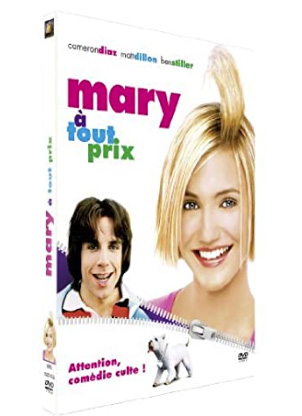
There's Something About Mary
Synopsis
Ted Stroehmann has never forgotten Mary Jensen, the beautiful girl he wanted to take to his high school prom. Their planned date ended in an embarrassing disaster, leaving Ted with a lasting romantic obsession. Years later, he decides to find her again and hires private investigator Pat Healy to track her down. However, Healy quickly develops feelings for Mary himself and begins manipulating the information he sends back to Ted. As several other men become interested in her, the competition for Mary's affection turns into an increasingly ridiculous series of misunderstandings and comic disasters.
The Film's Origins
There's Something About Mary was created by brothers Peter and Bobby Farrelly, who wanted to develop a romantic comedy built around outrageous physical humor and uncomfortable social situations. Their idea was to combine the emotional structure of a traditional love story with the deliberately provocative comedy that would become their trademark. The screenplay was developed with Ed Decter and John J. Strauss, who helped shape the characters and the complicated romantic misunderstandings. The film was an original story rather than an adaptation of a novel or a true event. Its central concept revolves around an ordinary man whose feelings for a woman from his teenage years become increasingly absurd as other men compete for her attention. The filmmakers were interested in exploring the difference between genuine affection and romantic obsession. Cameron Diaz was cast as Mary, a character whose natural charm makes her the object of several competing fantasies. Ben Stiller and Matt Dillon were chosen to provide contrasting forms of comic energy. The project ultimately became one of the most successful romantic comedies of the late 1990s. Its combination of sentimental storytelling and outrageous humor helped establish the Farrelly brothers as major names in American comedy.
Critical Reception
There's Something About Mary received generally favorable reviews from professional critics. Many praised the Farrelly brothers for combining outrageous physical comedy with an unexpectedly affectionate romantic story. Cameron Diaz received considerable attention for her charismatic performance and her ability to make Mary both charming and believable. Ben Stiller was also appreciated for his portrayal of an awkward man whose romantic idealism repeatedly leads him into embarrassing situations. Matt Dillon's performance as the manipulative private investigator was another frequent highlight. Some reviewers considered the humor excessively crude, but many recognized the film's originality and comic confidence.
The film became a major success with audiences and developed into one of the defining comedies of 1998. Its unusual jokes, memorable scenes and accessible romantic storyline helped attract a broad audience. It earned approximately 370 million dollars worldwide against a production budget of around 23 million dollars. Its popularity continued well beyond its theatrical release, with several scenes becoming part of popular culture. The film also helped establish Cameron Diaz as a major Hollywood star.
The film received several important award nominations and industry distinctions. Cameron Diaz was nominated for a Golden Globe for Best Actress in a Musical or Comedy. The film also received recognition from the American Film Institute, appearing in its lists celebrating the greatest American comedies and romantic films. Its success demonstrated that a comedy could combine deliberately provocative humor with a commercially successful romantic narrative. Although it did not win the major Academy Awards, its cultural impact and commercial performance remain significant.
Behind-the-Scenes Stories
The Farrelly brothers were inspired by their interest in socially awkward situations and the comic potential of people behaving badly while believing they are doing the right thing. They wanted to challenge the polished conventions of traditional romantic comedies. Their approach combined sentimental characters with situations that were deliberately embarrassing and sometimes shocking. The contrast between genuine affection and outrageous physical comedy became the foundation of the film.
One of the production's major challenges was balancing the film's extreme humor with its romantic storyline. The directors wanted audiences to care about the characters despite their foolish decisions and inappropriate behavior. The production also required careful coordination for several physically demanding comic sequences. The filmmakers worked closely with the actors to establish the timing necessary for jokes involving misunderstandings, accidents and escalating embarrassment.
The famous hair-gel scene became one of the most recognizable moments in the film. Its absurd visual joke was designed to create an unexpected combination of romantic embarrassment and physical comedy. Cameron Diaz's reaction and the surrounding situation helped transform an apparently ordinary preparation scene into a memorable comic set piece. The scene became so famous that it remains one of the first images many viewers associate with the film. It also illustrates the Farrelly brothers' willingness to push conventional romantic-comedy boundaries.
The casting process brought together several actors who helped shape the film's distinctive comic atmosphere. Ben Stiller was selected to play Ted, while Matt Dillon took the role of the deceptive private investigator Pat Healy. Cameron Diaz became Mary after impressing the filmmakers with her combination of charm and comic timing. Several supporting performers were also given opportunities to contribute to the film's unusual humor. The resulting ensemble helped create the chaotic romantic competition at the heart of the story.
Themes Explored
There's Something About Mary explores romantic obsession and the difference between loving someone and idealizing them. Ted has spent years imagining Mary as the perfect woman, even though he barely knows the person she has become. His romantic memories prevent him from seeing her as an independent individual with her own desires. The film also examines jealousy and competition between men who view romantic relationships as contests to be won. Deception becomes a recurring element, particularly through Pat Healy's manipulation of information. Friendship and loyalty are tested when personal desires conflict with moral responsibilities. The story also challenges conventional ideas of beauty by presenting Mary as a woman whose charm attracts attention without her actively seeking it. Its comedy frequently exposes hypocrisy and the absurdity of social expectations surrounding romance and masculinity. The contrast between genuine affection and selfish obsession becomes increasingly clear as the story develops. Despite its provocative humor, the film ultimately celebrates sincerity and the possibility of finding love beyond superficial appearances.
Ending Explained
The ending brings the competing romantic interests surrounding Mary to a final confrontation. Ted eventually discovers that Pat Healy has been lying to him and that several other men have also been manipulating their relationships with Mary. The situation forces Mary to reconsider the intentions of the people who claim to love her. Ted's honesty and genuine affection finally distinguish him from the other men. However, the film does not present him as a perfect romantic hero. His earlier behavior reveals insecurity, idealization and a tendency to confuse memories with reality. Mary ultimately chooses to follow her feelings rather than accept the version of herself that others have constructed. The resolution suggests that genuine relationships require honesty and respect rather than manipulation. The characters' ridiculous experiences also demonstrate how romantic competition can become destructive when individuals prioritize winning over understanding another person. The conclusion returns to the film's central idea that love should be based on the real person rather than an imagined ideal. Its happy ending provides a conventional romantic resolution after an intentionally unconventional journey.
Meaning of the Title
The title There's Something About Mary suggests that the central character possesses an unusual charm that attracts the attention of nearly every man she encounters. The expression is deliberately vague because the men cannot always explain what makes her so appealing. Mary becomes the object of their competing romantic fantasies and personal ambitions. The title also contains a humorous element because the story repeatedly reveals that the obsession surrounding her says as much about the men as it does about Mary herself. Rather than presenting her simply as a perfect romantic ideal, the film gradually exposes the difference between the real woman and the expectations projected onto her. The title therefore reflects both her magnetic personality and the absurdity of the romantic competition surrounding her.
Original Soundtrack
The soundtrack is closely associated with the music of Jonathan Richman, whose songs contribute to the film's distinctive atmosphere. His simple, cheerful musical style contrasts with the increasingly outrageous situations experienced by the characters. The soundtrack also includes popular songs that reinforce the romantic and comic dimensions of the story. Music is used to create emotional transitions and emphasize the film's affectionate attitude toward its characters. Jonathan Richman's contributions are particularly memorable because they give the film a playful and slightly unconventional musical identity.
Films with similar themes include Dumb and Dumber, Kingpin, Shallow Hal, Me, Myself & Irene, American Pie, The Wedding Singer, 10 Things I Hate About You and Groundhog Day. These comedies combine romantic misunderstandings, eccentric characters, physical humor and unconventional approaches to relationships.