

 Français
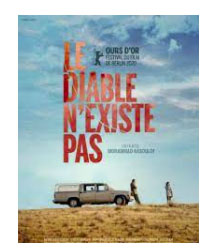
There Is No Evil
Synopsis
This powerful, profoundly moving, and Golden Bear-winning Iranian anthology drama film written and directed by Mohammad Rasoulof explores the moral burden, personal responsibility, and ethical consequences of capital punishment in modern Iran through four distinct, interconnected narrative chapters. Each story focuses on ordinary men tasked with executing state-mandated death sentences: one devoted family man who quietly slips away at dawn to work in the execution chamber; a young conscript soldier whose conscience prevents him from carrying out his first hanging order; a political dissident visiting his fiancée in a remote countryside who plans a secret act of resistance; and an aging uncle confronting his visiting niece with a dark, hidden secret from his past. It is a stunning, courageous masterpiece of political cinema.
The Making of the Film
The project originated from dissident Iranian auteur Mohammad Rasoulof's urgent desire to examine the systemic horrors of the death penalty in Iran, filming the entire feature in secret under extreme government censorship and facing an imminent prison sentence and travel ban by Iranian authorities. Rasoulof sought to craft a humanist anthology film that explored how ordinary citizens become cogs in an authoritarian execution machine without realizing their moral complicity. Inspiration was drawn from real-world totalitarian oppression, personal prison experiences, and Iranian philosophical traditions. The creative team aimed to produce a courageous masterpiece.
Critical Reception
Critics offered widespread, rapturous acclaim, praising Mohammad Rasoulof's fearless directorial vision, stunning rural cinematography, and the powerful ensemble cast. Reviewers noted that Rasoulof successfully bypassed direct political polemics, delivering instead a deeply nuanced, agonizing philosophical examination of personal conscience versus state obedience. The breathtaking mountain landscapes contrasting with grim prison corridors received universal applause at the Berlin International Film Festival where it won the prestigious Golden Bear. It was immediately recognized as a triumph of global cinema.
Audience reception was deeply moved and emotionally overwhelmed, driving the film to strong international art-house success and earning critical acclaim across global film festivals. Viewers on public platforms praised the gripping moral dilemmas, stunning natural scenery, and the shocking emotional twists of each chapter. Fans of international drama celebrated its supreme political courage. Word-of-mouth sustained strong global prestige.
Awards season brought major triumph, winning the Golden Bear (Best Film) at the 70th Berlin International Film Festival, alongside numerous international critic awards. Critics' associations praised the film for its stylistic brilliance and moral courage. These accolades cemented its status as a premier masterpiece of modern political cinema.
Behind-the-Scenes Stories
The director and production team drew visual inspiration from Iranian landscape photography, documentary minimalism, and classic political thrillers to establish a chilling, grounded aesthetic. Every location, from the misty Caspian Sea mountain forests to the dusty desert bee farms, was chosen to reflect the quiet isolation and moral weight of the characters. The production team collaborated in absolute secrecy, using code names and false production permits to evade Iranian intelligence surveillance during filming. These artistic choices created an immersive, perilous world.
Production presented fascinating logistical and technical hurdles, requiring Mohammad Rasoulof and his crew to operate under constant threat of arrest and confiscation of film reels, ultimately smuggling the completed digital files out of Iran on flash drives. The actors performed with extraordinary courage, knowing their participation could result in severe legal persecution. Furthermore, maintaining strict narrative secrecy demanded obsessive security protocols from the director.
During filming of the tense military-base escape sequences, the actors executed their frantic emotional breakouts with total professional commitment. To maintain authentic tension, Rasoulof utilized naturalistic framing. The crew utilized available sunlight. This rigorous dedication resulted in immortal cinematic moments.
Casting was anchored by securing an incredible ensemble of courageous Iranian actors including Ehsan Mirhosseini, Shaghayegh Shoorian, Kaveh Ahangar, and Mohammad Valizadegan. This secret casting strategy was the absolute heartbeat of the film's success.
Themes Explored
The narrative deeply explores themes of capital punishment, moral responsibility, and individual conscience under totalitarian regimes. It examines state-mandated murder, complicity, and the psychological cost of pulling the executioner's lever. Additionally, it highlights resistance, family duty, and the inescapable burden of guilt. Ultimately, the film reflects on courage, freedom, and the moral integrity of the human soul.
Ending Explained
The final chapter reveals that the aging uncle lived in deep shame for decades after refusing to execute a prisoner early in his military career—an act of defiance that cost him his medical license and freedom—while his visiting niece learns the true price of moral integrity as she uncovers her family's hidden past. In the haunting final shot, the young woman drives through the misty mountain roads in stunned silence. The devastating resolution underscores that true moral courage echoes through generations.
Meaning of the Title
The title ("There Is No Evil") directly references a philosophical Persian adage regarding moral responsibility and refusing to participate in institutional evil.
Similar Films
Films sharing similar political courage, moral dilemmas, and anti-authoritarian themes include A Separation (2011), The Salesman (2016), and Taxi Tehran (2015).