

 Français
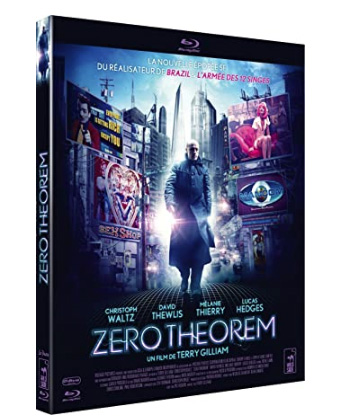
The Zero Theorem
Synopsis
Set in a bizarre, Orwellian corporate dystopia governed by an omnipresent entity known as Management, a reclusive, computer-genius genius suffering from existential dread works tirelessly from a burned-out church to solve a complex mathematical formula called the Zero Theorem. Tasked with proving that the universe ends in nothingness, he longs for a mysterious telephone call that will explain the true meaning of his life. Distracted by a seductive virtual reality companion and a rebellious corporate boss's son, he spirals through surreal digital dimensions. His quest for cosmic meaning tests the limits of human existence.
The Making of the Film
Director Terry Gilliam directed the philosophical sci-fi drama from an original screenplay written by Pat Rushin. The inspiration stemmed from Gilliam's lifelong fascination with existentialism, corporate alienation, and the absurd digital saturation of modern life. The production team aimed to construct a wildly colorful, chaotic dystopian aesthetic utilizing asymmetric framing and elaborate virtual reality sets. The script focused heavily on spiritual meaning versus digital nihilism.
Critical and Reception
Professional critics gave mixed reviews, praising Christoph Waltz's phenomenal lead performance, dazzling visual imagination, and Gilliam's distinctive directorial flair, while criticizing its convoluted narrative and heavy philosophical meandering. Audiences appreciated the surreal sci-fi voyage, though its arthouse tone limited mainstream commercial box-office returns. Reviewers noted that the film served as a spiritual companion piece to Gilliam's earlier masterpiece 'Brazil'. The movie secured a dedicated cult following among sci-fi enthusiasts.
Filming Anecdotes
Director Terry Gilliam drew inspiration from classical philosophy, corporate satire, and colorful dystopian art direction. Production faced tight budgetary constraints shooting on location in Bucharest soundstages to recreate the surreal digital metropolis. During the intense computer terminal sequences, Christoph Waltz shaved his head and eyebrows to portray the reclusive genius. The studio supported Gilliam's uncompromising visual style.
Themes Explored
The film explores existentialism, corporate alienation, digital isolation, the search for meaning, and nihilism. It examines how humanity struggles to find spiritual purpose in a hyper-technological world. Mathematics serves as the protagonist's obsessive coping mechanism. Additionally, dystopian corporate control provides a satirical backdrop.
Explanation of the Ending
The narrative concludes with the genius successfully completing the Zero Theorem calculation and discovering that the equation results in nothing—confirming the universe ends in a black hole of zero—before uploading his consciousness into a radiant digital paradise where he reunites with peace and freedom, leaving his physical body behind. Walking along a sunny virtual beach, he finally escapes the corporate dystopia. The final shots capture his smiling digital avatar. The resolution provides a surreal, poetic, and triumphant closure to the sci-fi drama.
Meaning of the Title
The title refers directly to the central mathematical equation being solved by the protagonist: the 'Zero Theorem', which posits that the universe ultimately equals zero and that life has no inherent meaning. It signifies nihilism, existential dread, and corporate absurdity. The name creates a striking, philosophical hook for a sci-fi film. It captures the core quest driving the narrative.
There are no recent major developments or active news items regarding this film.