

 Français
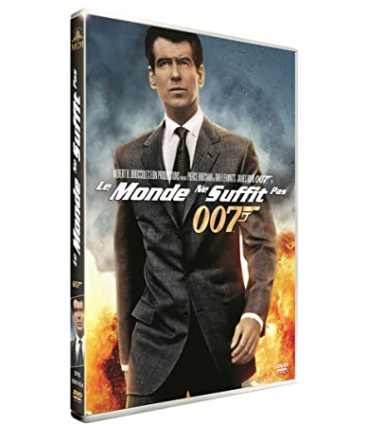
The World Is Not Enough
Synopsis
After an attack on MI6 headquarters kills a wealthy oil tycoon, James Bond is assigned to protect his daughter, Elektra King. The trail leads him to Renard, a ruthless terrorist who cannot feel pain and who once held Elektra captive. As Bond travels from London to the Caspian Sea and Istanbul, he uncovers a sinister plan involving a nuclear submarine. With the help of the nuclear physicist Dr. Christmas Jones, he must prevent a catastrophe that could change the world.
The Making of the Film
The World Is Not Enough was the nineteenth film in the official James Bond series and the third with Pierce Brosnan in the role. After the great success of GoldenEye and the solid performance of Tomorrow Never Dies, the producers were eager to keep the momentum. The script, written by Neal Purvis, Robert Wade and Bruce Feirstein, revolved around the theme of oil and the geopolitical tension surrounding it. The producers wanted to create a more emotional story in which a villain is not only a threat but also a victim. Michael Apted, known for his documentary series Up and for dramas like Coal Miner's Daughter, was chosen as director, a surprising choice for an action franchise. The team deliberately built a stronger role for M, played by Judi Dench, whose relationship with Bond added new depth. The title itself comes from the Bond family motto, mentioned in On Her Majesty's Secret Service. The goal was to deliver a spectacular film that also explored the psychology of its characters.
Reviews and reception
Professional critics' summary
Critics gave the film mixed reviews, praising the opening boat chase and the emotional complexity of the villain. Sophie Marceau's performance as Elektra King was seen as one of the franchise's most interesting female villains. However, many reviewers disliked the casting of Denise Richards as a nuclear physicist, which they found unconvincing. Others thought the second half of the film became too conventional after a promising start.
Audience reception
The film was a major commercial success, grossing more than 360 million dollars worldwide. Audiences enjoyed the mix of spectacle and humour, as well as the return of familiar faces. Over time, many fans have come to appreciate the film's darker themes and the Elektra storyline. It also marks the final appearance of Desmond Llewelyn as Q, which gives it a special place in the series.
Awards
The film did not win major awards, but it was nominated in several popular and technical categories. Denise Richards received a Golden Raspberry Award for Worst Supporting Actress, a controversial honour. Its theme song by Garbage was nominated for recognition in several music polls. The movie remains a significant entry in the Bond series for its blend of action and emotion.
Filming anecdotes
Director's inspirations
Michael Apted wanted to bring a stronger human dimension to the action, drawing on his experience in drama. He was interested in exploring the psychological effects of captivity, which are at the heart of Elektra's character. The film also draws on Ian Fleming's tradition of exotic locations and international intrigue. Apted maintained the franchise's tone, adding emotional stakes to the thrills.
Production difficulties
The production travelled to several countries, including Spain, Azerbaijan, Turkey and Scotland. Filming the opening Thames chase required cooperation from London authorities, and the sequence took weeks to complete. The MI6 building was used for exterior shots, with the permission of the British government, which was a first for the series. Coordinating the many locations and large stunt sequences made the film one of the most complex in the franchise.
Anecdote about a particular scene
The pre-title sequence begins in Bilbao, at the Guggenheim Museum, then leads into a spectacular boat chase down the River Thames. It ends with Bond's boat running aground at the Millennium Dome, which was being prepared for the year 2000 celebrations. The sequence is considered one of the longest and most impressive openings in the series. Another memorable scene involves the oil pipeline, where the characters face a deadly nuclear threat.
Originally planned casting
Pierce Brosnan returned as Bond, bringing the charm and wit that fans had come to love. Sophie Marceau was chosen to play Elektra, while Robert Carlyle took on the role of the villain Renard. Denise Richards was cast as Dr. Christmas Jones, and John Cleese made his debut as R, the successor to Q.
Themes explored
The film explores the relationship between power, oil and politics, reflecting real-world tensions of the late 1990s. It also examines the effect of trauma on the human mind through Elektra's transformation from victim to villain. Betrayal and trust are important, since Bond must question who is truly on his side. The story highlights the vulnerability of the hero, who is wounded and must fight to continue his mission. M's personal involvement in the case adds a theme of guilt and responsibility. The film also deals with the idea of modern terrorism and the dangers of nuclear weapons. Another theme is the tension between desire and duty, as Bond struggles with his feelings for Elektra. Overall, the film is a meditation on the price of power and the cost of past mistakes.
Ending explained
In the final act, Bond discovers that Elektra is behind the plot, having worked with Renard to take revenge on her father and on M. She plans to blow up a nuclear reactor in Istanbul in order to raise the price of her family's oil pipeline. After rescuing Dr. Jones, Bond confronts Renard on a submarine, where the villain is killed. Elektra, who has captured M, tries to seduce Bond but he sees through her manipulation. He shoots her, putting an end to her plan and ensuring the safety of the city. The film closes with Bond and Dr. Jones sharing an intimate moment, a classic ending for the series. The final lines, delivered with typical humour, remind us that Bond always has time for pleasure.
Meaning of the title
The title is the English translation of the Latin motto Orbis non sufficit, which is the Bond family motto. It was first revealed in On Her Majesty's Secret Service, when Bond visits the College of Arms. The phrase suggests that the world is never enough for those with ambition, a theme that applies to both the hero and the villains. In the film, it fits the greed of Elektra and the political games involving oil. It also reflects Bond's lifestyle, always searching for the next adventure. The title therefore has a literary and historical weight that sets it apart from other Bond titles. It reminds the audience that the series has a long and carefully constructed mythology.
Original Soundtrack
David Arnold composed the score, continuing the modern approach that he introduced in Tomorrow Never Dies. The title song, performed by the band Garbage, blends rock with the classic Bond style and has an unusual, seductive atmosphere. Arnold's music mixes electronic elements with traditional orchestration, giving the film a distinct sound.
News
After No Time to Die in 2021, the Bond franchise is now overseen by Amazon MGM Studios, which acquired MGM. Director Denis Villeneuve has been announced to direct the next film in the series. The role of Bond will be recast, and fans are eagerly awaiting more details.
Similar Films
Goldeneye and Tomorrow Never Dies are the other Pierce Brosnan Bond films. Casino Royale and Skyfall also feature emotional storylines for the character. Mission: Impossible and the Bourne series offer other action-packed spy adventures. The Rock and True Lies are more explosive alternatives with similar spectacle.