

 Français
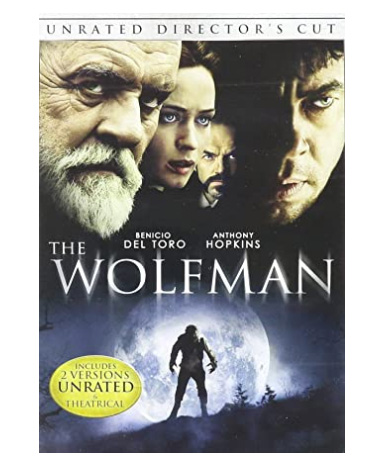
The Wolfman
Synopsis
In Victorian England during the late 19th century, renowned Shakespearean actor Lawrence Talbot returns to his gloomy ancestral estate in Blackmoor after his brother mysteriously vanishes. Urged on by his grieving father, Lawrence begins searching for his brother, only to discover a vicious creature is terrorizing the local villagers. During a nighttime hunt on the moors, Lawrence is attacked and bitten by a terrifying werewolf, inheriting an ancient and bloody curse. As the full moon approaches, he undergoes a monstrous transformation that unleashes primal terror upon Victorian society. He must uncover dark family secrets to put an end to the curse once and for all.
The Making of the Film
Director Joe Johnston and Universal Pictures developed the film as a lavish gothic remake of the legendary 1941 classic monster movie starring Lon Chaney Jr. The filmmakers wanted to honor classic Universal monster traditions by utilizing atmospheric gothic set design and state-of-the-art practical creature effects by Rick Baker. The production faced numerous creative delays, director changes, and release date pushbacks before hitting theaters. The script was crafted to deliver a dark, bloody period horror experience.
Critical Reception
Professional reviews were mixed, with critics praising Rick Baker's Oscar-winning practical makeup effects, lavish gothic cinematography, and Benicio del Toro's committed lead performance. However, many reviewers felt the narrative felt predictable and overly reliant on CGI action sequences in its final act. While atmospheric and visually striking, it struggled to fully revitalize the classic monster franchise for modern audiences.
Public reception was moderately favorable among fans of gothic horror and monster movies who enjoyed the bloody werewolf transformations and dark period aesthetic. Box office returns fell short of expectations due to high production costs. Word-of-mouth helped it gain a cult following among horror enthusiasts.
Awards recognition included an Academy Award win for Best Makeup for Rick Baker's incredible werewolf transformation effects, cementing its technical craftsmanship.
Shooting anecdotes
Director Joe Johnston drew inspiration from classic Universal horror films, gothic literature, and 19th-century Victorian aesthetic traditions.
Production faced severe logistical hurdles and studio interference during reshoots and editing, which altered the film's pacing and action balance.
During a grueling transformation scene, Benicio del Toro endured hours in the makeup chair as Rick Baker applied intricate prosthetic hair and appliances.
Initial casting discussions brought together an acclaimed cast of veteran actors including Anthony Hopkins and Emily Blunt to anchor the gothic drama.
Themes explored
The film explores family curses, patricide, Victorian repression, repressed primal instincts, and tragedy. It examines how generational sins haunt descendants through bloodlines. It also highlights the monster hidden within civilized society.
Explanation of the ending
The tragic climax resolves with Lawrence, now fully transformed into a beast, fighting and killing his villainous father before being put down by Gwen using a silver bullet. It closes on a somber note honoring the tragic curse of the wolfman.
Meaning of the title
The title refers directly to the legendary folkloric creature and the hereditary curse that afflicts the protagonist during lunar cycles.
Danny Elfman's haunting and majestic original orchestral score received widespread critical acclaim for blending classic gothic horror motifs with sweeping Victorian melodies.
Van Helsing, Sleepy Hollow, Bram Stoker's Dracula, An American Werewolf in London